
Anna Goes To The Supermarket – Educational Stories for Kids
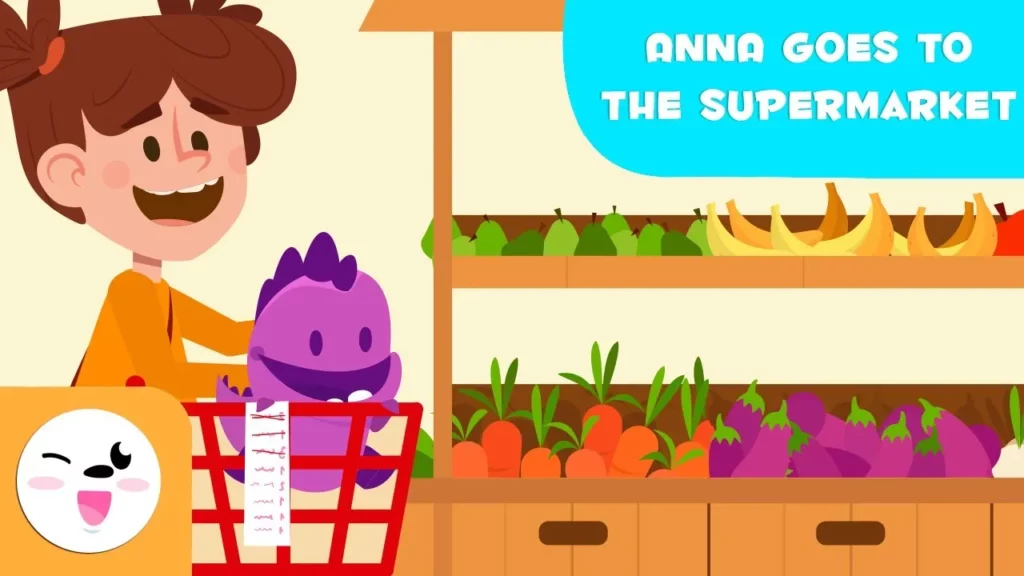
In “Anna Goes To The Supermarket,” Anna and her dad plan to make a special lunch for Grandma and Grandpa but realize they need to buy ingredients. They head to the supermarket, where Anna learns about grocery shopping, the importance of healthy foods, and how to be responsible while cooking with an adult. After successfully gathering everything on their list, they return home to prepare a delicious meal together, highlighting the joy of cooking and learning new skills.
Handwashing – Learn How To Wash Your Hands – 10 Steps to Washing Your Hands
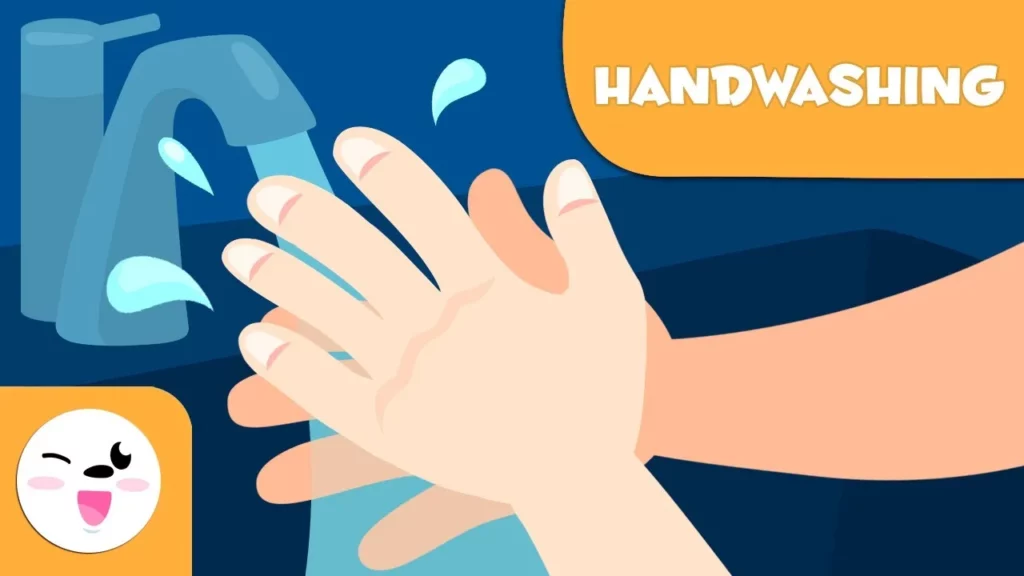
This lesson emphasizes the importance of proper handwashing to prevent the spread of germs, including viruses and bacteria. It outlines the recommended duration for washing hands—at least 30 seconds—and provides specific situations when handwashing is necessary. Additionally, the lesson details a 10-step process for effective handwashing and offers a tip for maintaining hand cleanliness while sneezing or coughing.
The Sense of Taste – How Does it Work? Senses For Kids
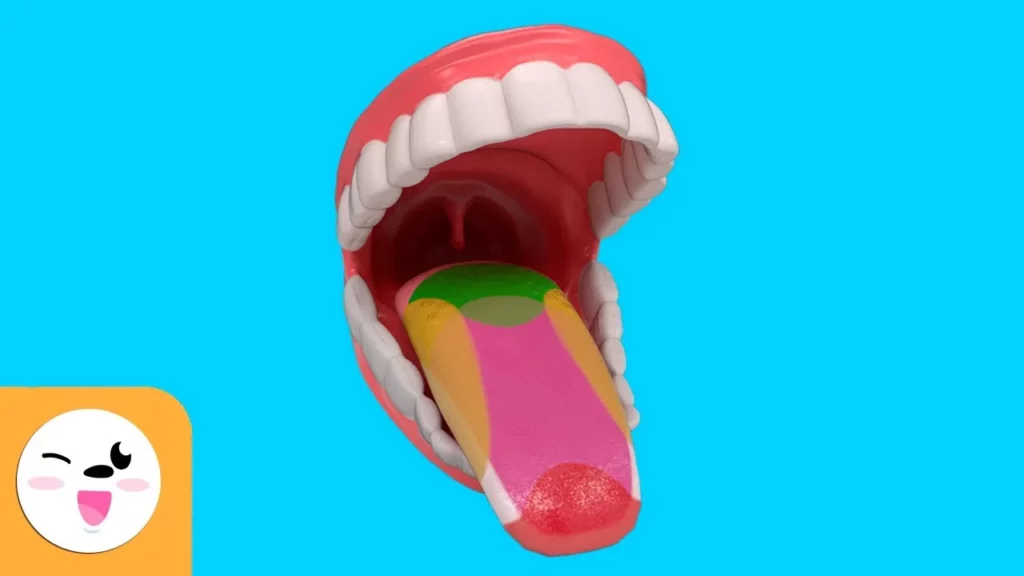
The lesson on the sense of taste explores how our taste buds, located on the tongue, detect five basic tastes: sweet, salty, bitter, sour, and umami. It highlights the collaboration between taste and smell in enhancing our food experiences and emphasizes the importance of taste in both enjoyment and safety, as it helps us identify spoiled or harmful foods. Overall, the lesson celebrates the intricate workings of our taste system and its role in our daily lives.
The Middle Ages for kids – 5 things you should know – History for Kids (Updated Version)
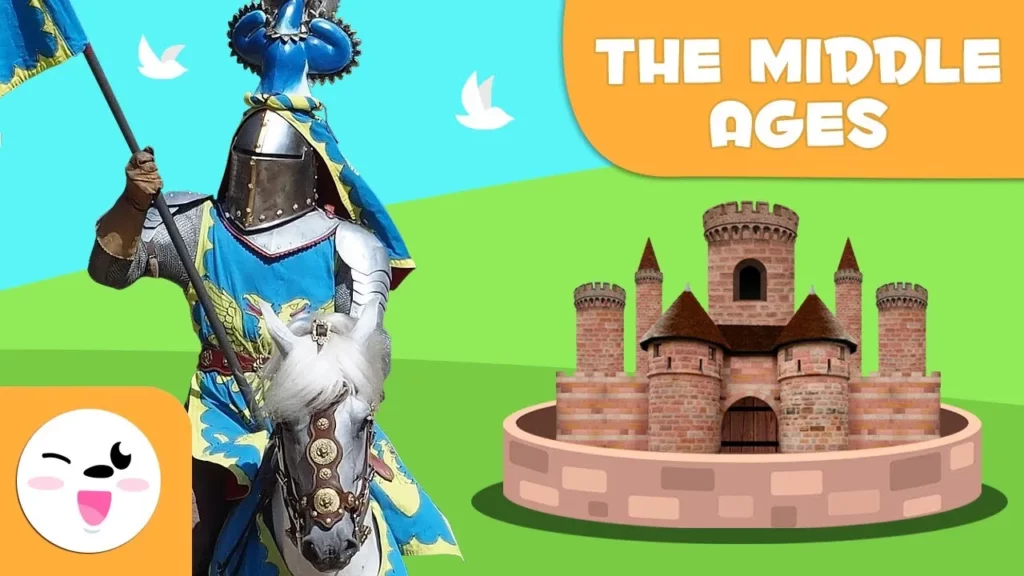
The Middle Ages, spanning from 476 A.D. to 1492 A.D., was a significant historical period marked by the fall of the Roman Empire and the rise of the feudal system, where society was structured like a pyramid with kings, nobles, and peasants. This era is divided into the Early and Late Middle Ages, witnessing shifts in power dynamics and economic growth, alongside the prominence of knights, castles, and bustling medieval markets supported by guilds. Overall, the Middle Ages was a time of transformation that laid the groundwork for modern Europe.
Color Songs – Colors for Kids – Red, blue, yellow, green, orange, pink, brown, purple, black…
In the “Color Songs – Let’s Learn Colors!” lesson, children are introduced to various colors through engaging songs and stories featuring colorful characters like Mr. Clown, Little Blue Fish, and Benjamin the unicorn. Each segment highlights a specific color while encouraging participation through singing and dancing, making the learning experience fun and interactive. The lesson concludes by inviting children to continue exploring and enjoying more colorful adventures.
Non-renewable Energy Sources – Types of Energy for Kids
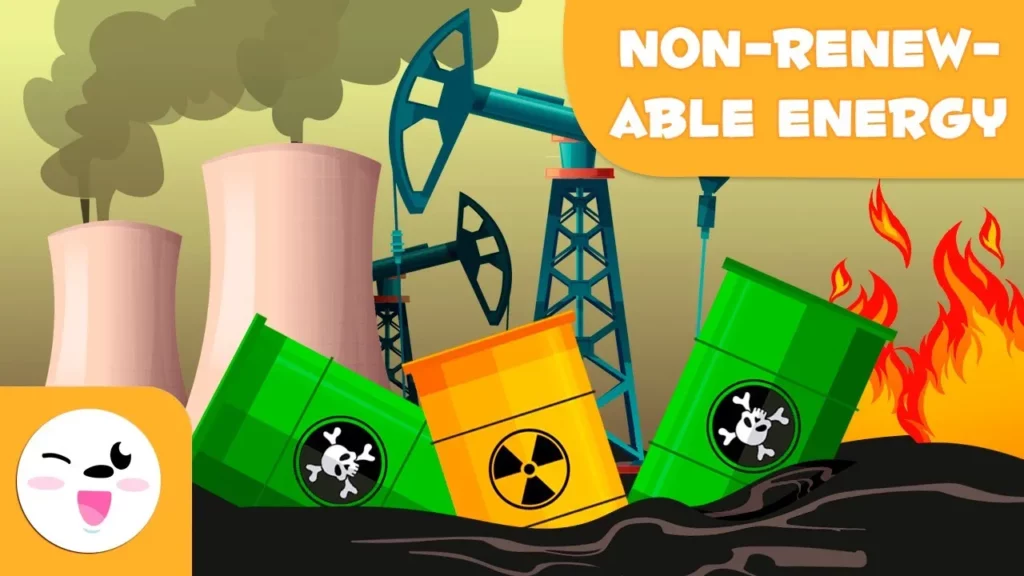
In this lesson, students learn about non-renewable energy sources, which are limited resources like coal, oil, natural gas, and uranium that do not replenish naturally. The lesson highlights the environmental issues associated with these energy sources, such as air pollution and radioactive waste, and encourages the transition to renewable energy options like solar and wind power to protect the planet.
Responsible Use of Technology for Kids – First Mobile – Cyberbullying – Fake News – Online Privacy
The lesson on the responsible use of technology for kids emphasizes the importance of safe and respectful online behavior, especially when using smartphones. It covers key topics such as effective communication, safe sharing of information, dealing with cyberbullying, protecting privacy, spotting fake news, and being a positive internet user. By following these guidelines and seeking adult guidance when needed, kids can navigate the digital world responsibly and make it a better place for themselves and others.
What are bacteria? – Science for Kids
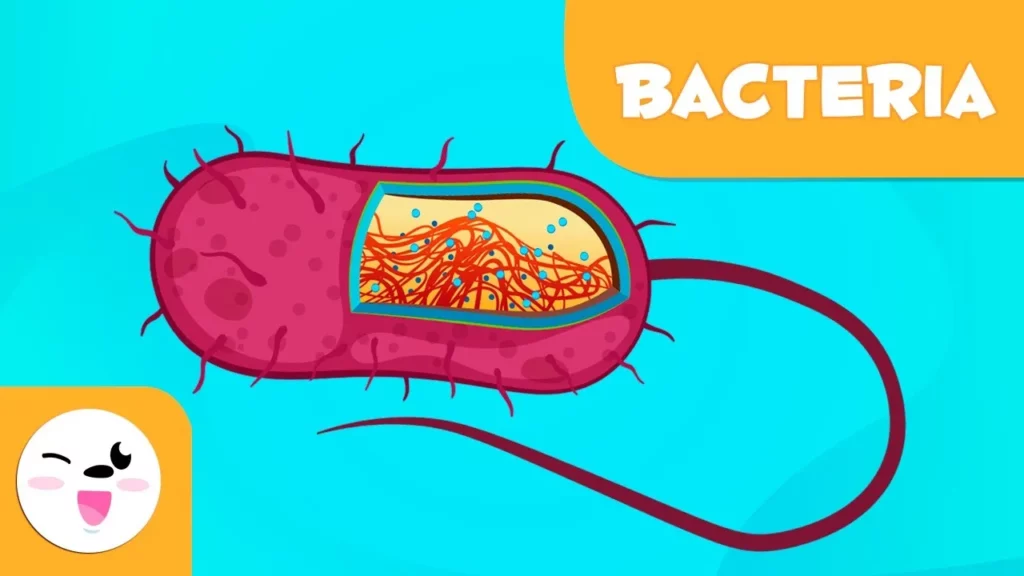
In this lesson, students learn about bacteria, which are tiny, unicellular microorganisms that play vital roles in various ecosystems. The lesson covers the structure and classification of bacteria, their beneficial and harmful effects on health, how they spread, and the importance of antibiotics in treating bacterial infections. Overall, it emphasizes the dual nature of bacteria as both essential for health and capable of causing diseases.
Learn How to Add Fractions – Same Denominator – Math for Kids
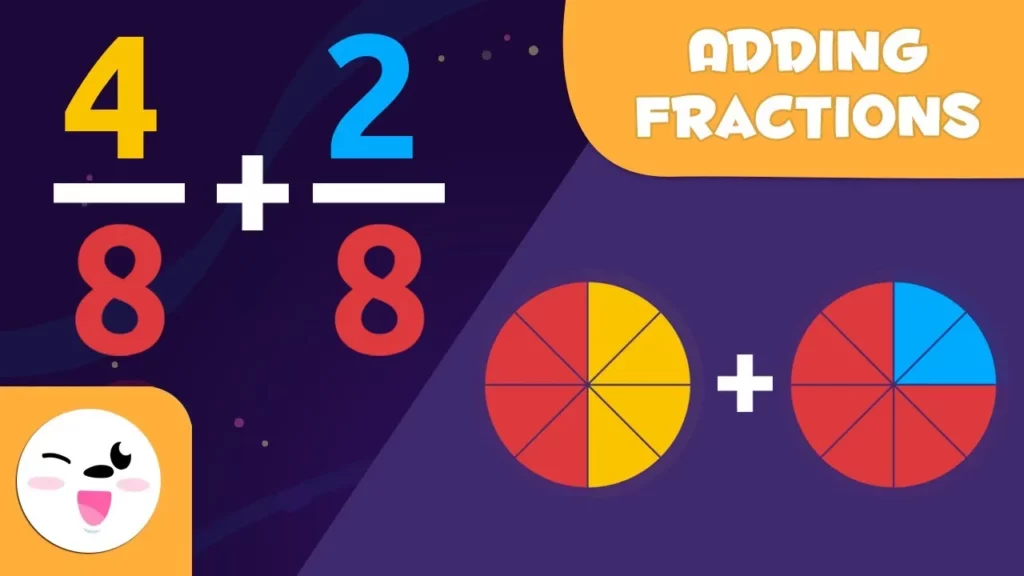
In this lesson, students learn how to add fractions with the same denominator by keeping the denominator constant and simply adding the numerators. Through engaging examples involving imaginary planets, learners practice adding fractions like \( \frac{2}{8} + \frac{3}{8} \) to find that \( \frac{5}{8} \) of the planet is occupied by aliens, and \( \frac{1}{5} + \frac{3}{5} \) to discover that \( \frac{4}{5} \) of another planet is covered with water. The lesson emphasizes understanding fractions and encourages continued practice for mastery.
Addition and Subtraction with Dinosaurs – Math for Kids – Math Operations
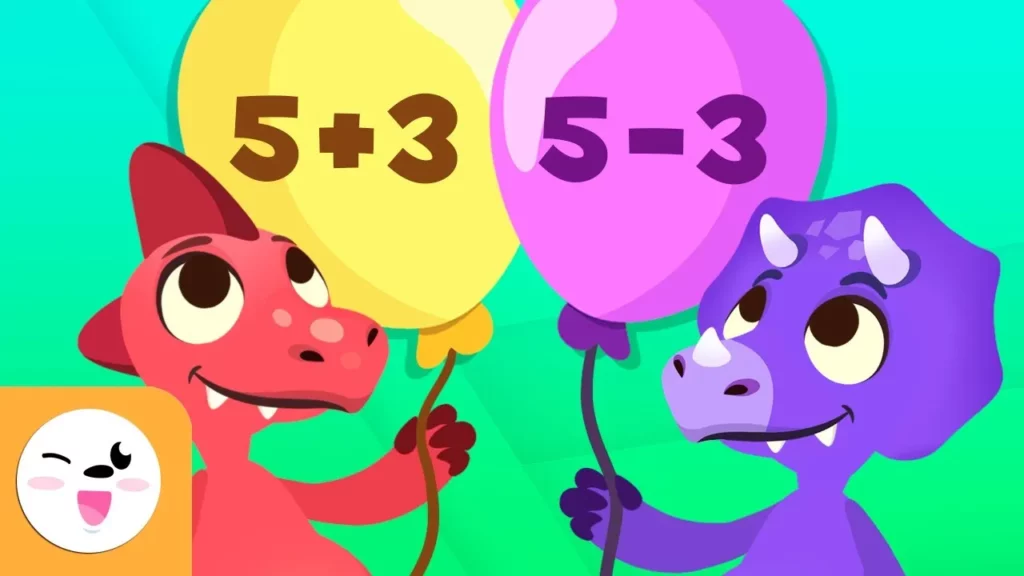
In this lesson, children learn the basics of addition and subtraction through engaging activities featuring dinosaurs, cupcakes, and balloons. They practice addition by counting and combining items, such as dinosaur eggs, and explore subtraction by determining how many items remain after some are taken away, like cupcakes and balloons. The lesson emphasizes that math can be enjoyable and encourages continued practice to build confidence and expertise.