
Nebulae: Astronomy #36
The lesson explores the beauty and significance of nebulae in astronomy, describing them as massive clouds of gas and dust that play a crucial role in the life cycle of stars. It categorizes nebulae into three types—emission, reflection, and dark nebulae—each with unique characteristics and visual effects, and highlights notable examples like the Orion Nebula and the Eagle Nebula. Ultimately, the lesson emphasizes that nebulae are not only visually stunning but also essential for understanding the processes that govern the universe.
How and Why We Read: English Literature #1
This lesson emphasizes the significance of reading and writing as essential skills that enhance our understanding of the world and ourselves. It highlights the role of grammar in effective communication, the importance of critical reading for deeper engagement with texts, and the power of literature to connect us across time and experiences. Ultimately, the lesson encourages thoughtful reading and writing as means to foster empathy and enrich our lives.
The Director: Film Production with Lily Gladstone #7
The lesson on understanding the role of a film director emphasizes that directing is a multifaceted job that involves asking critical questions, fostering collaboration, and ensuring clear communication with actors and creative teams. Directors must create an environment that allows actors to explore their characters deeply while also guiding the overall vision of the film through careful planning and collaboration with various departments. Ultimately, the director’s role extends beyond filming to include significant involvement in post-production, shaping the final narrative to align with their artistic vision.
Light Is Waves: Physics #39
The lesson explores the wave theory of light, highlighting its dual nature as both a particle and a wave. Key concepts such as Huygens’ Principle, diffraction, and interference are discussed, illustrating how light behaves when encountering obstacles and how these behaviors lead to phenomena like the bright spot in a shadow. Through experiments like the double-slit experiment, the lesson emphasizes the importance of wave theory in understanding light and its implications in modern physics.
Rethinking Civilization – World History 201
The lesson explores the concept of civilization, challenging the traditional narrative that equates civilization with settled farming societies and views hill cultures as primitive. It highlights James Scott’s argument that many hill societies, often seen as uncivilized, are actually deliberate choices to escape the oppressive structures of state governance, prompting a reevaluation of what it means to be “civilized.” Ultimately, the lesson emphasizes the dual nature of civilization, recognizing both its achievements and the potential for exploitation inherent in state control.
The Age of Exploration: European History #4
The lesson explores the significant impact of the Ottoman Empire’s capture of Constantinople in 1453, which prompted European nations, particularly Portugal and Spain, to seek new trade routes and expand their territories during the Age of Exploration. It highlights the contrasting approaches of the Portuguese, who focused on trade and navigation, and the Spanish, who prioritized colonization and exploitation, leading to profound consequences for indigenous populations and the global exchange of goods and ideas. Ultimately, this period marked a transformative era in history, characterized by ambition, conflict, and lasting change.
The Economics of Healthcare: Economics #29
The lesson provides a comprehensive overview of the economics of healthcare, highlighting the unique unpredictability of medical needs and the importance of insurance. It compares various global healthcare systems, including those of Canada, France, the UK, and the U.S., while discussing the challenges of access, cost, and quality, particularly in the U.S. The lesson concludes by addressing the complexities of healthcare reform and the ongoing debate about improving the system’s effectiveness and fairness.
Hearing & Balance: Anatomy & Physiology #17
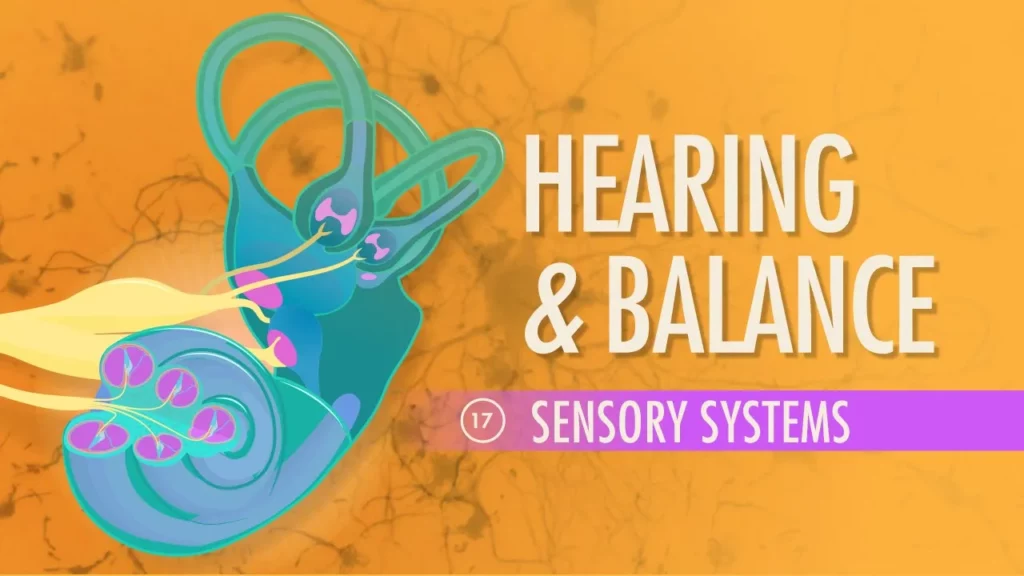
The lesson explores the science of sound and balance, explaining how sound is created by vibrations that travel through the air and are processed by our ears. It details the structure of the ear, including the external, middle, and inner ear, and describes how sound waves are transformed into electrical signals for the brain to interpret. Additionally, it highlights the role of the vestibular apparatus in maintaining balance and the potential for sensory conflict, which can lead to motion sickness.
Equilibrium Equations: Chemistry #29
The lesson on chemical equilibrium introduces Grade 11 learners to the concept of equilibrium in chemical reactions, where the rates of forward and reverse reactions are equal, resulting in constant concentrations of reactants and products. It explains how factors like concentration, temperature, and pressure can influence this balance and introduces the equilibrium constant (Keq) as a crucial tool for understanding these dynamics. Additionally, the lesson covers the use of RICE tables for calculating equilibrium concentrations, emphasizing the practical applications of this knowledge in scientific and engineering contexts.
The Creation of Chemistry – The Fundamental Laws: Chemistry #3
The lesson outlines the historical development of chemistry, highlighting key figures such as Antoine Lavoisier, who established foundational concepts like the Law of Conservation of Mass and shifted the field from alchemy to modern chemistry. It also discusses the contributions of Joseph Proust, John Dalton, and Amadeo Avogadro, who further advanced the understanding of chemical compounds and atomic theory. Together, these scientists laid the groundwork for contemporary chemistry, transforming our comprehension of matter and its interactions.