
In the Mood For Love: Film Criticism #5

The lesson explores the tragic love story depicted in Wong Kar-Wai’s film *In the Mood for Love*, highlighting its unique narrative style and emotional depth. Set in 1960s Hong Kong, the film follows the complex relationship between Mr. Chow and Mrs. Chan as they navigate their spouses’ infidelities through imaginative role-plays, ultimately leading to a heartbreaking separation. Through its rich cinematography and thematic connections to the sociopolitical climate of the time, the film serves as a poignant reflection on love, longing, and the interplay between personal and collective experiences.
What Is Organic Chemistry?: Organic Chemistry #1
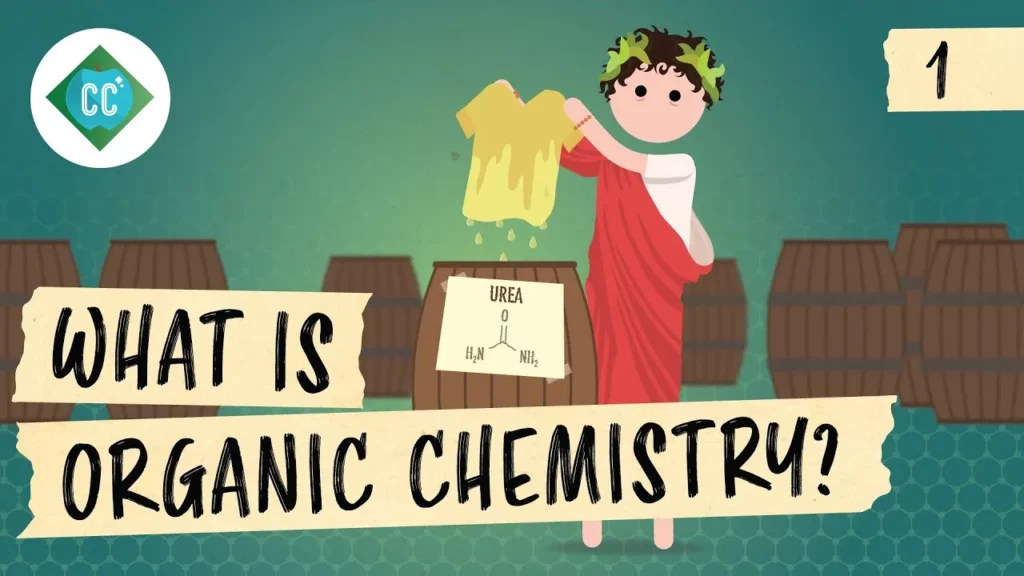
This lesson introduces organic chemistry, focusing on the significance of carbon and its ability to form diverse compounds due to its four valence electrons. It traces the evolution of the field from ancient medicinal practices to modern breakthroughs, such as Friedrich Wöhler’s synthesis of urea, which expanded the definition of organic compounds. The lesson also covers the importance of understanding molecular structures, functional groups, and the everyday applications of organic chemistry in our lives.
Freedom of Religion: Government and Politics #24
This lesson explores the Supreme Court’s jurisprudence on freedom of religion, focusing on the First Amendment’s Establishment and Free Exercise Clauses. Key cases, such as *Church of Lukumi Babalu Aye v. Hialeah* and *Lemon v. Kurtzman*, illustrate the complexities of balancing religious practices with government regulations, particularly through the Lemon test, which assesses the constitutionality of laws affecting religion. Despite established guidelines, ongoing challenges, such as school prayer, highlight the evolving nature of religious freedom in American constitutional law.
Personality Disorders: Psychology #34
This lesson provides an overview of personality disorders, highlighting their complex nature and the challenges associated with diagnosis and treatment. It explains the classification of these disorders into three clusters according to the DSM-5, and discusses specific examples such as Borderline Personality Disorder (BPD) and Antisocial Personality Disorder (ASPD). The lesson emphasizes the importance of understanding the characteristics of these disorders and the need for compassionate treatment approaches, particularly in light of their impact on individuals’ lives and relationships.
Divine Command Theory: Philosophy #33
The lesson explores Divine Command Theory, which posits that morality is determined by God’s commands, often derived from religious texts like the Bible. However, it raises complex questions about the nature of moral obligations and the inconsistency in following certain commandments, leading to the Euthyphro Problem posed by Plato. This dilemma challenges the theory by questioning whether actions are right because God commands them or if God commands them because they are inherently right, ultimately highlighting the limitations of Divine Command Theory in addressing moral complexities.
Controlling Bureaucracies: Government and Politics #17
The lesson on “Understanding Bureaucracies in American Government” explores the often negative perception of bureaucracies and outlines the mechanisms through which they can be controlled. It highlights two primary methods of control: limiting bureaucratic discretion through before-the-fact and after-the-fact measures, and reducing the size and number of bureaucracies via termination, deregulation, devolution, and privatization. Ultimately, the lesson emphasizes the essential role bureaucracies play in public administration and the need for a balanced approach to managing their power and effectiveness.
Presidential Powers 2: Government and Politics #12
This lesson explores the various powers of the President of the United States, distinguishing between expressed, inherent, and informal powers. While the Constitution outlines specific formal powers, such as being the Commander in Chief, the President also exercises significant informal powers, particularly in foreign policy and legislative influence, which allow for substantial unilateral action. Understanding these complexities is essential for comprehending the President’s role and influence within the American political system.
Before I Got My Eye Put Out – The Poetry of Emily Dickinson: English Literature #8
The lesson explores the life and poetry of Emily Dickinson, highlighting her unique style, reclusive nature, and the complex themes present in her work. Known for her paradoxical approach to subjects like faith and existence, Dickinson’s poetry often intertwines sight with self-awareness, reflecting her struggles and insights during a time when women’s voices were marginalized. Through an analysis of her famous poem “I Heard a Fly Buzz – When I Died,” the lesson emphasizes her innovative use of structure and symbolism, inviting readers to engage with the profound themes of life, death, and identity that permeate her writing.
The Ideal Gas Law: Chemistry #12
This lesson explores the behavior of gases, focusing on the Ideal Gas Law and its historical development through the contributions of scientists like Robert Boyle, Jacques Charles, and Amedeo Avogadro. It highlights how gases can be described mathematically, the significance of their properties such as pressure, volume, and temperature, and illustrates the Ideal Gas Law in action through a practical example. Ultimately, the lesson emphasizes the collaborative nature of scientific discovery and the foundational principles that guide our understanding of gases.
The Nucleus: Chemistry #1
This lesson introduces the fundamental concepts of chemistry, emphasizing that everything is composed of atoms, which are the building blocks of matter. It explains the structure of atoms, detailing the roles of protons, neutrons, and electrons, and highlights the significance of atomic number and isotopes in defining elements and their properties. By grasping these basics, we can better appreciate the relevance of chemistry in our daily lives and the natural world.