
The Solar System Presented by Science Time
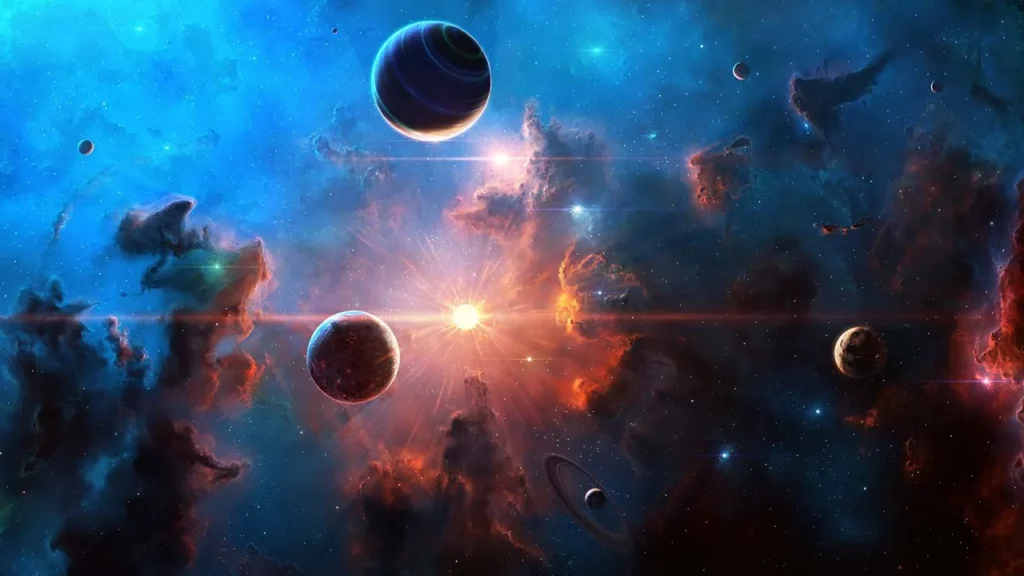
In this lesson, we embark on an exciting exploration of the solar system, beginning with the birth of the sun and the formation of planets from a solar nebula approximately 4.5 billion years ago. We learn about each planet, from Mercury’s extreme temperatures to the icy realms of Pluto and the mysterious Oort Cloud, while highlighting the unique characteristics and potential for exploration of celestial bodies like Mars and Jupiter. This journey emphasizes the importance of astronomy in understanding our universe and the fascinating dynamics that govern it.
Neil deGrasse Tyson Explains The Weirdness of Quantum Physics
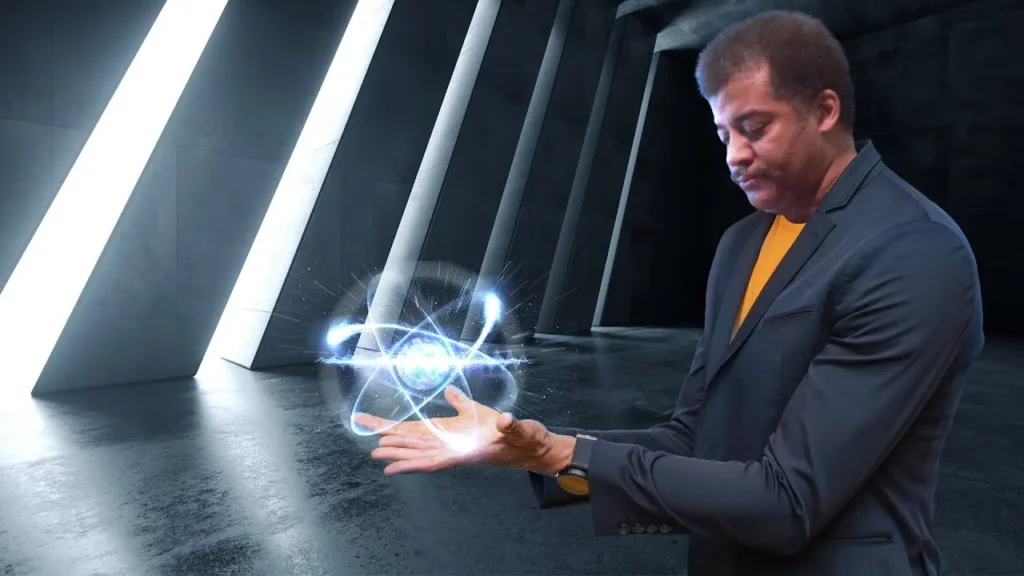
In this lesson, Neil deGrasse Tyson discusses the intriguing and often counterintuitive principles of quantum mechanics, which examines the behavior of particles at microscopic scales. Key concepts such as the uncertainty principle highlight the limitations of measuring a particle’s position and momentum simultaneously, while the practical applications of quantum mechanics are evident in technologies like lasers, GPS, and telecommunications. The lesson also touches on the role of quantum phenomena in nature and the study of exotic states of matter, emphasizing the ongoing exploration of this captivating field.
The Mysteries of String Theory With Brian Greene
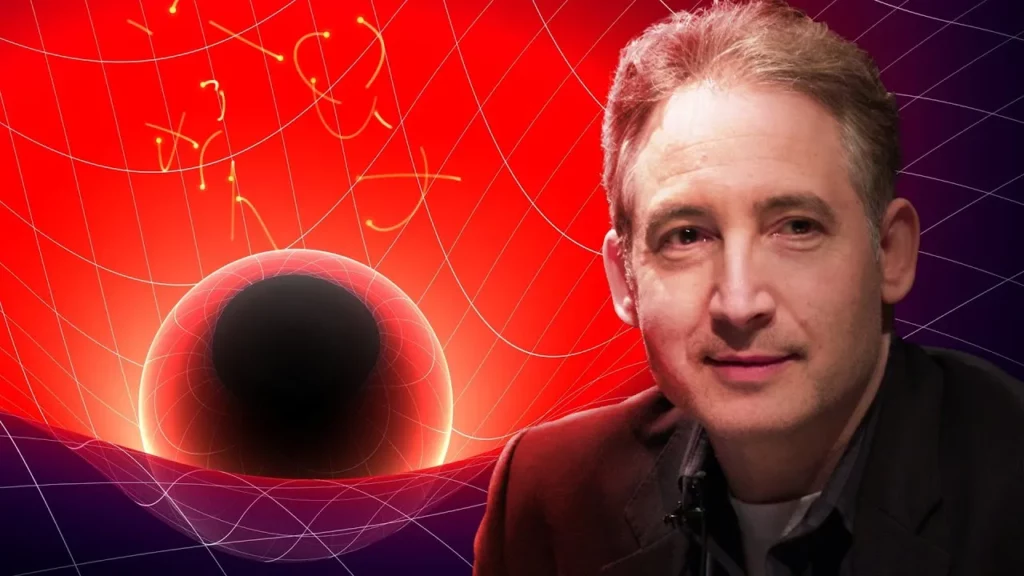
In this lesson, Brian Greene explores the revolutionary concept of string theory, which posits that the fundamental building blocks of the universe are not point-like particles but tiny, vibrating strings. This theory aims to unify gravity and particle physics, addressing profound questions in physics while introducing concepts like supersymmetry and dualities. Despite its potential, string theory faces challenges and criticisms regarding its complexity and the lack of empirical evidence, leaving its status as a comprehensive theory of everything uncertain.
Neil deGrasse Tyson: What Drives Scientific Progress?
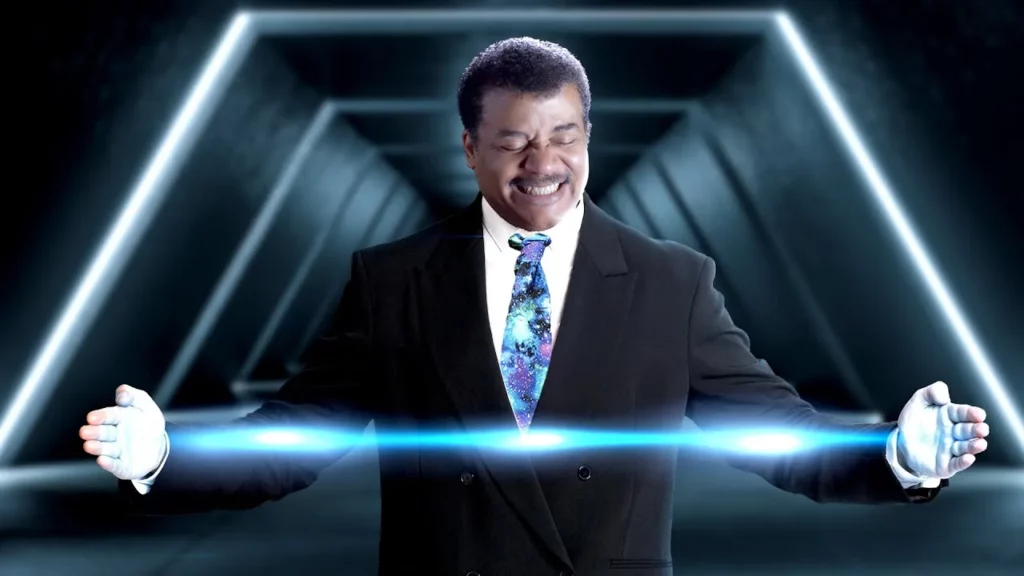
In Neil deGrasse Tyson’s lesson on what drives scientific progress, he identifies three primary motivators for large-scale projects: survival instinct, economic gain, and the desire for honor. He emphasizes that while historical endeavors often stemmed from these factors, the pursuit of knowledge and innovation remains a constant force in human advancement. Ultimately, Tyson highlights the unpredictable nature of scientific discovery, which can lead to groundbreaking applications that were not initially foreseen.
The Kardashev Scale With Michio Kaku: Can We Become a Type 1 Civilization?
The lesson discusses the Kardashev Scale, introduced by Nikolai Kardashev, which categorizes civilizations based on their energy consumption capabilities. A Type I civilization can harness all the energy from its planet’s star, while Type II and III civilizations would utilize energy on a larger scale, from multiple stars or even galaxies. Currently, humanity is classified as a Type 0 civilization, primarily dependent on fossil fuels, but advancements in renewable energy and technology may lead us toward achieving Type I status within the next century.
Faster Than Light Speed Travel With Neil deGrasse Tyson
In this lesson, Neil deGrasse Tyson explores the concept of faster-than-light (FTL) travel, highlighting the vast distances in space and the limitations of current technology. He discusses theories such as warp drives and wormholes, which offer potential solutions for interstellar travel, but emphasizes that these ideas remain largely theoretical and face significant scientific challenges. Ultimately, while FTL travel captivates the imagination, it remains an unfulfilled dream as researchers continue to investigate the possibilities.
The Hidden Reality of Quantum Physics With Sean Carroll
The lesson on quantum physics, presented by Sean Carroll, explores the fundamental principles of quantum mechanics, which describes the behavior of matter at atomic and subatomic levels. It highlights the success of quantum mechanics in making precise predictions, the distinction between quantum and classical physics, and key concepts such as wave-particle duality and uncertainty. Additionally, the lesson addresses the philosophical implications of quantum phenomena, including entanglement and the challenges of interpretation, emphasizing the ongoing quest for deeper understanding in this complex field.
The 4 Dimensional Space Time With Brian Greene
In this lesson, Brian Greene explores the intertwined concepts of space and time, emphasizing their evolution from Newton’s classical mechanics to Einstein’s revolutionary theories of relativity. He explains how space-time is a four-dimensional construct where gravity distorts the fabric of space and time, leading to phenomena like gravitational time dilation, which has practical implications for technologies such as GPS. The lesson also highlights the ongoing challenges in reconciling quantum physics with our understanding of gravity, particularly in extreme environments like black holes.
The End of The Universe – The Big Freeze, Empty Space & Supernovae With Lawrence Krauss
In this lesson, Lawrence Krauss explores the evolution and ultimate fate of the universe, beginning with the Big Bang and the subsequent expansion of space. He discusses the implications of Einstein’s theory of relativity, the concept of the Big Freeze as the universe cools and expands indefinitely, and the mysterious role of dark energy. Additionally, Krauss highlights the life cycles of stars and our intrinsic connection to the cosmos, emphasizing that the atoms in our bodies originated from stellar processes.
Neil deGrasse Tyson: What is Dark Matter? What is Dark Energy?
In this lesson, Neil deGrasse Tyson explores the concepts of dark matter and dark energy, which together make up the majority of the universe’s composition, with regular matter accounting for only about 4.6%. Dark matter, an invisible substance inferred from its gravitational effects, plays a crucial role in the structure of galaxies, while dark energy, which constitutes approximately 68% of the universe, is responsible for the accelerating expansion of the cosmos. Ongoing research and upcoming missions, such as NASA’s Roman Space Telescope, aim to deepen our understanding of these enigmatic components and their implications for the universe.