
The Evolution of The Universe Explained by Brian Cox
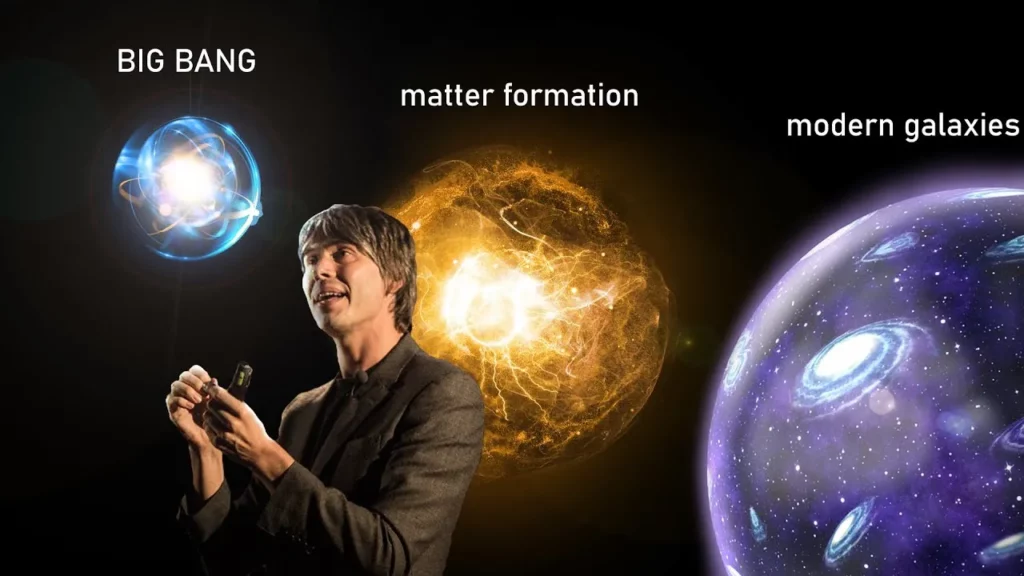
In this lesson, Brian Cox explains the evolution of the universe, beginning with the Big Bang approximately 13.75 billion years ago and detailing key events such as the formation of the Higgs field, the “dark ages” of the universe, and the birth of the first stars. He highlights the composition of the universe, including dark matter and dark energy, and discusses theories like inflation that describe the early universe’s rapid expansion. The lesson emphasizes ongoing astronomical research aimed at uncovering the mysteries of the cosmos and our understanding of its history and structure.
A Universe From Nothing? The Ultimate Free Lunch
The lesson explores the profound questions surrounding the origins of the universe, particularly the intriguing idea of how something can arise from nothing. Renowned physicist Lawrence Krauss challenges traditional notions of “nothing,” revealing it to be a complex and dynamic state filled with potential, while Stephen Hawking’s Big Bang theory suggests that the universe and time began simultaneously, complicating our understanding of existence. Ultimately, the lesson emphasizes the importance of recognizing the limits of our knowledge and the ongoing scientific inquiry into the nature of nothingness and the universe’s origins.
What If Aliens Make Contact? – Neil deGrasse Tyson on Intelligent Alien Life
In this lesson, Neil deGrasse Tyson explores the implications of discovering intelligent alien life and the challenges humanity might face in such a scenario. He discusses the vast intelligence gap between species, the Fermi Paradox, and the potential reasons for the absence of contact with extraterrestrial civilizations, including the Great Filter hypothesis, which suggests that intelligent life may be rare due to significant evolutionary challenges. Ultimately, Tyson emphasizes the need for humility in our search for alien life, acknowledging that we may be far less significant in the cosmos than we believe.
The Multiverse Hypothesis Explained by Brian Cox
The lesson on the multiverse hypothesis, as explained by Brian Cox, introduces the idea that our universe may be just one of many within a vast cosmic landscape, challenging traditional views of the Big Bang. It explores concepts such as inflation, the many worlds interpretation of quantum mechanics, and the potential existence of additional dimensions and primordial black holes, while also addressing the ongoing debate about the empirical evidence for the multiverse. Ultimately, the lesson encourages further exploration of cosmology and quantum mechanics to understand these complex theories.
Did We Receive a Signal From Aliens? Brian Greene on Space Travel & ET
The lesson explores the intriguing question of whether advanced civilizations self-destruct before achieving interstellar communication, a concept tied to the Fermi Paradox. It discusses the ongoing search for extraterrestrial life through initiatives like SETI, highlighting significant signals such as the “Wow! signal” and BLC1, while also considering the challenges of distinguishing between natural cosmic phenomena and potential alien communications. Ultimately, it emphasizes humanity’s innate curiosity and the importance of exploration in our quest to understand the universe, suggesting that our efforts may one day lead to the discovery of new worlds.
How Did Life Begin? Neil deGrasse Tyson on Life on Earth & Beyond
The lesson explores the intriguing question of how life began on Earth and the potential for life beyond our planet. It discusses the leading hypothesis that life originated from self-replicating RNA molecules in a harsh early environment, as well as the possibility of life being seeded on Earth through panspermia. The search for extraterrestrial life continues, with scientists investigating various celestial bodies and utilizing advanced technology to uncover the origins of life and the conditions necessary for its existence elsewhere in the universe.
Dark Stars, Dark Energy & Gravitons Explained by Brian Greene
In this lesson, Brian Greene explains the concepts of dark matter, dark energy, and gravitons, highlighting that ordinary matter constitutes only about five percent of the universe, while dark matter and dark energy make up the remaining 95 percent. Dark matter is theorized to hold galaxies together through its gravitational influence, while dark energy is responsible for the accelerated expansion of the universe. The lesson also introduces the graviton, a hypothetical particle that could mediate gravitational interactions, suggesting a potential link between quantum mechanics and general relativity.
Leonard Susskind Marrying Quantum Physics & General Relativity
In this lesson, Leonard Susskind explores the intricate relationship between quantum mechanics and general relativity, highlighting how these two foundational theories of physics may be interconnected rather than incompatible. He discusses groundbreaking concepts such as the holographic principle, which suggests that information about objects is encoded on the boundaries of space, and how recent research links quantum entanglement with gravitational phenomena, potentially paving the way for a unified theory of quantum gravity. Susskind’s work emphasizes the profound implications of these theories for our understanding of the universe and the nature of reality.
Brian Cox – Alien Life as we Don’t Know it
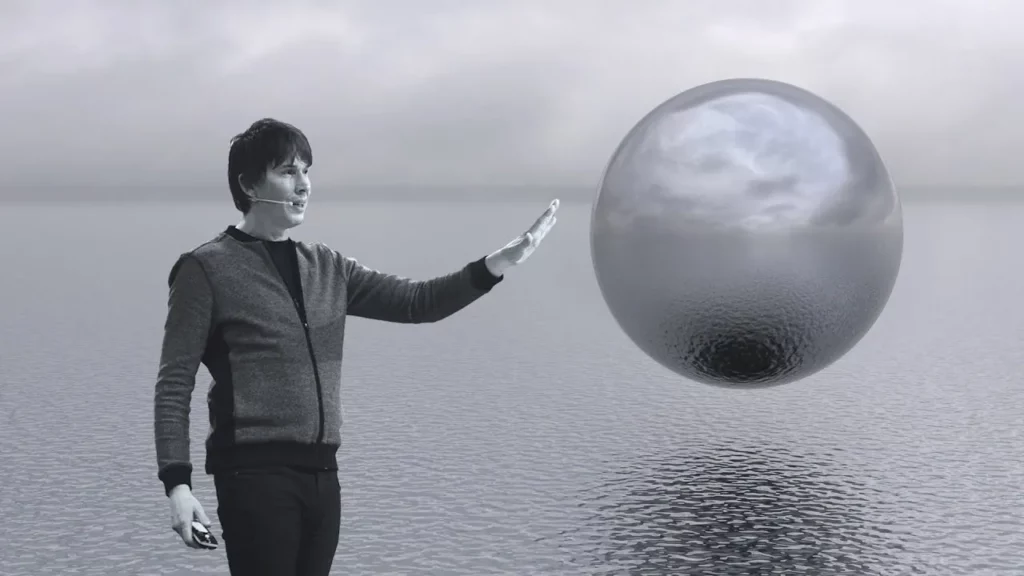
In the lesson “Brian Cox – Alien Life as We Don’t Know It,” the potential for discovering extraterrestrial life is explored, highlighting the significance of exoplanets and the concept of “Goldilocks zones” where conditions may be just right for life. The discussion includes the historical possibility of life on Mars and the exciting prospects of exploring moons like Titan and Europa for current life forms. Ultimately, while the existence of complex life beyond Earth remains uncertain, the search continues to answer the profound question of whether we are alone in the universe.
VR + AR + Internet=?
The lesson explores the concept of the metaverse, a transformative digital environment that merges virtual reality (VR), augmented reality (AR), and the internet, allowing users to interact in immersive ways. It highlights the metaverse as an interconnected network of digital spaces, offering diverse applications across various industries while emphasizing the importance of safety and inclusivity in this evolving landscape. Ultimately, the metaverse is poised to revolutionize human interaction, making digital experiences more engaging and meaningful.