
Brian Cox – What’s The Biggest Mystery in The Universe?
In the lesson “What’s The Biggest Mystery in The Universe?” Brian Cox explores the vastness and complexity of the universe, highlighting key phenomena such as supernovae and the ongoing mysteries of antimatter and dark matter. While we have made significant strides in understanding the universe’s composition—comprising about 5% ordinary matter, 25% dark matter, and 70% dark energy—many questions remain unanswered, particularly regarding the imbalance of matter and antimatter and the elusive nature of dark matter. The lesson encourages continued curiosity and exploration of the cosmos.
How Did The Universe Come Into Existence? Brian Greene on The Multiverse & The Fine Tuning Argument
The lesson explores the intriguing question of why our universe appears finely tuned for life, examining the interplay of fundamental forces and the implications of the fine-tuning argument. Brian Greene introduces the concept of the multiverse as a potential explanation, suggesting that if countless universes exist with varying physical properties, it is not surprising that at least one would support life. The discussion also touches on the anthropic principle, the possibility of a higher power, and the challenges of gathering evidence for the existence of multiple universes.
How Did Everything Begin? The Science of Space & Time Explained by Max Tegmark
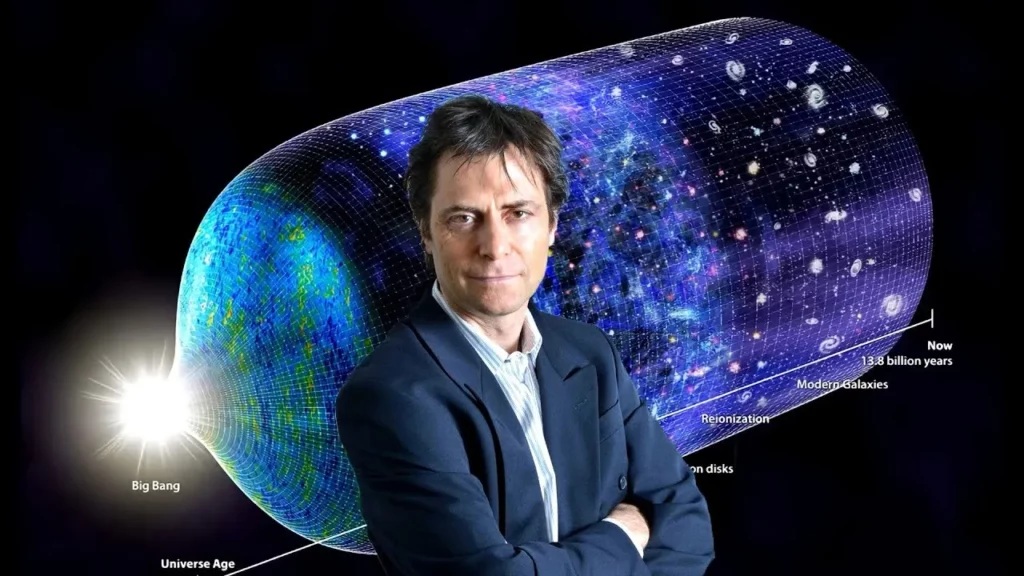
In this lesson, Max Tegmark delves into the origins and vastness of the universe, exploring key concepts such as the inflation theory, the nature of space and time, and the redshift phenomenon that indicates the universe’s expansion. He explains how the universe evolved from a dense state 13.8 billion years ago, shaped by fundamental forces, and highlights the significance of Hubble’s discoveries in transforming our understanding of galaxies. The lesson concludes with an overview of the inflationary paradigm, which offers insights into the universe’s rapid expansion leading to the Big Bang.
Neil deGrasse Tyson – The Dominion of Space by 2045
In his lesson, Neil deGrasse Tyson emphasizes the historical and geopolitical motivations behind space exploration, highlighting how competition, particularly during the Cold War, has driven significant advancements in technology and innovation. He discusses the resurgence of interest in lunar exploration, particularly through NASA’s Artemis mission and the growing ambitions of countries like China, suggesting that this new space race could lead to economic growth and a deeper understanding of humanity’s place in the universe. Ultimately, Tyson advocates for the benefits of space exploration, not only for scientific discovery but also for fostering collaboration and addressing global challenges.
Brian Cox – Traversable Wormholes as Time Machines
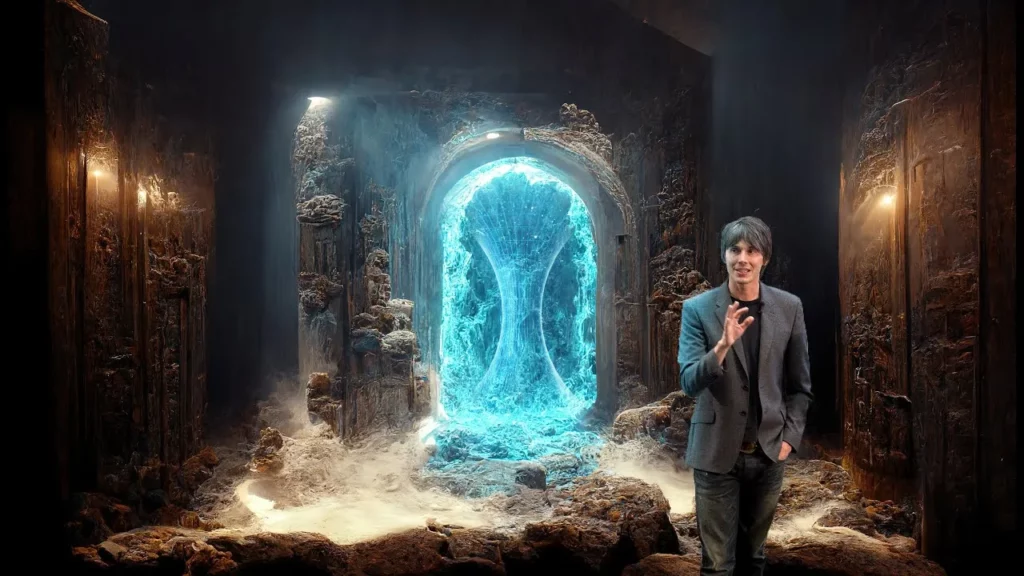
In this lesson, Brian Cox explores the intriguing concept of time travel, highlighting the scientific principles that make future travel feasible through relativity, while emphasizing the challenges of traveling to the past due to the constraints of Einstein’s theories and the potential issues of causality. The discussion includes the theoretical possibility of traversable wormholes as time machines, the implications of the arrow of time, and the current limitations in our understanding of quantum gravity, suggesting that while time travel captivates our imagination, it remains a complex and unresolved topic in physics.
Should We Fear AI? Brian Cox & Stuart Russell on The Rise of The Machines
The lesson discusses the dual nature of artificial intelligence (AI), highlighting both its potential benefits and risks. While AI can enhance our lives and solve complex problems, experts like Brian Cox and Stuart Russell emphasize the importance of understanding and regulating its development to prevent misuse and manipulation. Ultimately, the future of AI depends on our choices regarding its implementation and oversight.
Are You Stuck in a Simulation?

The lesson explores the intriguing concept of whether our reality might be a computer simulation, sparked by recent discoveries in physics that challenge the idea of “local realism.” Philosopher Nick Bostrom’s simulation hypothesis suggests that if advanced civilizations can create simulated universes, it is statistically probable that we are living in one. The lesson also addresses criticisms of this hypothesis, including the fine-tuning problem and alternative theories like the multiverse, prompting deeper reflection on the nature of existence and reality.
Brian Greene on The Mysterious Stuff Called Dark Matter
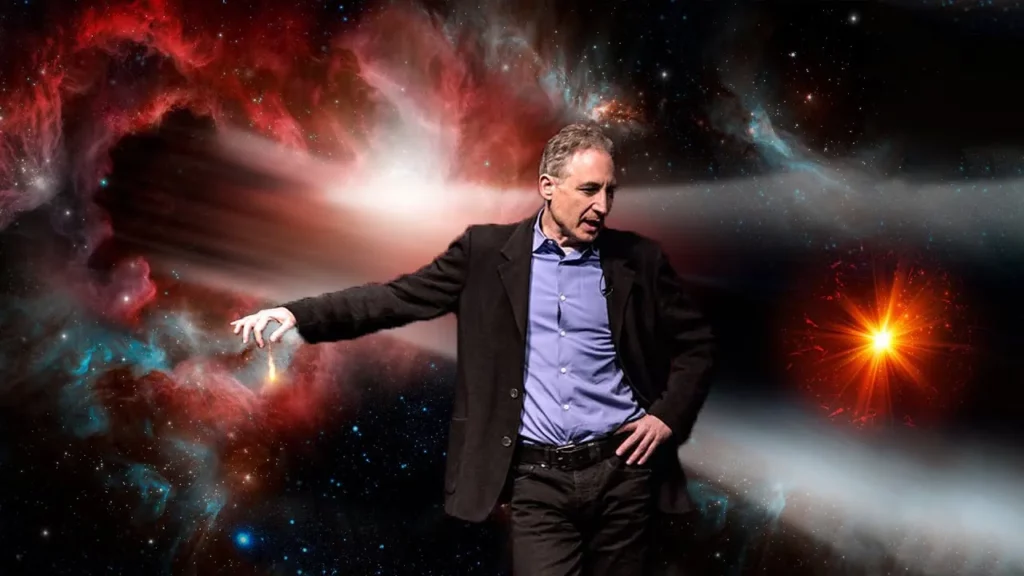
In this lesson, Brian Greene discusses the enigmatic concept of dark matter, a substance believed to constitute a significant portion of the universe’s mass despite being invisible and undetectable through traditional means. The existence of dark matter is inferred from its gravitational effects on visible matter, leading to theories about its nature and abundance, which could be four to five times greater than ordinary matter. As scientists continue to investigate dark matter and its implications for our understanding of the universe, they face challenges that may require a reevaluation of fundamental concepts in cosmology and gravity.
The Aliens Are Here? Neil deGrasse Tyson on UFO’s & Alien Life
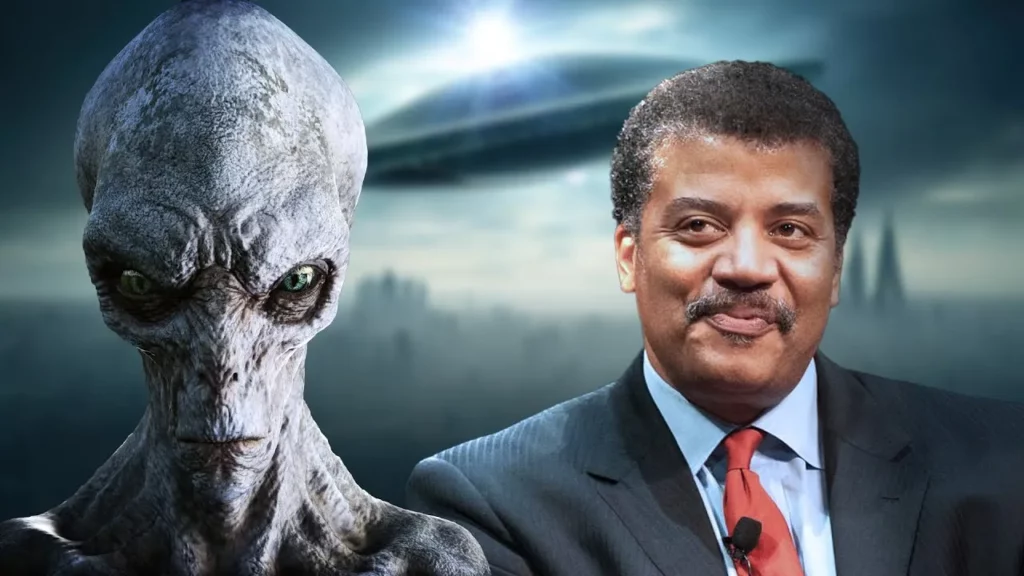
In the lesson, Neil deGrasse Tyson explores the intriguing question of extraterrestrial life and UFOs, emphasizing the importance of scientific skepticism and the need for solid evidence before jumping to conclusions about alien visitors. He discusses notable incidents like the 2004 USS Nimitz encounter, highlighting the uncertainty surrounding such sightings and questioning the absence of clear evidence despite technological advancements. Ultimately, Tyson encourages an open-minded yet critical approach to the search for extraterrestrial life, reminding us that while the universe is vast, our beliefs should be grounded in verifiable facts.
Brian Cox – Is The Big Bang Theory Wrong?
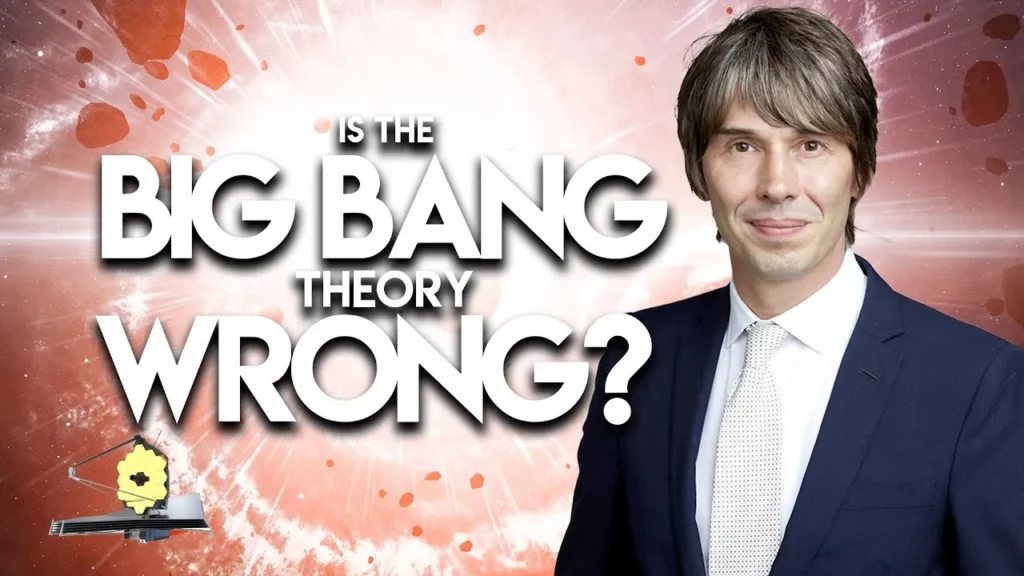
In this lesson, Brian Cox discusses the implications of recent findings from the James Webb Telescope, which have sparked debate about the validity of the Big Bang Theory. While some claims suggest a challenge to this foundational theory of the universe’s origins, Cox emphasizes that the Big Bang Theory remains robust, supported by extensive evidence such as cosmic microwave background radiation and the telescope’s observations of early galaxies, reinforcing our understanding of cosmic evolution. The lesson highlights the ongoing quest for knowledge in astronomy, acknowledging both the successes and the challenges faced in unraveling the universe’s mysteries.