
Antimatter Could Cross The Galaxy Without Being Destroyed
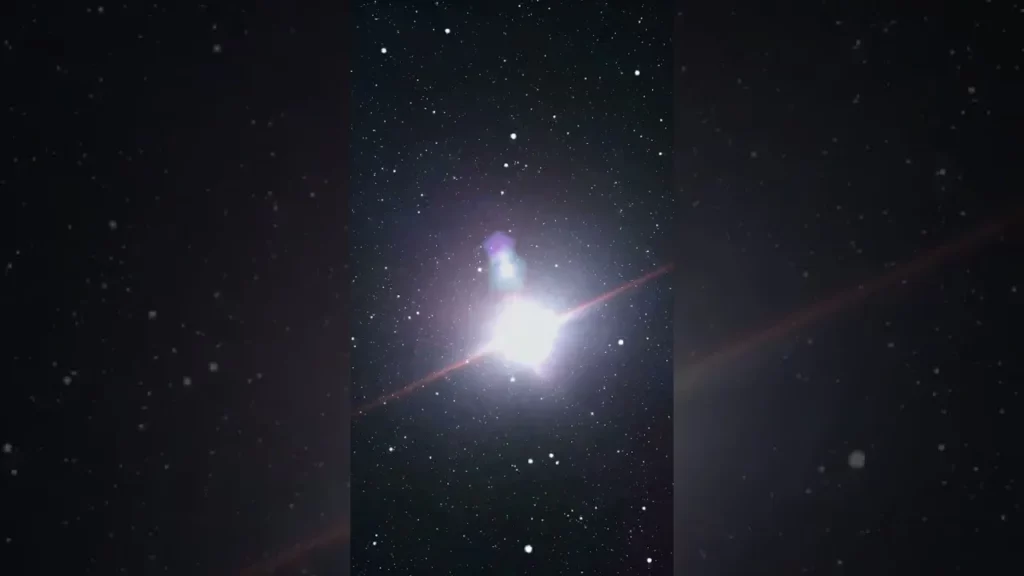
The lesson discusses recent findings from the Large Hadron Collider (LHC) regarding antimatter, particularly anti-helium particles, which may travel across the galaxy without annihilating upon contact with regular matter. This research addresses the matter-antimatter asymmetry problem, exploring why the universe is predominantly composed of matter despite expectations of equal creation during the Big Bang. The insights gained from studying antimatter could lead to significant advancements in our understanding of fundamental physics and cosmology.
Brian Cox – Solving The Fermi Paradox: Intelligent Alien Life in Our Galaxy

The lesson explores the Fermi Paradox, which questions why, despite the vast number of potentially habitable planets in our galaxy, we have yet to encounter intelligent alien life. It discusses the evolution of our understanding of the universe, the search for Earth-like planets, and the challenges of detecting life beyond our solar system. Various theories are presented to explain the paradox, including the rarity of complex life, the possibility of self-destructive civilizations, and the unique evolutionary path of life on Earth, suggesting that our planet may hold a special significance in the cosmos.
LIGO May Detect Alien Warp Drives Using Gravitational Waves
The lesson discusses the potential of the Laser Interferometer Gravitational-Wave Observatory (LIGO) to detect gravitational waves generated by advanced alien spacecraft utilizing warp drives. Gravitational waves, which are ripples in space-time caused by massive objects, could provide a groundbreaking method for searching for extraterrestrial life by revealing the presence of these hypothetical civilizations. As technology evolves, LIGO exemplifies how innovative scientific tools can enhance our understanding of the universe and the possibilities of life beyond Earth.
JWST Finds The Most Distant Galaxy Ever
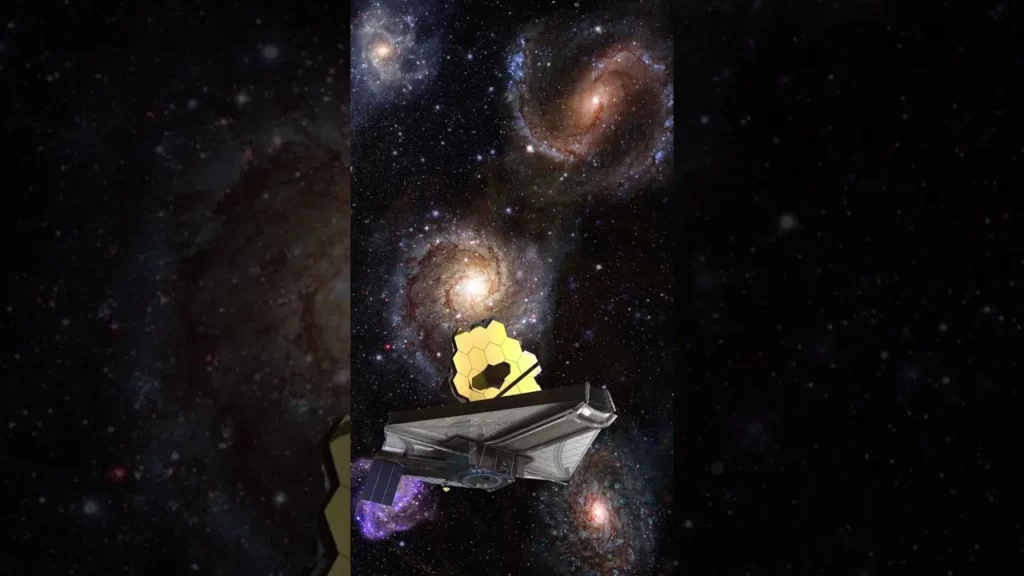
The James Webb Space Telescope (JWST) has achieved a remarkable milestone by identifying the most distant galaxy confirmed to date, which formed approximately 350 million years after the Big Bang. This discovery is crucial as it suggests that star formation occurred earlier than previously believed, enhancing our understanding of the universe’s origins and evolution. As the JWST continues its exploration, it promises to unveil further insights into the early cosmos and inspire future astronomical research.
Strange Exoplanet Has Ocean 500 Times Deeper Than Earth’s
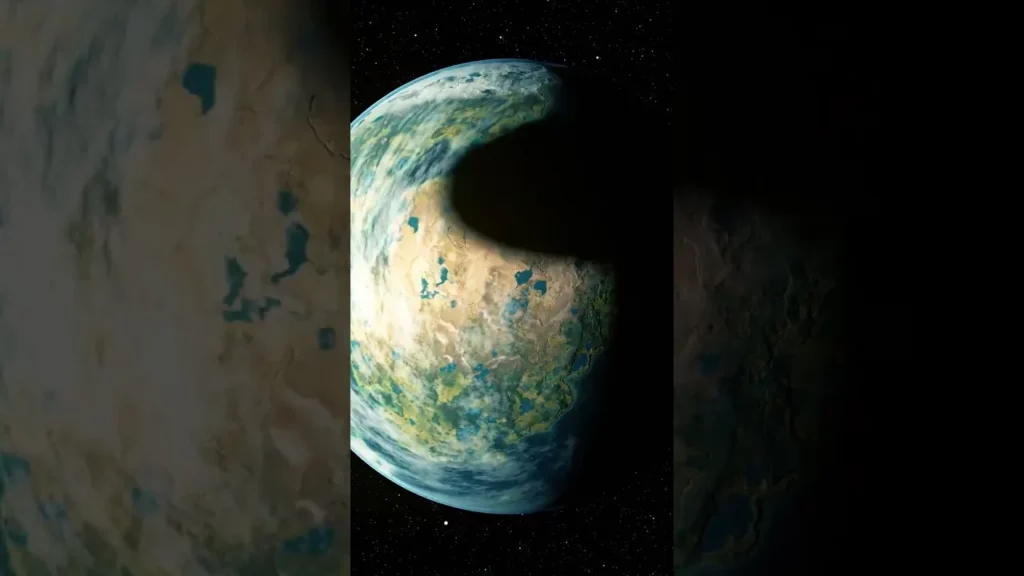
Researchers from the University of Montreal have discovered two exoplanets, including Kepler-138d, located about 218 light-years away in the constellation Lyra, which are classified as “water worlds.” These planets possess water layers that make up over 50% of their volume, with Kepler-138d’s ocean estimated to be 1,243 miles deep—approximately 500 times deeper than Earth’s oceans. This finding challenges existing theories of planetary formation and composition, while also raising intriguing questions about the potential for life in such unique environments.
Brian Greene Explains The Bizarre Nature of Black Holes
In this lesson, Brian Greene explains that black holes are not just massive, dense objects formed from collapsing stars; rather, any object can become a black hole if it is compressed sufficiently, challenging our traditional notions of density and size. He emphasizes the intriguing nature of black holes, which push the boundaries of our understanding of physics and the universe, inviting further exploration into their effects on space and time, as well as their role in galaxy evolution.
The Universe Less Than a BILLIONTH of a Second After The Big Bang
The lesson explores the universe’s conditions less than a billionth of a second after the Big Bang, focusing on the role of the Large Hadron Collider (LHC) in simulating these early high-energy environments. It highlights the process of nucleosynthesis, which led to the formation of the first atomic nuclei and the elemental composition of the universe, allowing scientists to refine their understanding of fundamental physics. Overall, this research not only sheds light on the universe’s origins but also enhances our comprehension of its current state and future evolution.
Journey to The Edge of The Universe
The lesson “Journey to The Edge of The Universe” explores humanity’s quest for understanding the cosmos, beginning with the historic moon landing and the profound perspective it provided on Earth as a small part of a vast universe. It delves into the formation of our solar system, the challenges of space travel limited by the speed of light, and the expanding universe as revealed by advanced telescopes like the James Webb Space Telescope. Ultimately, the lesson emphasizes the ongoing journey of exploration and discovery that may one day enable us to traverse the galaxy and deepen our connection to the universe.
Can a Wormhole Stay Open to Send a Signal Back?
The lesson explores the theoretical concept of wormholes, which are envisioned as shortcuts through space-time connecting distant points in the universe. It highlights the fragility of wormholes, noting that they are likely to collapse if any matter enters them, but suggests that a signal could potentially be sent through a wormhole before it collapses. While the practical use of wormholes for travel or communication remains speculative, their study encourages ongoing exploration and challenges our understanding of the universe.
What’s The Connection Between Black Holes & Quantum Computing?
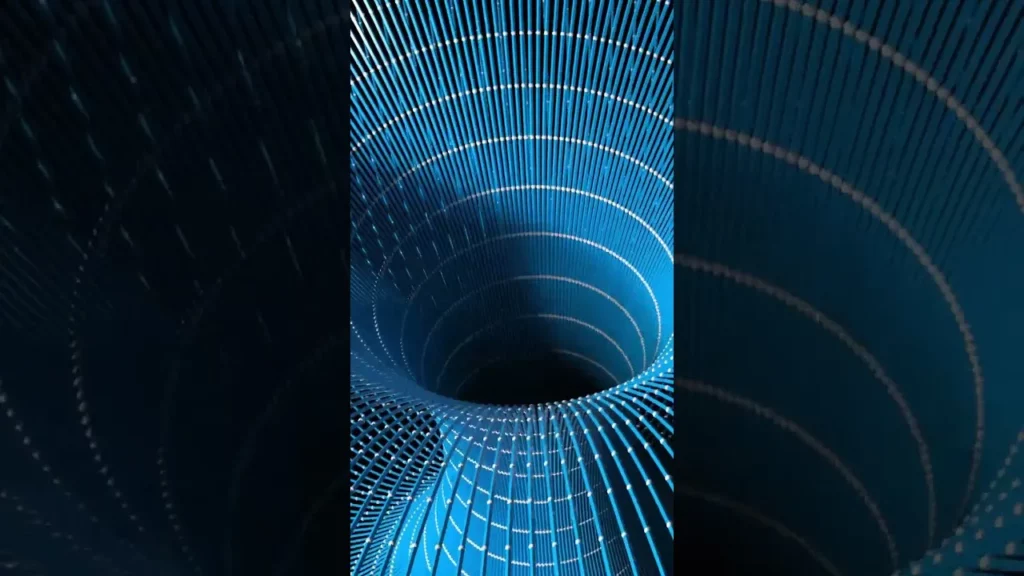
The lesson explores the intriguing connection between black holes and quantum computing, highlighting how recent research has revealed that black holes can be understood through a holographic description that emphasizes quantum mechanics rather than gravity. This perspective not only parallels quantum error correction techniques used in quantum computing but also opens new avenues for research, potentially leading to advancements in both fields and a deeper understanding of the universe.