
New Study on Hawking’s Paradox
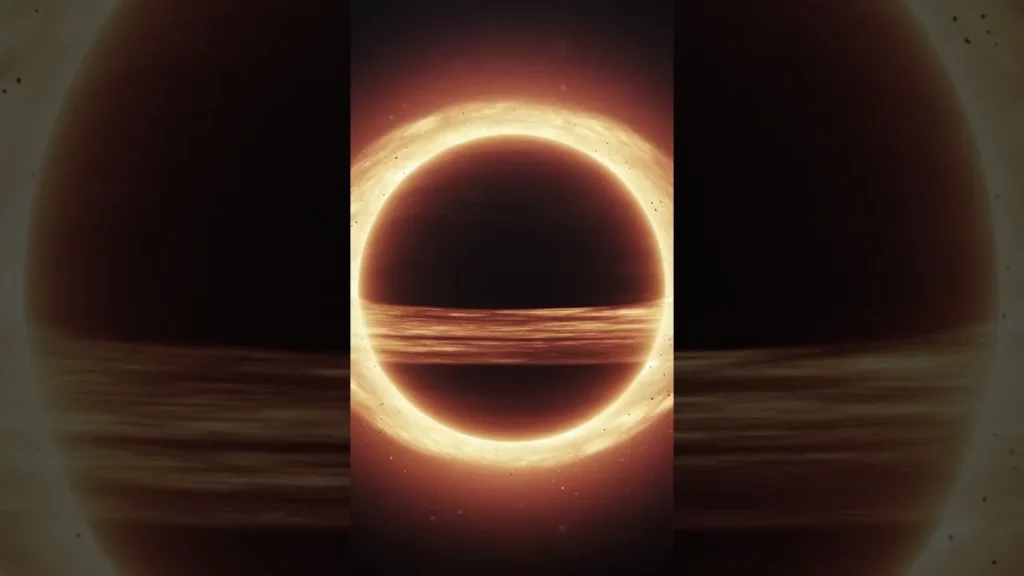
Recent research suggests a potential resolution to Stephen Hawking’s information paradox, proposing that black holes may preserve information about their progenitor stars through a phenomenon known as “quantum hair” embedded in the surrounding radiation. By reevaluating Hawking’s calculations with quantum gravity effects, scientists indicate that this radiation could reveal the origins of black holes, challenging the notion that they obliterate all information. Although measuring this “quantum hair” remains a significant challenge, the findings could have profound implications for theoretical physics and our understanding of the universe.
Humans to Mars in 45 Days?
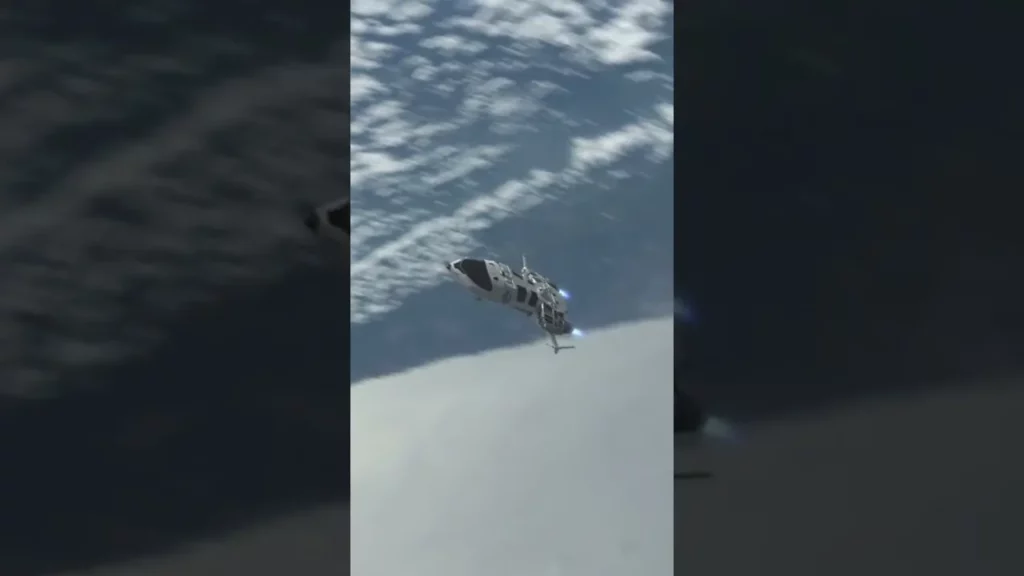
NASA and DARPA are collaborating on a groundbreaking nuclear-powered rocket engine that could reduce travel time to Mars from seven months to just 45 days, with plans to have it operational by 2027. This innovative engine utilizes nuclear fission for propulsion, making it three times more efficient than traditional chemical rockets, which could revolutionize space exploration and open up new possibilities for missions to Mars and beyond. The development of this technology represents a significant advancement in our ability to explore the solar system and could lead to future colonization efforts.
Brian Cox – How The Moon Formed
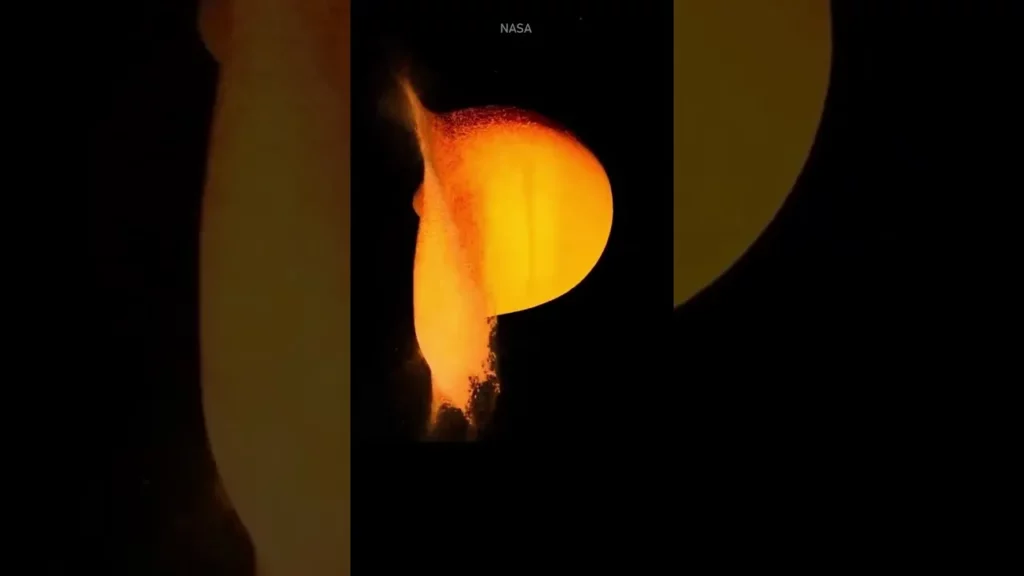
In this lesson, Brian Cox explains the Giant Impact Theory, which posits that the Moon was formed about 4.5 billion years ago when a Mars-sized planet collided with the young Earth, creating a ring of debris that eventually coalesced into the Moon. This celestial body serves as a time capsule, providing insights into the early history of Earth and the solar system. Additionally, the lesson highlights that the Moon is gradually moving away from Earth, emphasizing its ongoing journey through space.
Europa’s Ocean Affects Its Rotation

NASA scientists have discovered a vast ocean of salty water beneath the icy surface of Europa, one of Jupiter’s moons, which may influence its rotation. The ocean currents interact with the floating ice shell, potentially causing it to rotate at different speeds and contributing to the unique geological features observed on Europa’s surface. To further investigate these dynamics, NASA is planning the Europa Clipper Mission, set to launch in 2024, to gather more information about the moon’s rotation and its ocean’s impact.
From GPT-4 To AGI – Elon Musk Calls For Pause on AI Development
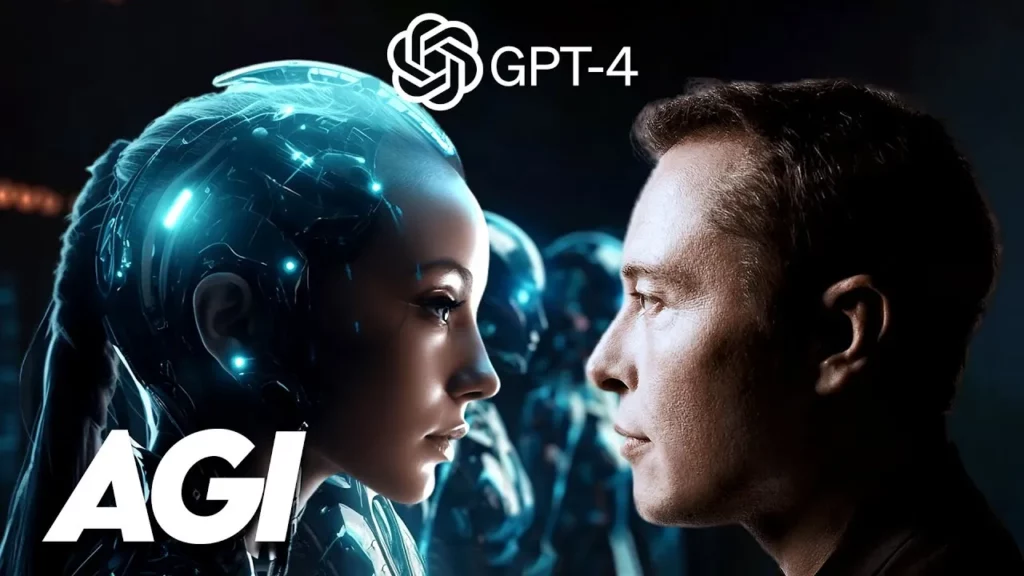
The lesson discusses the rapid advancements in artificial intelligence, particularly through the GPT series, and the growing concerns surrounding the potential development of artificial general intelligence (AGI) and artificial superintelligence (ASI). Prominent figures like Elon Musk advocate for a pause in AI development to assess the associated risks, emphasizing the need for effective regulation and ethical considerations to ensure that AGI aligns with human values and does not pose existential threats. The lesson highlights the importance of balancing the potential benefits of AGI with its risks, calling for collaborative efforts to safely harness its power for humanity’s advancement.
Have We Been Visited By Aliens?
The lesson explores the vastness of the universe, which is approximately 14 billion years old, and the potential for life beyond Earth, including simple microorganisms and intelligent beings. While many people associate UFOs with alien visits, the scientific community requires strong evidence to support such claims, which has not yet been met. Ultimately, the search for extraterrestrial life remains an ongoing and intriguing endeavor for scientists.
Is The Universe Eternal?
The lesson explores the concept of the universe’s size and its origins, highlighting that while we can only observe a small portion of it, scientists believe it may be infinite. It discusses the Big Bang Theory, which posits that the universe began approximately 13.8 billion years ago and has been expanding ever since, while also acknowledging the ongoing mystery of what existed before the Big Bang. Ultimately, the lesson emphasizes the continuous quest for knowledge about the universe and its many enigmas.
Brian Cox Explains Black Holes
In this lesson, Brian Cox explores the nature of black holes, which form from the collapse of massive stars that exhaust their fuel. As these stars collapse, they create a region in space with gravity so intense that not even light can escape, leading to the formation of a black hole and its central singularity, a point of infinite density. Studying black holes is crucial for understanding the universe, gravity, and the life cycle of stars, making them a significant focus in astrophysics.
Stuart Russell – Is GPT-4 Intelligent?

In the lesson “Is GPT-4 Intelligent?” by Stuart Russell, the distinction between human intelligence and the capabilities of GPT-4 is explored. While GPT-4 can generate human-like text and perform tasks that mimic intelligent behavior, it fundamentally operates by recognizing patterns in data without true understanding or consciousness. Ultimately, GPT-4 is best viewed as a powerful tool rather than an independent intelligent entity, highlighting the ongoing debate about the nature of intelligence in artificial systems.
Brian Cox Explains The Big Bang & Inflation
In this lesson, Brian Cox explains the Big Bang as the pivotal event marking the universe’s inception, characterized by an incredibly hot and dense state filled with particles. He introduces the theory of Eternal Inflation, which posits that prior to the Big Bang, space-time was rapidly expanding, ultimately leading to the release of energy that heated the universe and resulted in the formation of particles. Understanding these concepts is essential for grasping the origins and evolution of the universe, as well as addressing fundamental questions about our existence.