
Alien Planets That Flip

Scientists have recently found that some exoplanets, particularly those orbiting red dwarf stars, may not be tidally locked as previously thought, but instead could rotate. This rotation could lead to more balanced temperatures across the planet, creating a more stable climate that is conducive to the possibility of life. This discovery challenges existing beliefs and opens new avenues for research into the potential habitability of these distant worlds.
Hawking’s Multiverse
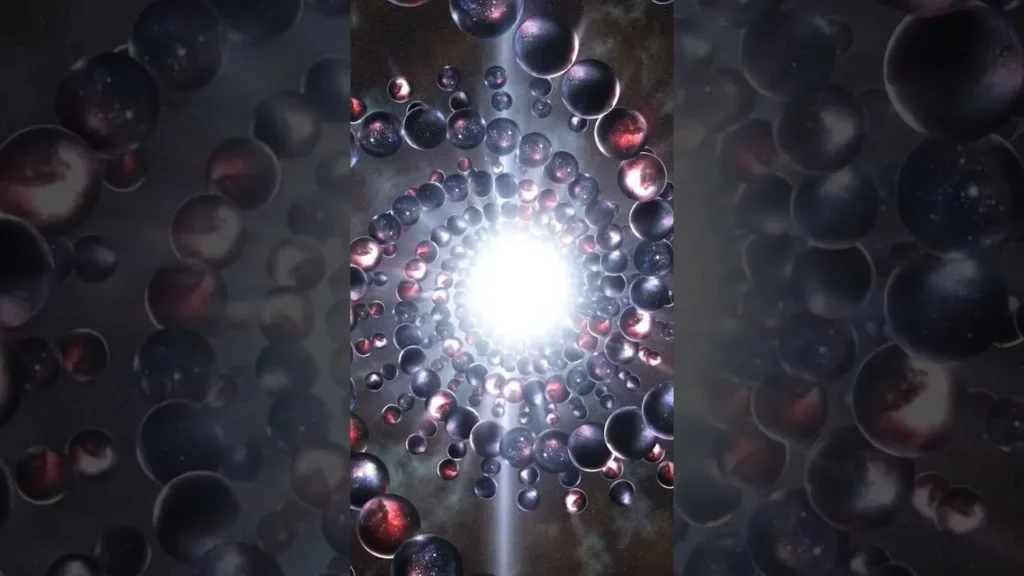
Stephen Hawking, in collaboration with Thomas Hertog, proposed a structured theory of the multiverse that builds on the concept of cosmic inflation, suggesting the existence of countless universes with unique properties. Their work aims to create a mathematical framework that limits the infinite possibilities of the multiverse, making it more comprehensible and opening avenues for scientific testing. This theory not only enhances our understanding of the cosmos but also contributes to the quest for a unified theory applicable to all universes.
New Discovery on Dark Matter
Recent discoveries by researchers from the University of Hong Kong have advanced our understanding of dark matter, suggesting that dark matter waves may influence the bending of light from distant galaxies through a phenomenon known as gravitational lensing. The study highlights axions, ultra-light particles, as a promising candidate for dark matter, offering a more accurate explanation for observed gravitational effects compared to traditional theories. This breakthrough not only challenges existing concepts but also opens new avenues for exploring the universe’s hidden components and the fundamental nature of dark matter.
Hubble Discovers Black Hole Leaving Its Galaxy?
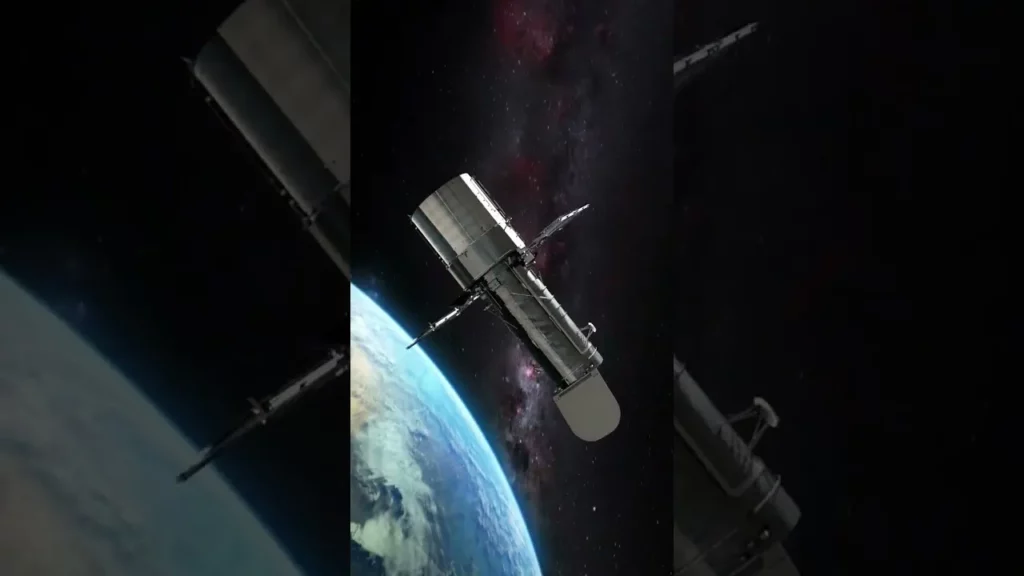
In a groundbreaking discovery, scientists using the Hubble Space Telescope have observed a supermassive black hole traveling away from its galaxy at incredible speeds while simultaneously creating new stars, leaving a trail of cosmic activity in its wake. This unprecedented finding raises important questions about the dynamics between black holes and galaxies, including how the black hole was ejected and the implications for its original galaxy. The research highlights the ever-evolving nature of the universe and the potential for further exploration of cosmic phenomena.
We’re Building The Aliens Through AI

The lesson emphasizes that as we develop artificial intelligence, we are essentially creating a new form of intelligence that diverges from traditional evolutionary processes. This responsibility entails ensuring that AI reflects human values and contributes positively to society, while also addressing the ethical challenges and potential risks associated with its advancement. Ultimately, the journey of creating AI presents both exciting opportunities and significant ethical considerations that require careful navigation.
Neil deGrasse Tyson – JWST Images Shatter Our Understanding of The Universe?
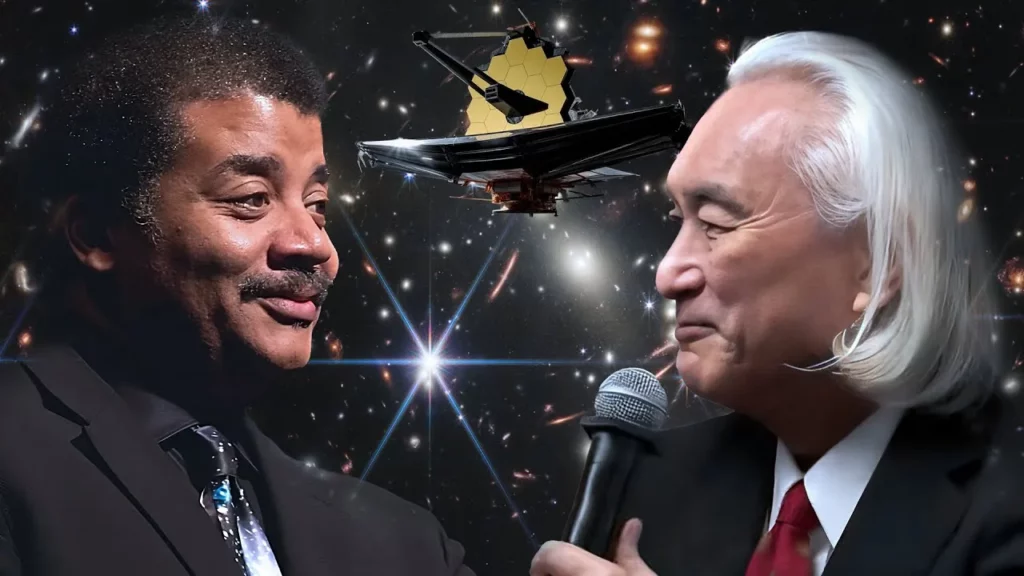
The lesson highlights the transformative impact of NASA’s James Webb Space Telescope (JWST) on our understanding of the universe, particularly through its groundbreaking discoveries of massive galaxies from the Dark Ages, which challenge existing theories of cosmic evolution. By providing detailed insights into galaxy formation, stellar birth, and the atmospheres of exoplanets, the JWST enriches our knowledge of celestial phenomena while refining our current models rather than completely overturning them. Ultimately, the JWST represents a significant leap in astronomical exploration, enhancing our comprehension of the cosmos and pushing the boundaries of scientific inquiry.
Brian Cox – How Black Holes Evaporate
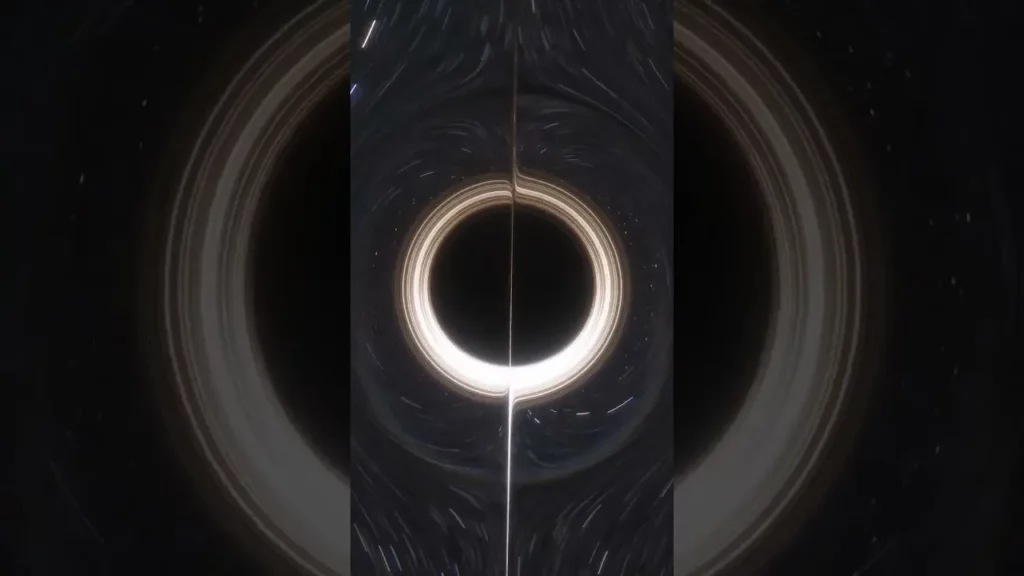
The lesson on black hole evaporation highlights Stephen Hawking’s revolutionary concept of Hawking radiation, which posits that black holes emit a faint glow and can gradually lose mass and energy over time. This phenomenon is rooted in quantum mechanics, particularly the principle of quantum entanglement, where particle interactions at the event horizon lead to the creation of particle-antiparticle pairs. Additionally, the lesson explores the fate of information that falls into black holes, suggesting that it is not lost but rather encoded within the emitted radiation, prompting ongoing debates in theoretical physics.
Amazing Images of Mars’s Moon Deimos
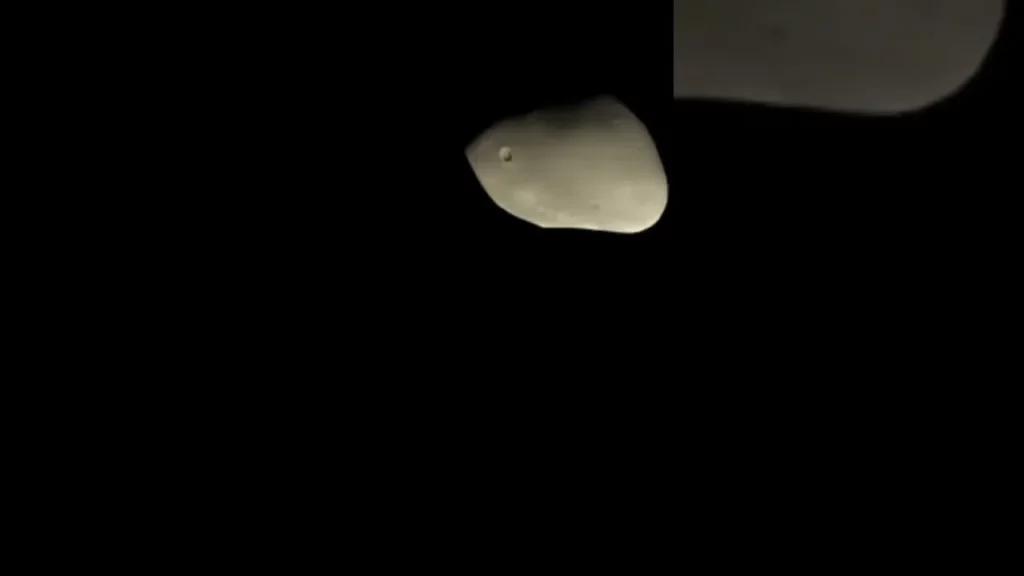
The United Arab Emirates’ Hope Orbiter has successfully flown close to Deimos, one of Mars’s moons, capturing stunning images and conducting detailed ultraviolet and infrared observations that enhance our understanding of its surface and composition. This groundbreaking data may help unravel the long-standing mysteries surrounding the origins of Mars’s moons, potentially reshaping our knowledge of the red planet and its celestial companions. The mission underscores the significance of space exploration and international collaboration in expanding our understanding of the universe and inspiring future generations.
Detailed Image of Supermassive Black Hole
The lesson discusses a groundbreaking image of the supermassive black hole in the M87 galaxy, revealing intricate details about the accretion disk and the energetic jets emitted from its core. This enhanced understanding of black holes is vital for astrophysics, as it helps researchers refine models of their behavior and their role in galaxy evolution. The advancements in imaging technology, particularly through the Event Horizon Telescope, underscore the importance of collaborative efforts in uncovering the mysteries of the universe.
Neutrinos 1 Second After The Big Bang
The lesson explores the significance of neutrinos, elusive particles that emerged just after the Big Bang and have been traveling through the universe ever since. Despite their ghostly nature and weak interactions with matter, detecting these particles, particularly cosmic neutrinos from the universe’s early moments, could revolutionize our understanding of cosmology and the fundamental processes that shaped the universe. By studying neutrinos, scientists aim to uncover secrets about the origins and evolution of the cosmos.