
The Universe is Humming With Gravitational Waves
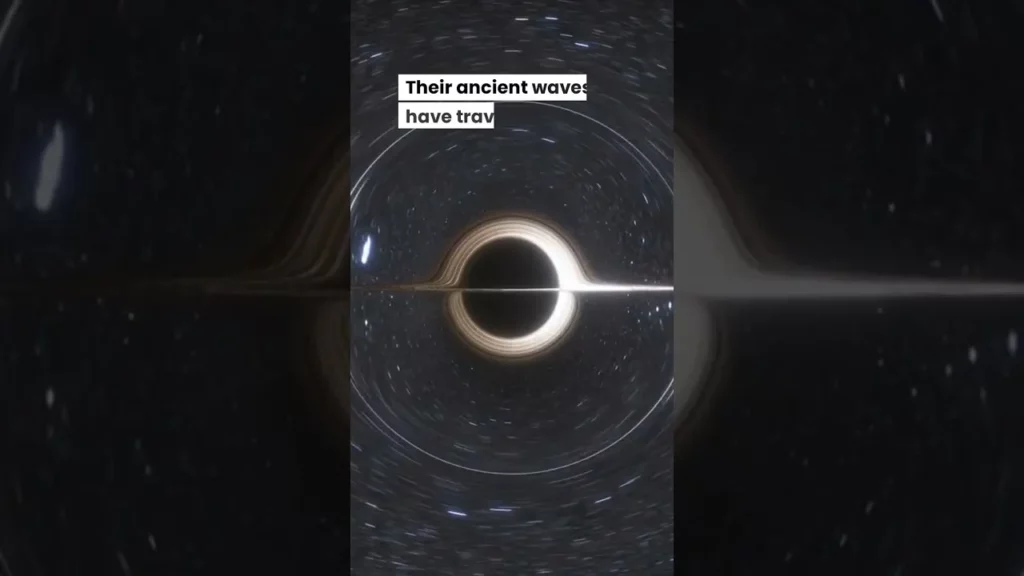
The lesson highlights the recent discovery of low-frequency gravitational waves by the North American Nanohertz Observatory for Gravitational Waves (NANOGrav), which provide insights into the early universe and the formation of galaxies. These waves, generated by the gravitational interactions of supermassive black holes, serve as a cosmic symphony that carries information from the universe’s infancy, potentially revealing secrets about its origins and evolution. As technology advances, the study of these waves promises to deepen our understanding of fundamental physics and the cosmos.
Brian Cox Explains Relativity in 36 Seconds

Einstein’s Theory of Relativity fundamentally reshapes our understanding of motion, asserting that if an object is not accelerating, it moves at a constant speed in a straight line, making it impossible to detect this motion through experiments. This principle highlights that motion is relative and depends on one’s point of view, leading to profound implications for time and space, such as time dilation and the bending of light around massive objects. By grasping these concepts, we enhance our appreciation of the universe and the laws that govern it.
Distortions in Space Time Could Test Einstein’s Theory of Relativity
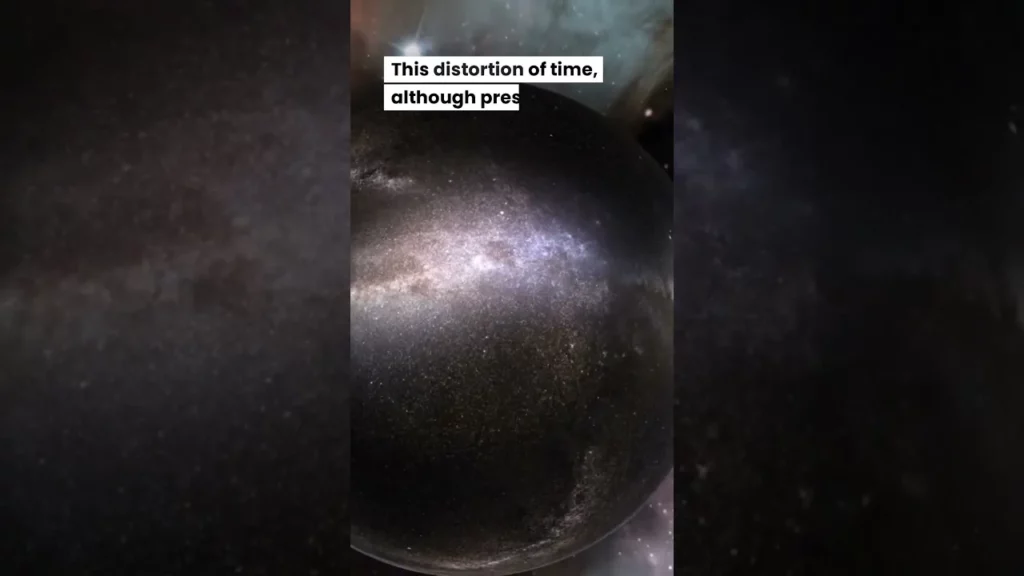
The lesson discusses a groundbreaking study that explores Einstein’s theory of general relativity by examining distortions in time and space, particularly through the measurement of redshift associated with gravitational wells. Utilizing data from the European Space Agency’s Euclid telescope, researchers aim to test the theory’s ability to explain dark matter and dark energy, potentially leading to new insights or theories about the universe’s fundamental workings. This innovative approach promises to deepen our understanding of cosmic phenomena and the validity of general relativity.
Neil Tyson: How a Black Hole Eats Earth
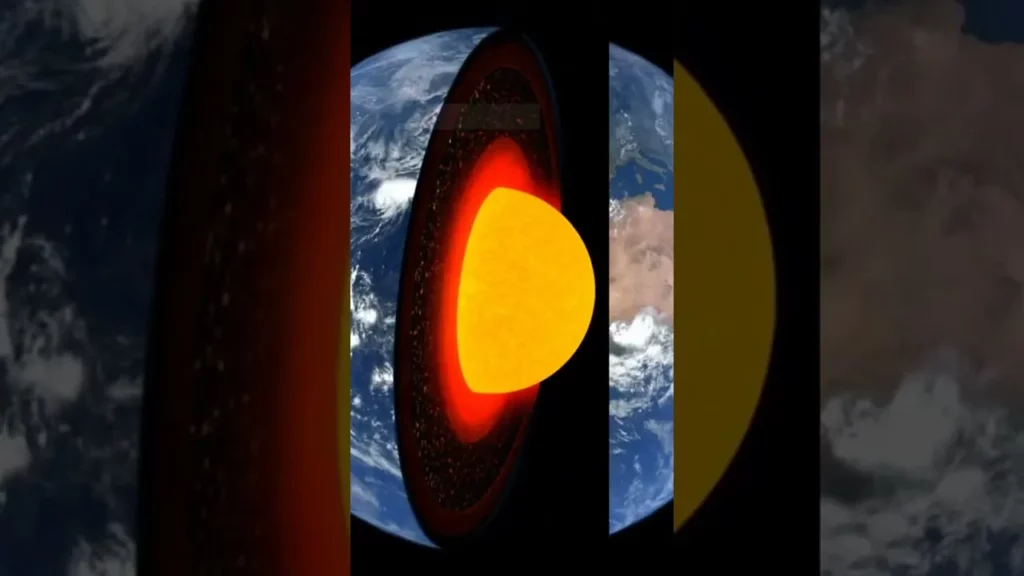
In this lesson, Neil Tyson explores the dramatic consequences of Earth encountering a black hole, emphasizing the powerful tidal forces that would stretch the planet and potentially lead to its destruction through a process known as “spaghettification.” He explains that black holes, formed from collapsing massive stars, possess gravity so strong that not even light can escape, making them intriguing subjects for scientific study. Ultimately, the lesson highlights the awe-inspiring nature of the universe and the importance of understanding these cosmic phenomena.
An Alien Planet May be “Hiding” in The Oort Cloud
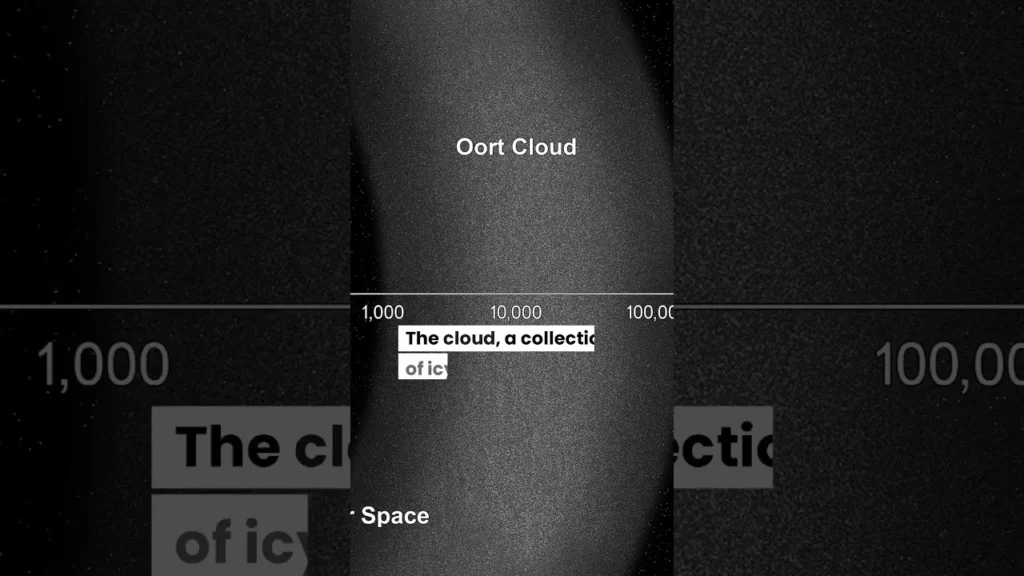
Recent research suggests that the Oort Cloud, a distant and largely unexplored region at the edge of our solar system, may be concealing a rogue exoplanet. Simulations indicate that gravitational interactions in the early solar system could have ejected planet-sized objects into this area, with a 0.5% chance of a rogue planet from our solar system and a 7% chance of a Neptune-sized planet captured from another system residing there. These findings, still pending peer review, open new avenues for understanding the dynamics of our solar system and the potential for hidden worlds in the cosmos.
Brian Cox – JWST & Euclid Will Reveal The Mysteries Behind Dark Matter & Energy?
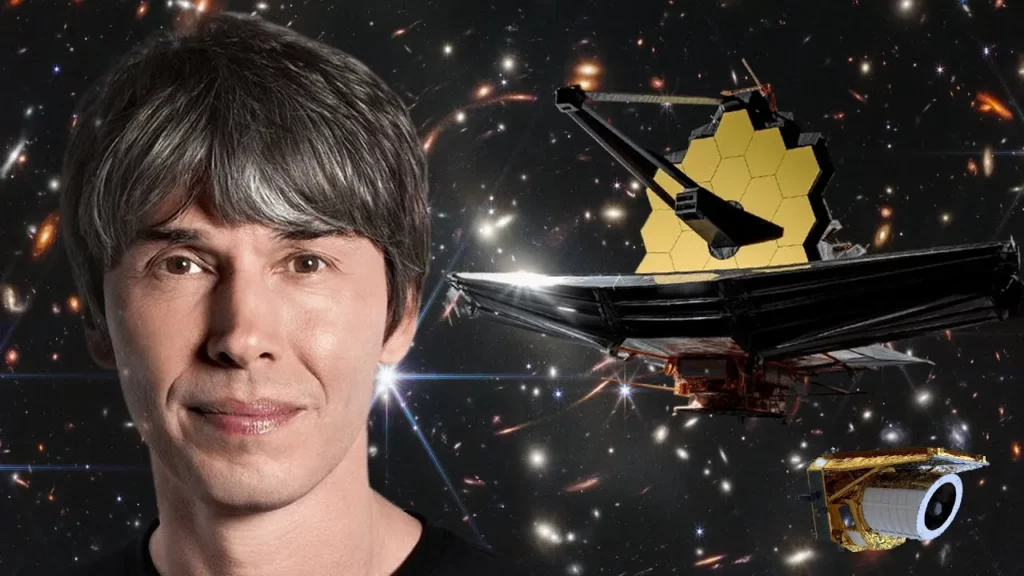
The lesson discusses the groundbreaking discoveries made by the James Webb Space Telescope (JWST) and the upcoming Euclid Space Telescope in understanding dark matter and dark energy. JWST’s ability to observe ancient galaxies challenges existing theories of galaxy formation, while both telescopes aim to explore the universe’s expansion and the elusive nature of dark matter and dark energy, potentially reshaping our understanding of the cosmos. The lesson also touches on alternative theories, such as the existence of parallel universes, highlighting the ongoing quest to unravel these profound mysteries.
Michio Kaku Explains String Theory

String theory presents a revolutionary perspective on the universe, suggesting that all particles are actually tiny, vibrating strings whose vibrations determine their properties. Originating from the quest to understand the vast array of subatomic particles, this theory likens the universe to a grand symphony, where physics and chemistry emerge as harmonies and melodies from these strings. Ultimately, string theory enriches our comprehension of the cosmos and hints at the existence of additional dimensions, offering a creative framework for exploring the fundamental forces of nature.
Brian Cox Explains Gravitational Waves

In this lesson, Brian Cox explains the concept of gravitational waves, which were predicted by Einstein and have recently been detected using advanced technology at LIGO, a network of detectors in the U.S. These waves, caused by events like black hole collisions, provide a new method for scientists to observe and understand the universe, confirming Einstein’s theories and enhancing our knowledge of cosmic phenomena. The ability to detect these subtle ripples in space marks a significant breakthrough in astrophysics.
Einstein’s Theory of Relativity, Time Dilation & Quasars
The lesson explores the observation of time dilation in quasars, which supports Einstein’s theory of general relativity and the concept of space expansion. Quasars, powered by supermassive black holes, exhibit time running five times slower than on Earth due to their high velocity, reinforcing the idea that as objects approach the speed of light, time slows relative to an observer. This discovery not only confirms fundamental principles of physics but also enhances our understanding of the universe’s evolution since the Big Bang.
The Alliance of Quantum Computers & AI
The lesson explores the transformative potential of combining Artificial Intelligence (AI) with quantum computing, highlighting how their integration can revolutionize problem-solving across various sectors. AI mimics human intelligence to automate tasks and derive insights, while quantum computers utilize qubits to process information more efficiently than traditional computers. Together, they can enhance capabilities in fields such as pharmaceuticals, cybersecurity, and advanced AI development, marking a significant shift in technological advancement and innovation.