
5 Theories about What Lies Beyond our Universe | Edge of the Observable Universe
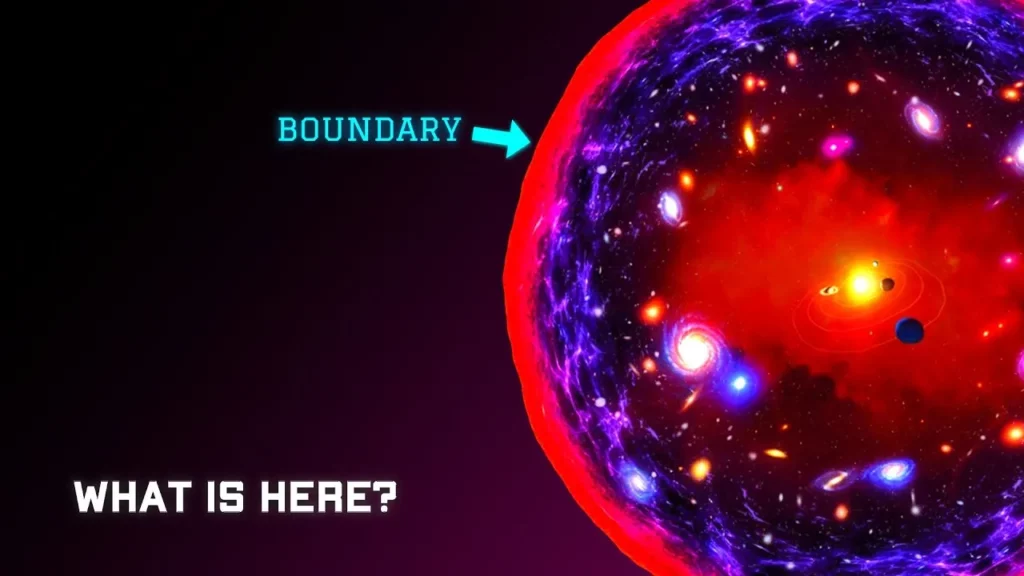
The lesson explores five intriguing theories about what may exist beyond our universe, including the concepts of infinite universes (multiverse theory), the possibility that our universe is inside a black hole, the idea of true nothingness, and the simulation hypothesis. Each theory presents unique implications for our understanding of reality and the cosmos, highlighting the limitations of our observable universe and the ongoing quest for knowledge. Ultimately, while these theories stimulate scientific inquiry and imagination, none have been proven, leaving the mysteries of the universe open for exploration.
How Earth was Formed | Earth’s Evolution
The lesson explores the formation and evolution of Earth, beginning with the Big Bang theory introduced by Georges Lemaître in the 1920s, which explains the universe’s origins and supports the idea that Earth formed about 4.5 billion years ago. It details the processes that led to the creation of stars and galaxies, the birth of our solar system, and the development of Earth’s layered structure, while also addressing current challenges like artificial global warming that threaten the planet’s future.
All Fundamental Forces and Particles Explained Simply | Elementary particles
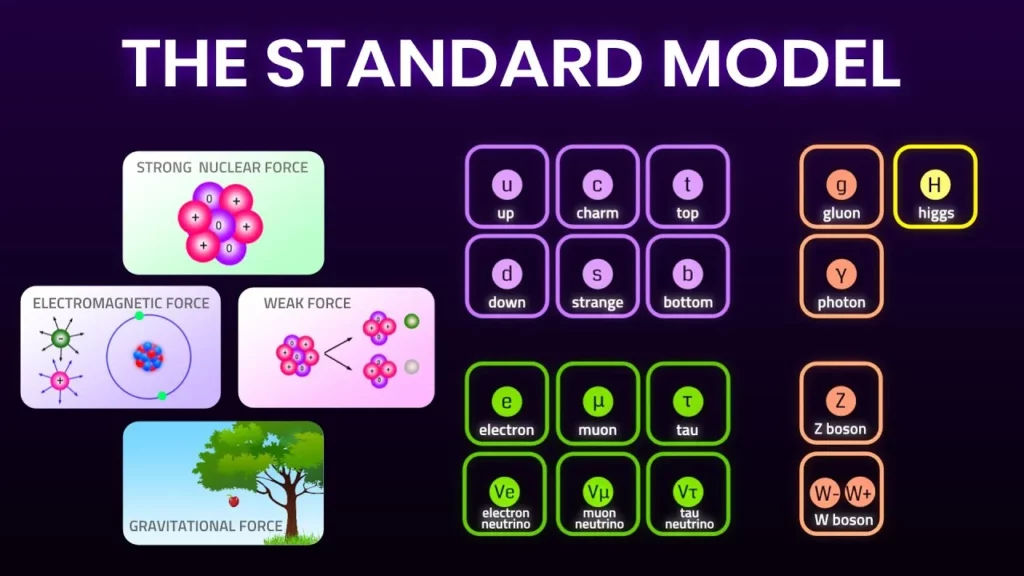
This lesson provides a comprehensive overview of the fundamental forces and particles that constitute the universe, emphasizing the intricate structure of matter from cells to atoms. It explains the components of atoms, including protons, neutrons, and electrons, and introduces the Standard Model of particle physics, which categorizes particles into fermions and bosons, detailing their properties and interactions. The lesson also highlights the roles of the strong nuclear force, electromagnetic force, weak force, and the Higgs boson, while underscoring the ongoing research aimed at unraveling the mysteries of the universe.
Easy Way to Understand Special Relativity | Lorentz Transformation | Time dilation
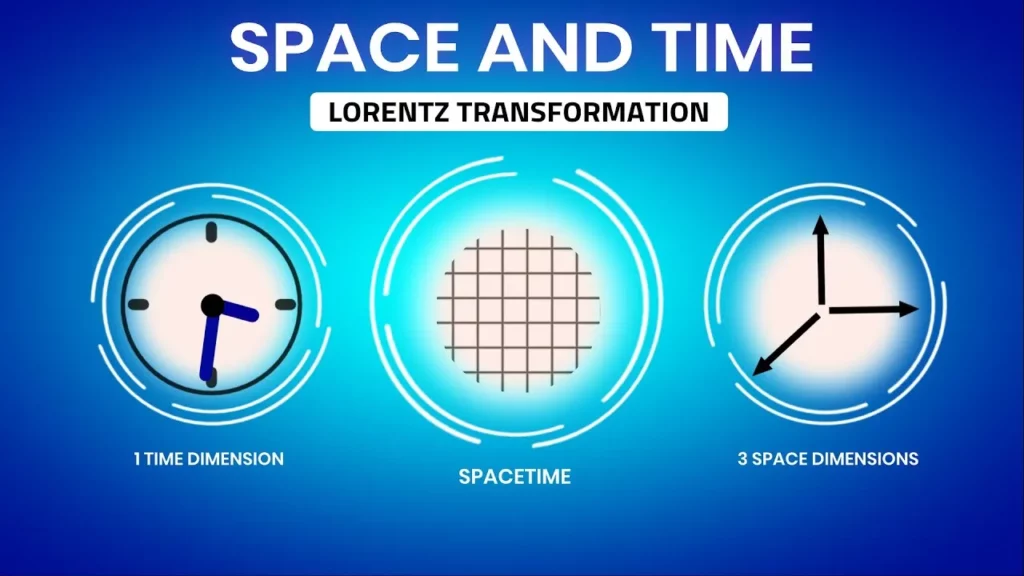
This lesson introduces the fundamental concepts of special relativity, emphasizing the interplay between space and time through the framework of spacetime. It explains how the speed of light remains constant for all observers, leading to phenomena such as time dilation, where time appears to slow down for objects moving at high speeds compared to stationary observers. By using visualizations like spacetime diagrams and relative motion examples, the lesson illustrates the relativity of positions and speeds, reinforcing the idea that space and time are not absolute but rather dependent on the observer’s frame of reference.
Physics for Beginners (Ep-1) | Motion | Basic Physics
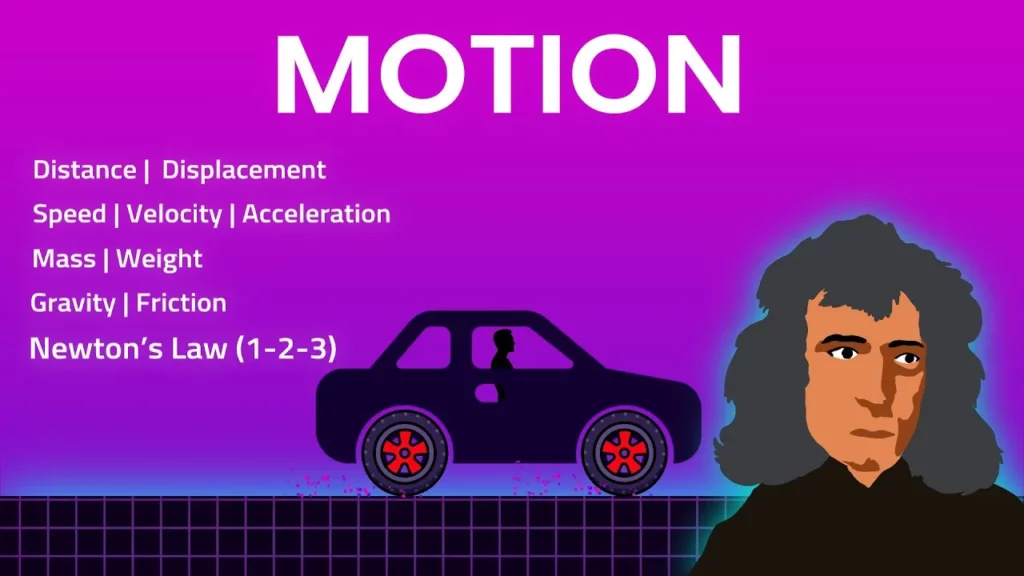
The lesson “Physics for Beginners: Understanding Motion” introduces fundamental concepts of physics, focusing on how motion is governed by specific laws. Key topics include displacement versus distance, the distinction between speed and velocity, and the principles of acceleration and Newton’s laws of motion. Additionally, the lesson covers the effects of gravity and mass, as well as the role of friction in motion, emphasizing how these concepts help us understand the forces that shape our universe.
Einstein’s Special Relativity Theory | Does Time really Slow down
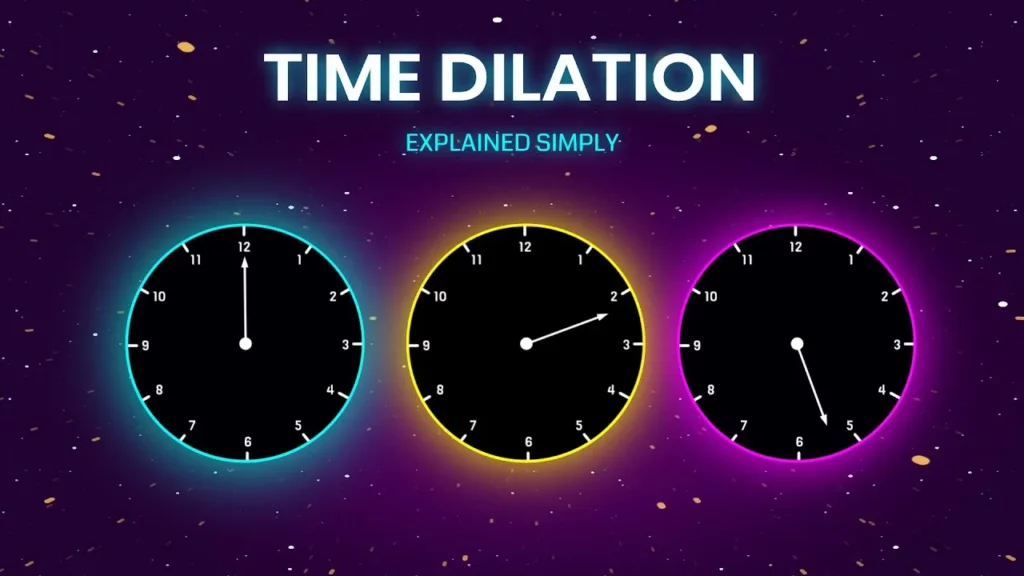
Einstein’s Special Relativity Theory challenges our conventional understanding of time, revealing that it is not a universal constant but varies based on an observer’s motion and location. The theory introduces key concepts such as the relativity of simultaneity and time dilation, demonstrating that time can appear to slow down for objects moving at high speeds compared to stationary observers. Experimental evidence, including atomic clock experiments and observations of particle decay, supports these ideas, illustrating the profound implications of relativity on our perception of time.
Stephen Hawking view on God | Science vs God
The lesson explores Stephen Hawking’s perspective on the existence of God in relation to scientific understanding, highlighting how ancient beliefs attributed natural phenomena to divine actions before scientific discoveries began to challenge these notions. It discusses the evolution of our comprehension of the universe, from Aristarchus’s heliocentric model to the implications of the Big Bang and quantum physics, suggesting that the universe may have emerged spontaneously without divine intervention. Ultimately, while science provides insights into the universe’s creation, the question of its origin and the human need for belief in God remains a profound and captivating mystery.
Simplest Explanation of E=MC² for Beginners | E=mc2 explained
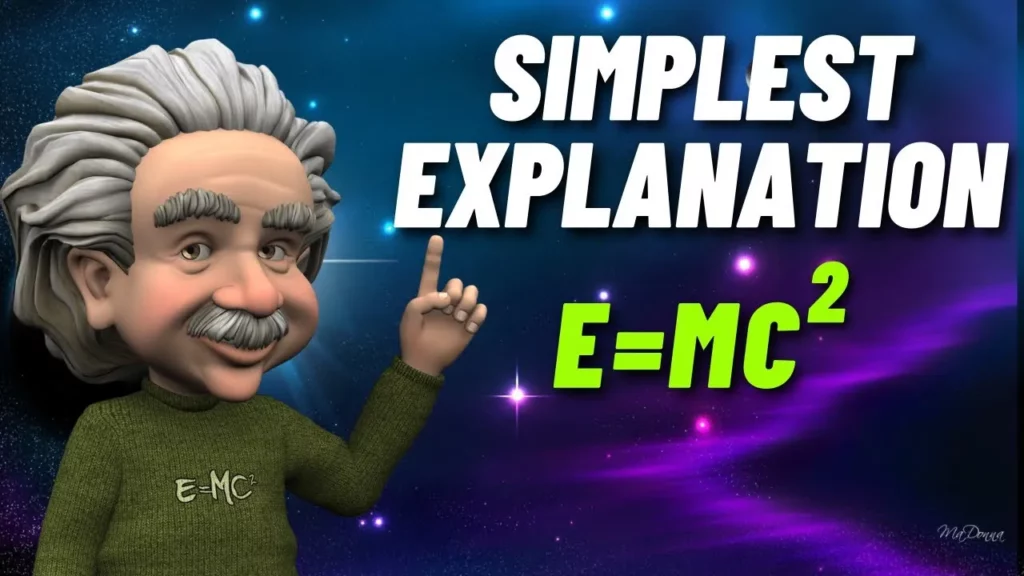
The lesson on E=mc² explains that this iconic equation, formulated by Albert Einstein, reveals the fundamental relationship between energy (E) and mass (m), indicating that they can be converted into one another. It traces the historical development of the concepts of energy and mass, highlighting contributions from scientists like Michael Faraday and Antoine Lavoisier, and emphasizes the equation’s profound implications for understanding the universe, including the processes in stars and the potential for both scientific advancement and destruction.
Base for Special Relativity theory | Why is the speed of light constant
The lesson on the constancy of the speed of light in special relativity explains that, unlike other speeds which vary based on the observer’s frame of reference, the speed of light remains constant at approximately 300,000 kilometers per second for all observers. This unique property leads to significant implications for our understanding of space and time, including phenomena such as time dilation and length contraction, which are central to Einstein’s theory of special relativity. The historical journey of measuring light’s speed highlights key discoveries that shaped our comprehension of light as an electromagnetic wave and the fundamental laws governing the universe.
If light has no mass, why is it affected by gravity? General Relativity Theory
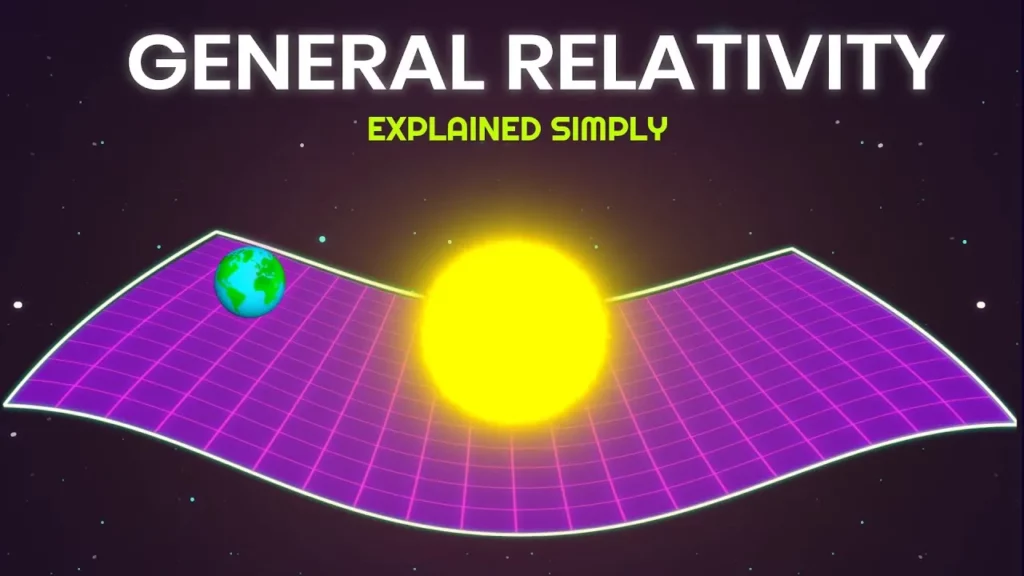
The lesson explains the relationship between light and gravity, highlighting the transition from Newton’s gravitational theory, which describes gravity as a force between masses, to Einstein’s revolutionary concept of space-time. Einstein proposed that gravity results from the curvature of space-time caused by massive objects, allowing even massless light to follow these curves, which was later confirmed through observations of starlight during a solar eclipse. This understanding reshaped our perception of gravity and established the foundation for modern physics.