
8 Explorers Who Vanished Without a Trace

The lesson explores the intriguing tales of eight explorers who mysteriously vanished without a trace, highlighting their daring adventures and the risks associated with exploration. Notable figures include Amelia Earhart, whose disappearance sparked numerous theories, and Percy Fawcett, who sought a legendary city in the Amazon. These stories serve as reminders of the enduring mysteries of exploration and the human spirit’s quest for discovery.
Misconceptions About the French Revolution
The lesson addresses common misconceptions about the French Revolution, particularly clarifying that the events depicted in Victor Hugo’s *Les Misérables* occur during the June Rebellion of 1832, not the Revolution itself. It also corrects misunderstandings surrounding significant events like the storming of the Bastille and the guillotine’s origins, as well as the misattributed phrase “Let them eat cake” to Marie Antoinette, emphasizing the importance of accurately understanding historical contexts and figures.
Misconceptions About the ’70s
The lesson explores common misconceptions about the origins and evolution of punk rock in the 1970s, emphasizing that its roots can be traced back to American influences rather than solely the UK scene. It highlights the significant contributions of bands like the New York Dolls, MC5, and The Velvet Underground, while also addressing the broader cultural shifts of the decade, including the sexual revolution and technological advancements. Additionally, the lesson touches on the rise and fall of disco, illustrating the diverse musical landscape of the era.
Misconceptions About Evolution

The lesson on misconceptions about evolution clarifies common misunderstandings surrounding the concept, particularly the phrase “survival of the fittest,” which oversimplifies natural selection by neglecting the critical role of reproduction. It emphasizes that evolution is a complex, non-linear process influenced by environmental pressures, leading to diverse adaptations and the emergence of traits through mechanisms like convergent evolution and epigenetics. Ultimately, the lesson highlights the importance of viewing evolution as a well-supported scientific theory that continues to evolve with new discoveries, enriching our understanding of life’s intricate connections.
20 Facts About The Muppets (feat. The Muppets!) – List Show (309)
In this lesson, Ellie takes viewers on a delightful exploration of the Muppets, featuring fun facts and anecdotes shared by Kermit the Frog and Miss Piggy. The lesson highlights the Muppets’ rich history, notable television appearances, and memorable moments, such as Kermit’s Oscar-nominated song “Rainbow Connection” and Miss Piggy’s self-help book. The engaging dialogue and trivia celebrate the beloved characters while inviting viewers to appreciate their enduring legacy in entertainment.
The Surprising Stories of Sesame Street Scatterbrained
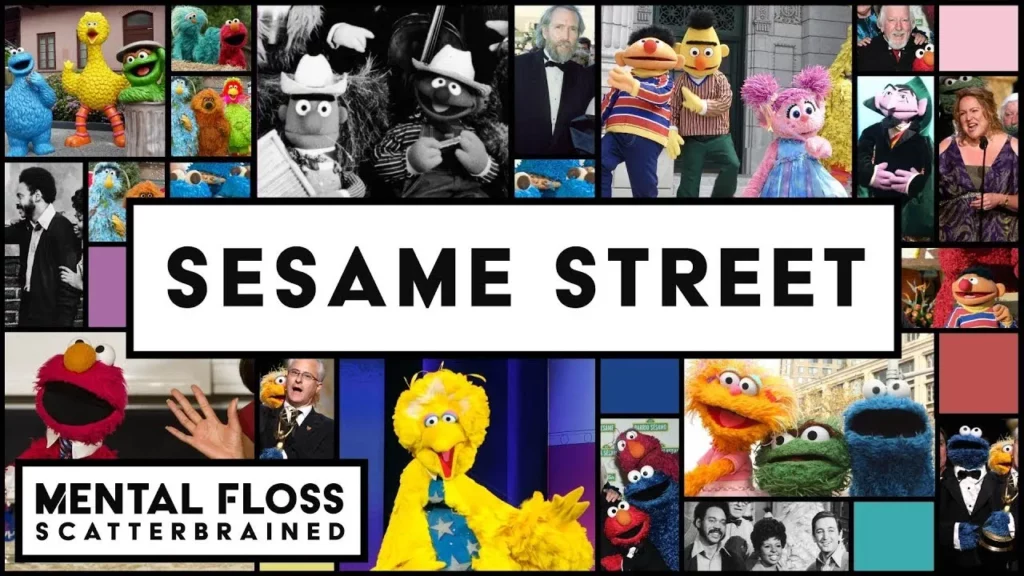
In this lesson, we explored the fascinating history and evolution of Sesame Street and its iconic characters, revealing surprising facts about their origins and transformations over the years. From Cookie Monster’s initial design to Big Bird’s early appearance, we learned how these beloved Muppets have changed while still capturing the hearts of audiences. Additionally, we highlighted the show’s significant impact on children’s education and its enduring legacy in early childhood programming.
The Unexpected Origins of 20 Culinary Terms
The lesson explores the intriguing origins of various culinary terms, revealing how historical, cultural, and linguistic influences shaped their meanings. For example, “baker’s dozen” likely originated from the need for bakers to provide an extra loaf to street vendors to ensure profit, while “barbacoa” evolved from indigenous cooking methods to become “barbecue.” Additionally, terms like “umami” highlight the discovery of a distinct taste, and various Italian and French culinary phrases illustrate the rich history behind popular dishes and cooking techniques.
31 Things You Didn’t Know about Holiday Songs List Show (Ep. 239)

In this lesson, Mike from Mental Floss shares 31 intriguing facts about holiday songs, highlighting their surprising origins, songwriters, and historical connections. Notable anecdotes include the Catholic Church’s initial disapproval of “I Saw Mommy Kissing Santa Claus,” the Jewish songwriter Johnny Marks behind classics like “Rudolph the Red-Nosed Reindeer,” and the unexpected inspirations behind songs like “Let It Snow.” The lesson emphasizes the rich history and cultural significance of holiday music, making it a festive exploration for listeners.
Chinese Food in America: A Brief History
The lesson explores the history and evolution of Chinese cuisine in America, highlighting how dishes like General Tso’s chicken were adapted to suit local tastes while often straying from their authentic roots. It discusses the significant influence of various Chinese regional cuisines, particularly Cantonese, on American Chinese food, as well as the challenges faced by Chinese immigrants in establishing their culinary presence. Ultimately, the lesson emphasizes the importance of balancing authenticity with innovation in the appreciation of Chinese food globally.
Many Things You Never Knew About Money and Game Shows! Scatterbrained
In this lesson, we explored fascinating stories and facts about money, including the tale of Peter the Eagle, a beloved mascot at the Philadelphia Mint, and the surprising role of credit scores in relationships. We also learned about historical U.S. currency, the purpose of ridges on coins, and the intricacies of participating in game shows, including potential tax implications on winnings. Overall, the lesson highlighted the importance of financial awareness and responsibility in various aspects of life.