
Climate change is turning sea turtles FEMALE?!
The lesson highlights the unexpected impact of climate change on sea turtle populations, where rising temperatures are leading to a significant increase in female hatchlings due to temperature-dependent sex determination. This imbalance poses a threat to future mating and survival, emphasizing the urgent need for conservation efforts to protect these species and their habitats. By addressing climate change and pollution, individuals can contribute to the preservation of sea turtles for future generations.
What does NASA keep inside this armored vault? ????

The lesson “Discovering the Secrets of the Moon” explores the significance of moon rocks, particularly the Genesis Rock, which is stored in a secure vault at the U.S. Federal Reserve Bank. These rocks, which make up about 70% of all moon samples on Earth, provide crucial insights into the moon’s formation and the history of our solar system, revealing that the moon was formed from debris created by a massive collision between Earth and a Mars-sized object. By studying these lunar treasures, scientists deepen our understanding of planetary formation and our place in the universe.
This famous climate graph is hiding a secret ????

The Keeling Curve is a significant graph in climate science that illustrates the increasing levels of carbon dioxide (CO2) in the atmosphere since 1958, primarily due to human activities. Its jagged, sawtooth pattern reflects the natural seasonal cycle of plant growth, where CO2 levels drop during the growing seasons in the Northern Hemisphere and rise during the dormant months. Overall, the graph highlights the alarming trend of rising CO2 levels, emphasizing the need for action to mitigate climate change and protect the environment.
There was NO first human
The lesson “The Mystery of the First Human” explains that there wasn’t a singular “first” human due to the gradual nature of evolution, where species change slowly over millions of generations. It emphasizes that all living beings are interconnected through this evolutionary process, making it impossible to pinpoint an exact moment when one species becomes another. Ultimately, the lesson highlights the fascinating journey of life and the importance of understanding evolution to appreciate the diversity of life on Earth.
The Secret Discovery in Da Vinci’s Notebook…
The lesson highlights Leonardo Da Vinci’s dual legacy as both an artist and a pioneering scientist, emphasizing his early exploration of gravity through a simple doodle in his notebooks. This doodle revealed a connection between gravity and acceleration, allowing Da Vinci to approximate the gravitational constant with remarkable accuracy, predating the work of Galileo and Newton. Ultimately, the lesson underscores the value of curiosity and the potential for groundbreaking discoveries that can arise from seemingly trivial observations.
We need to talk about scallop eyes ????

This lesson explores the fascinating world of scallop eyes, highlighting their unique structure and function. Unlike human eyes, scallops possess up to 200 eyes that utilize a mirror made of guanine crystals to focus light onto two retinas, showcasing an extraordinary adaptation for survival. The lesson emphasizes the diversity of vision in the animal kingdom and how studying scallop eyes can enhance our understanding of evolutionary adaptations in nature.
The REAL reason moths fly towards light ????

The lesson explores why moths are attracted to light, debunking the old theory that they confuse artificial lights with the moon. New research reveals that moths use the sun’s position for navigation, and at night, bright lights disrupt their natural flying instincts, causing them to fly in circles and crash into the light. Understanding this behavior can aid in insect navigation studies and help develop strategies to manage pests and design less attractive lighting for insects.
What happened to all the BUGS?! ???? ???? ???? ???? ????
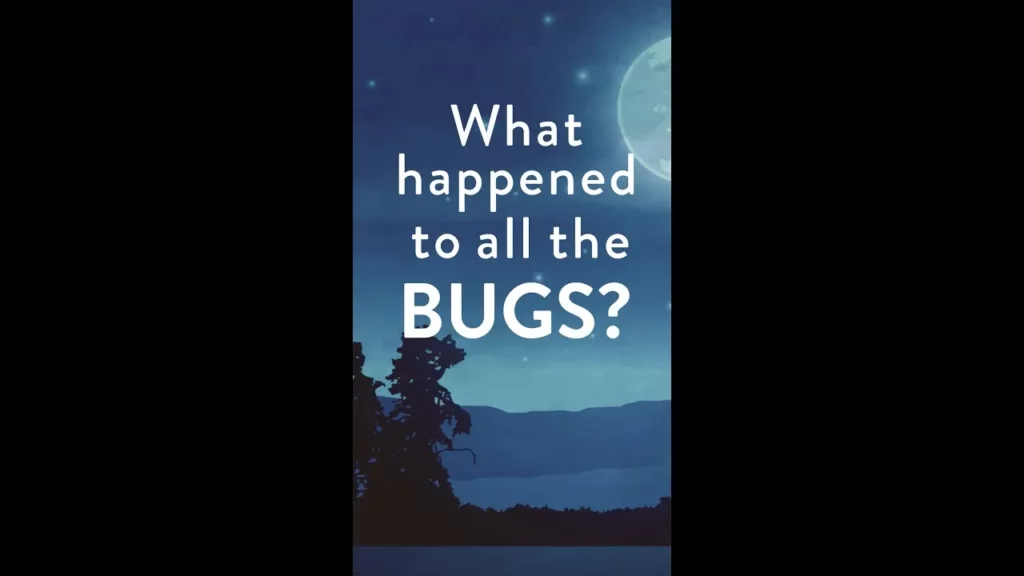
The lesson “The Disappearing Bugs: A Closer Look at Our Changing World” highlights the alarming decline in insect populations, which is linked to factors such as pesticide use, habitat loss, and climate change. It emphasizes the crucial role bugs play in our ecosystem and encourages individuals to recognize their responsibility in protecting the environment through actions like planting native species, reducing pesticide use, and supporting conservation efforts. By making informed choices, we can help restore the balance of nature for future generations.
Why ROYGBIV is Wrong ????
The lesson “Understanding the Colors of the Rainbow” explores the discovery of the rainbow’s colors by Isaac Newton, who used a prism to reveal the spectrum of light, famously summarized by the acronym “Roy G. Biv.” It discusses the debate surrounding the color indigo and the cultural significance of the number seven, while emphasizing that the rainbow is a continuous spectrum with infinite colors. Ultimately, the lesson encourages appreciation for the science behind rainbows and the beauty of light.
We were completely WRONG about starfish
The lesson explores the surprising anatomy of starfish, revealing that what we commonly refer to as their “arms” are not actually arms at all. Instead, starfish are essentially a head with a mouth, as their growth is driven solely by genes related to head development, with no genes for body growth. Additionally, the lesson highlights interesting facts about starfish, such as their ability to regenerate lost appendages and their unique movement through tiny tube feet.