
Long-run aggregate supply | Aggregate demand and aggregate supply | Macroeconomics
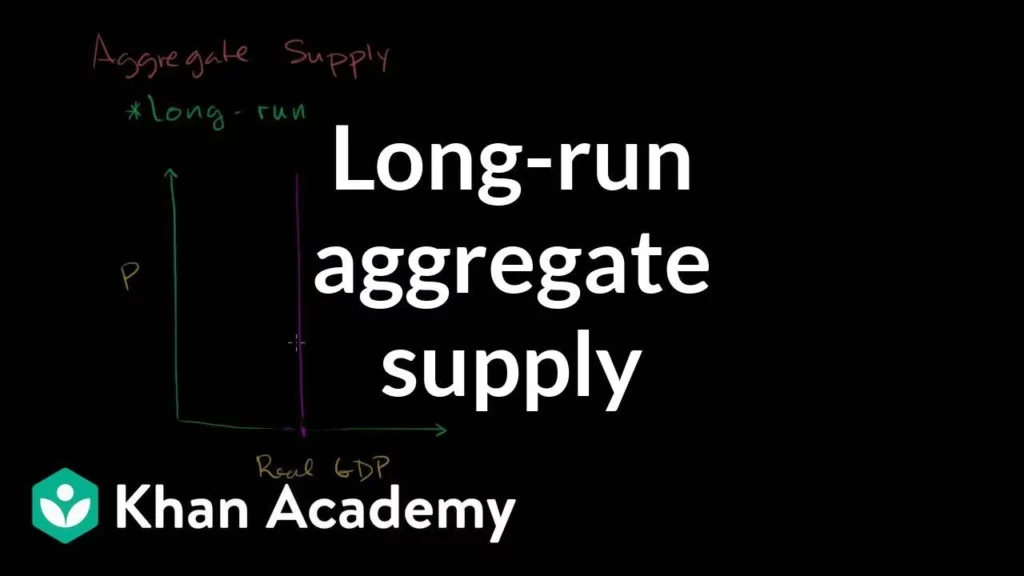
The lesson on “Understanding Aggregate Supply in the Long Run” emphasizes the importance of aggregate supply in economics, particularly how it remains unaffected by price levels in the long run. It highlights that while factors such as population growth, technological advancements, and resource discovery can shift the long-run aggregate supply curve, the economy’s productive capacity remains stable despite price fluctuations. This understanding is essential for analyzing economic performance and informing policy decisions.
Introduction to chemistry | Atoms, compounds, and ions | Chemistry
The lesson emphasizes that chemistry is fundamental to understanding the building blocks of the universe and how they interact to form everything around us. It highlights the importance of chemistry in connecting various scientific disciplines, such as physics and biology, and illustrates how chemical interactions underpin all life processes. Ultimately, the study of chemistry is portrayed as an exciting journey of discovery that continues to reveal the complexities of reality.
The elements of a poem | Reading (unlisted)

The lesson “Understanding Poetry: A Journey Through Language and Emotion” explores the unique qualities of poetry, emphasizing its ability to convey deep emotions and ideas through carefully chosen words and structures. By analyzing poems like “Cat” by Marilyn Singer and “Litany” by Billy Collins, students learn how elements such as line breaks, rhyme, and vivid imagery contribute to the overall meaning and experience of a poem. Ultimately, the lesson highlights poetry as an art form that invites readers to engage with language in a profound and emotional way.
Logarithms | Logarithms | Algebra II
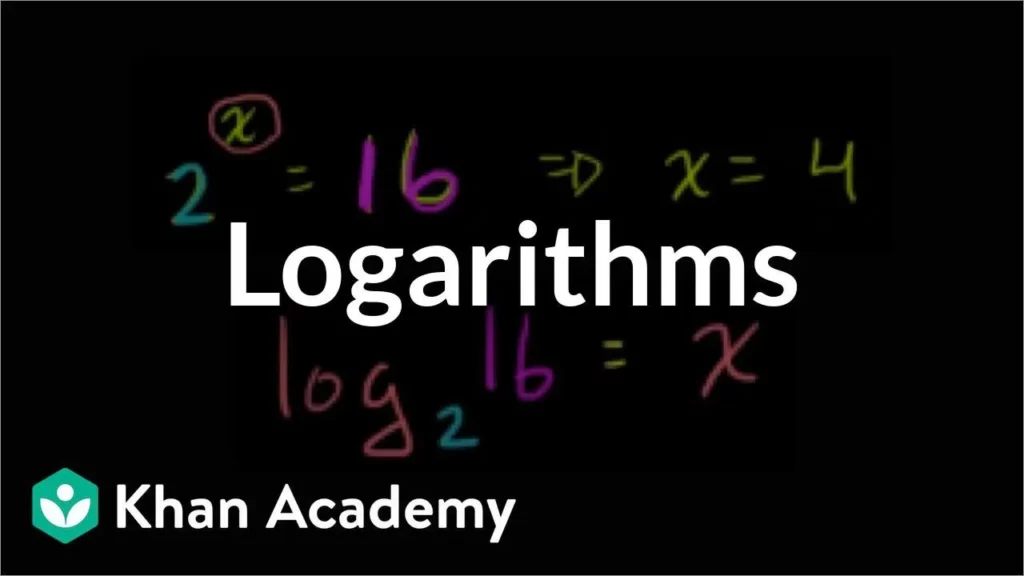
This lesson introduces Grade 10 learners to the concept of logarithms, explaining them as a way to determine the power to which a base must be raised to obtain a specific number. Through various examples, students learn how to evaluate logarithmic expressions and understand key properties, such as the logarithm of 1 being zero in any base. By grasping these fundamentals, learners can apply logarithms in various mathematical and scientific contexts.
Matrix multiplication introduction | Matrices | Precalculus
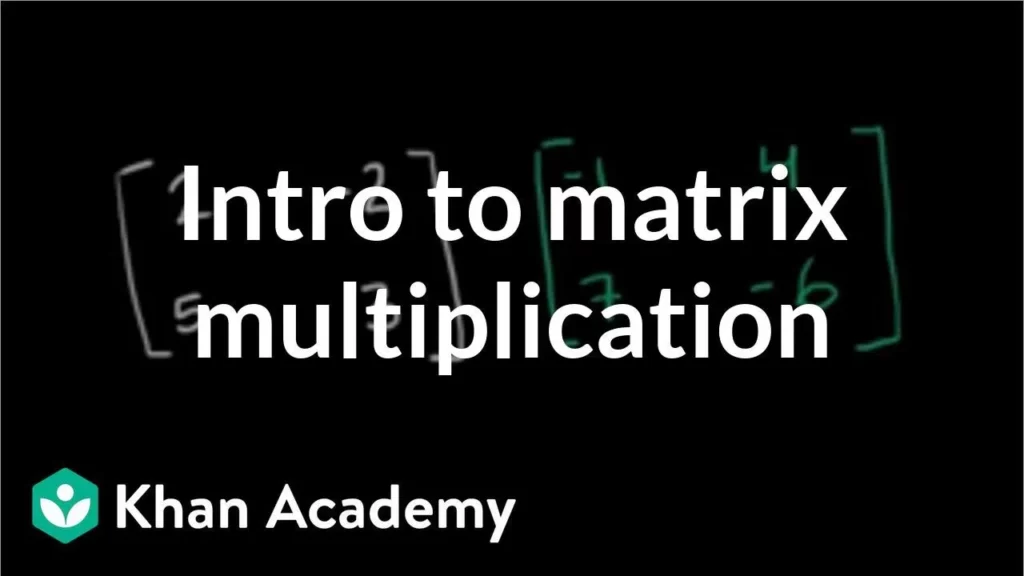
This lesson provides a comprehensive overview of matrix multiplication, specifically focusing on the multiplication of two 2×2 matrices. It explains the process step-by-step, emphasizing the dot product method used to calculate each entry in the resulting matrix, ultimately demonstrating how to derive the final product. Understanding this concept is essential for applications in fields such as computer graphics and data modeling.
Hedge fund structure and fees | Finance & Capital Markets
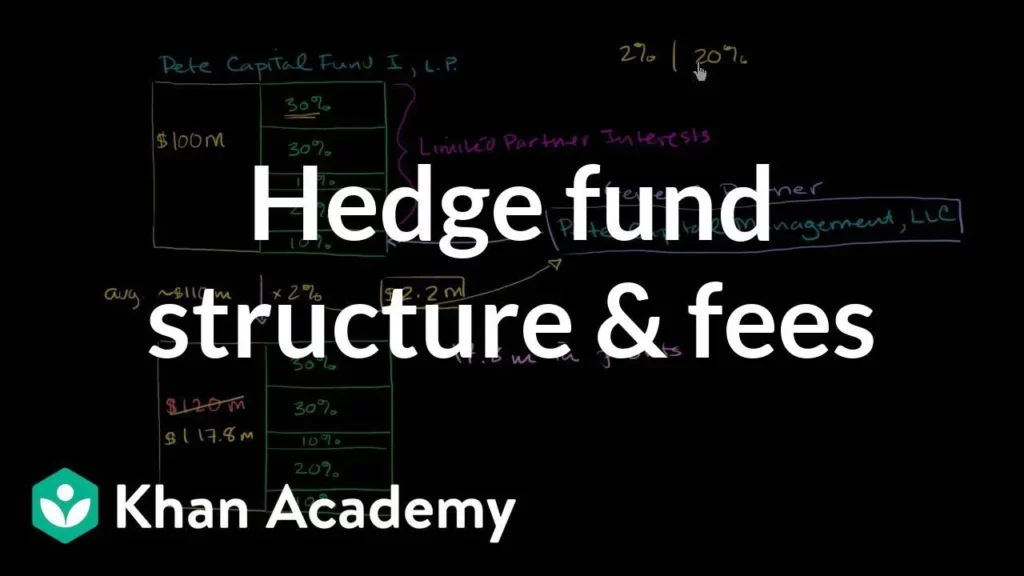
The lesson explains the structure and fee mechanisms of hedge funds, using the hypothetical example of Pete Capital Fund 1 to illustrate how these investment vehicles operate as limited partnerships. It details how management fees are calculated based on the fund’s average net asset value, and how performance fees are derived from the fund’s profits, highlighting the financial dynamics that benefit both fund managers and investors. Additionally, it discusses the flexibility of hedge funds in terms of investor redemptions and contributions, distinguishing them from closed-end funds.
Techniques for generating a simple random sample | Study design | AP Statistics
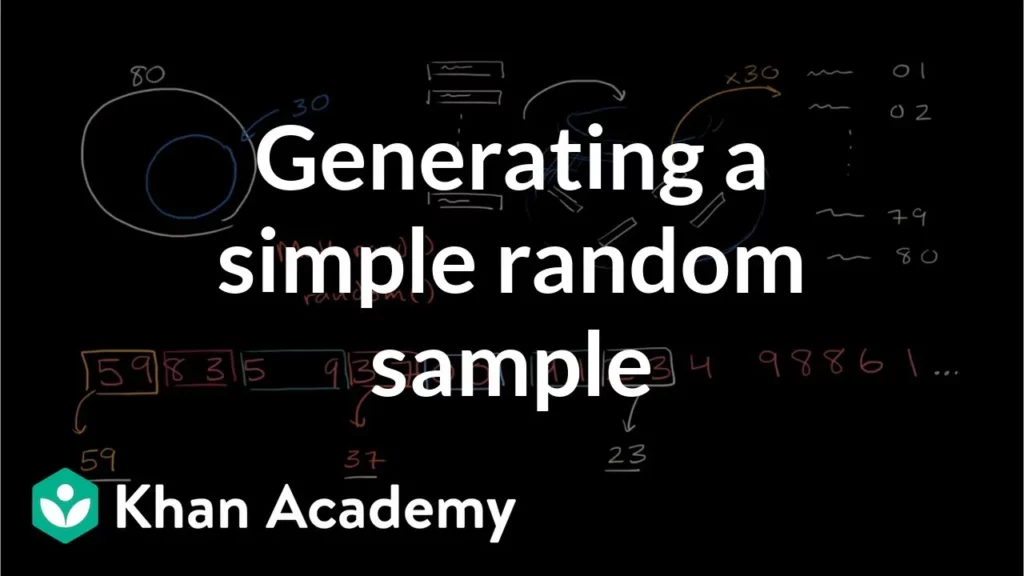
In this lesson, students learn how to estimate the average height of their school population using simple random sampling, which allows them to select a representative group of students without measuring everyone. Various methods for selecting a random sample are discussed, including drawing names from a bowl, using a random number generator, and employing random digit tables. Emphasizing the importance of randomness ensures that the sample accurately reflects the entire population, leading to reliable results.
Determining the equation of a trig function | Graphs of trig functions | Trigonometry
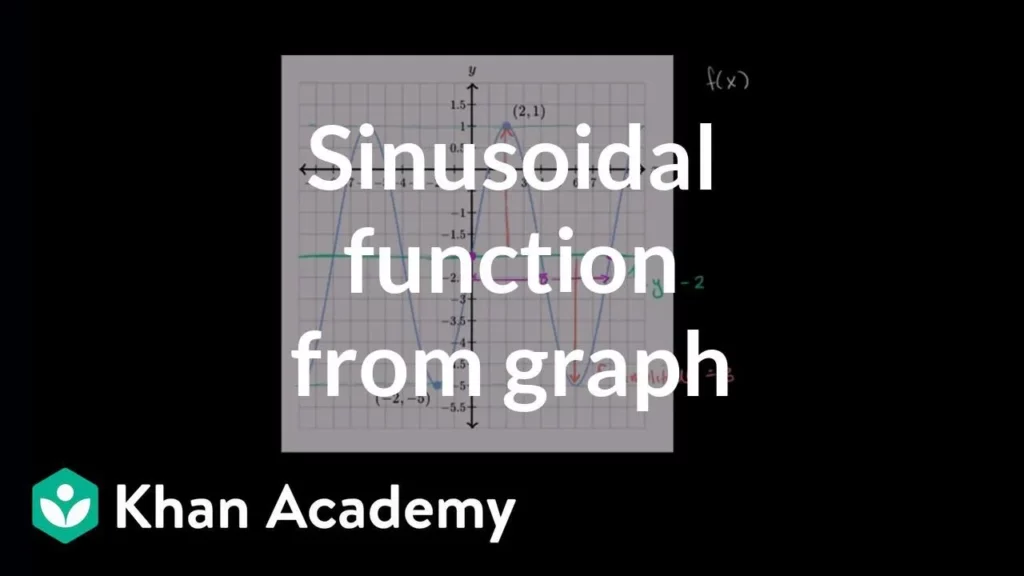
In this lesson, we explored periodic functions, focusing on how to derive their equations from graphs. We learned to identify the midline and amplitude, which are essential for constructing the function, and determined that the function was a sine function based on its behavior at \( x = 0 \). Finally, we calculated the period and formulated the complete equation of the periodic function as \( f(x) = 3 \sin\left(\frac{\pi}{4}x\right) – 2 \).
Practice determining oxidation states | Chemistry
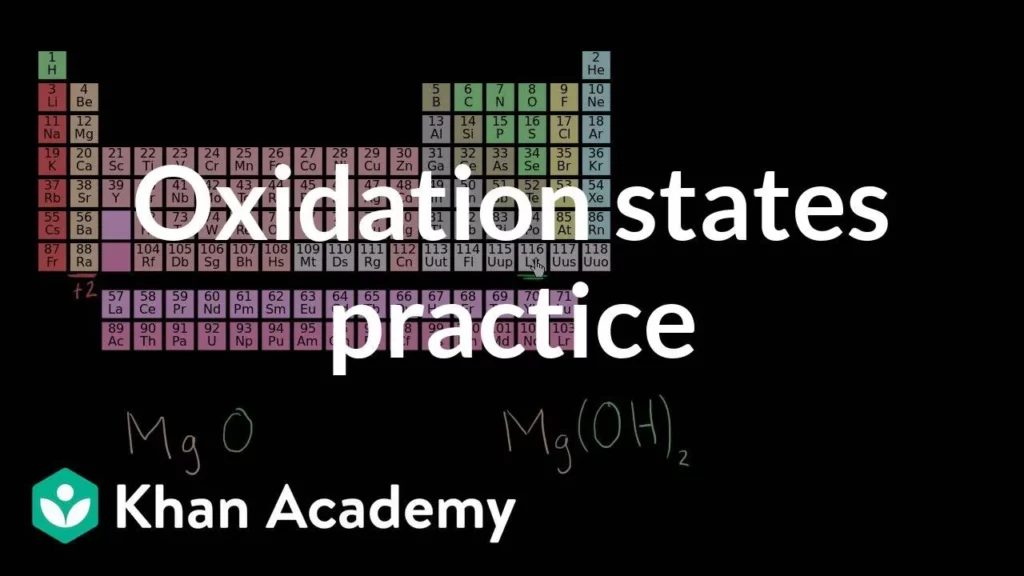
This lesson focuses on understanding oxidation states through the analysis of magnesium compounds, specifically magnesium oxide (MgO) and magnesium hydroxide (Mg(OH)₂). It explains how to determine the oxidation states of magnesium and oxygen in these compounds, highlighting that magnesium typically has a +2 oxidation state while oxygen has a -2 oxidation state, resulting in neutral compounds. The lesson emphasizes the importance of oxidation states in chemistry and how they help in understanding the behavior of elements in various compounds.
Converting repeating decimals to fractions 1 | Linear equations | Algebra I
In this lesson, we learned how to convert repeating decimals into fractions using a straightforward step-by-step process. By setting the repeating decimal equal to a variable, multiplying to eliminate the repeating part, and then subtracting to isolate the variable, we can easily derive the fraction form of any repeating decimal. This method simplifies the conversion and makes it accessible for various examples.