
Basic fractional exponents | Exponent expressions and equations | Algebra I
This lesson introduces the concept of exponents, covering positive, negative, and fractional types. Positive exponents indicate repeated multiplication, negative exponents represent the reciprocal of the base raised to the positive exponent, and fractional exponents relate to roots, such as square and cube roots. Understanding these concepts is essential for simplifying and solving various mathematical problems.
Differential equation introduction | First order differential equations
The lesson introduces differential equations as mathematical tools that model how systems change over time, distinguishing them from algebraic equations by their reliance on functions and their derivatives. It explains that solutions to differential equations are functions rather than specific numbers, providing examples to illustrate this concept. The lesson concludes by emphasizing the importance of understanding differential equations for real-world applications and hints at further exploration of solution techniques and their behaviors.
Introduction to increasing, decreasing, positive or negative intervals | Algebra I
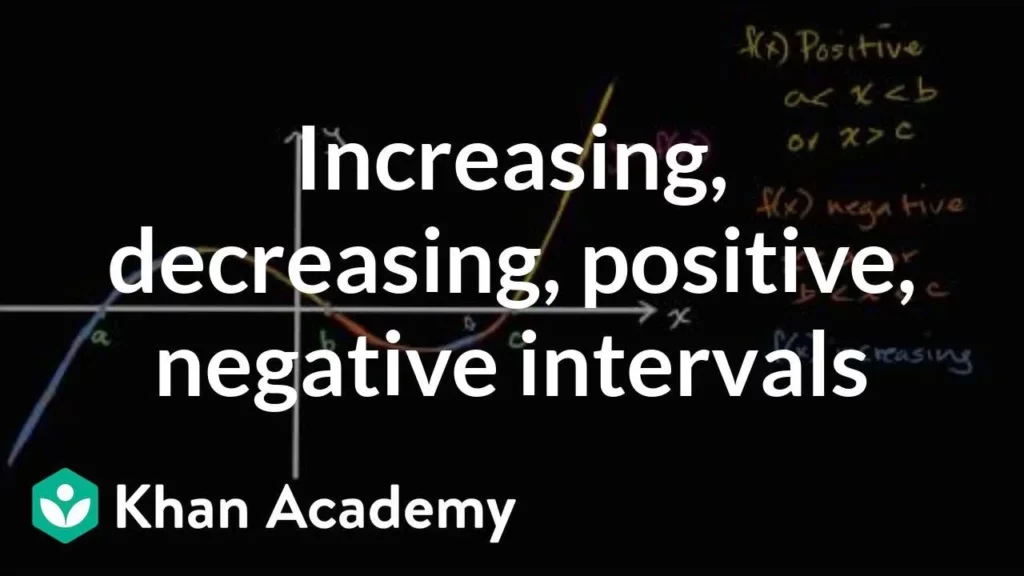
This lesson focuses on analyzing the behavior of functions by examining their graphs, specifically identifying positive and negative intervals as well as increasing and decreasing behavior. A function is considered positive when its values are above zero and negative when below zero, with specific intervals defined for each case. Additionally, the lesson explains that a function is increasing when the output values rise as the input increases, and decreasing when the output values fall, highlighting the importance of understanding these behaviors for a comprehensive analysis of functions.
Constrained optimization introduction

This lesson introduces the concept of constrained optimization problems, focusing on maximizing a multi-variable function while adhering to specific constraints. It emphasizes the importance of visualizing the function and its constraints through graphs and contour maps to identify potential maximum points, highlighting that the optimal solution occurs at the tangency point between the contour line and the constraint. The lesson sets the stage for further exploration of mathematical techniques, such as gradients, to solve these optimization challenges effectively.
Introduction to rational and irrational numbers | Algebra I
This lesson explains the distinction between rational and irrational numbers. Rational numbers can be expressed as fractions with whole numbers in the numerator and denominator, including whole numbers and repeating or terminating decimals, while irrational numbers cannot be represented as such fractions and include famous examples like π and e. The lesson emphasizes the prevalence of irrational numbers, noting that there are infinitely many between any two rational numbers, highlighting their significance in mathematics.
Adding and subtracting negative numbers | Pre-Algebra
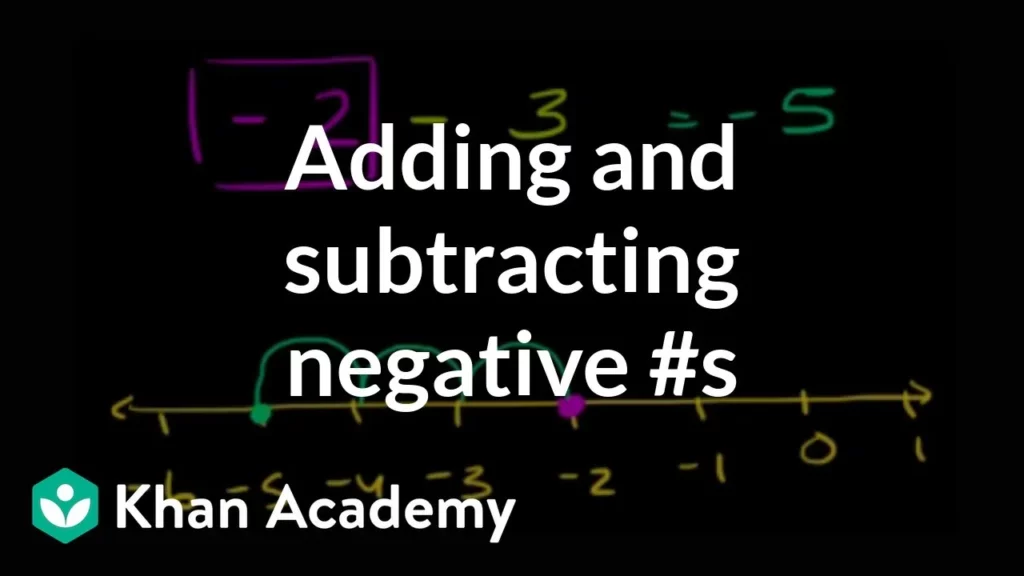
This lesson focuses on understanding the addition and subtraction of negative numbers using a number line. It illustrates various scenarios, such as subtracting a larger positive from a smaller positive, adding a positive to a negative, and the effects of subtracting negative numbers, emphasizing that subtracting a negative is equivalent to adding a positive. By visualizing these operations on a number line, learners can grasp the concepts more effectively, laying a foundation for more advanced mathematical topics.
Zoroastrianism | World History
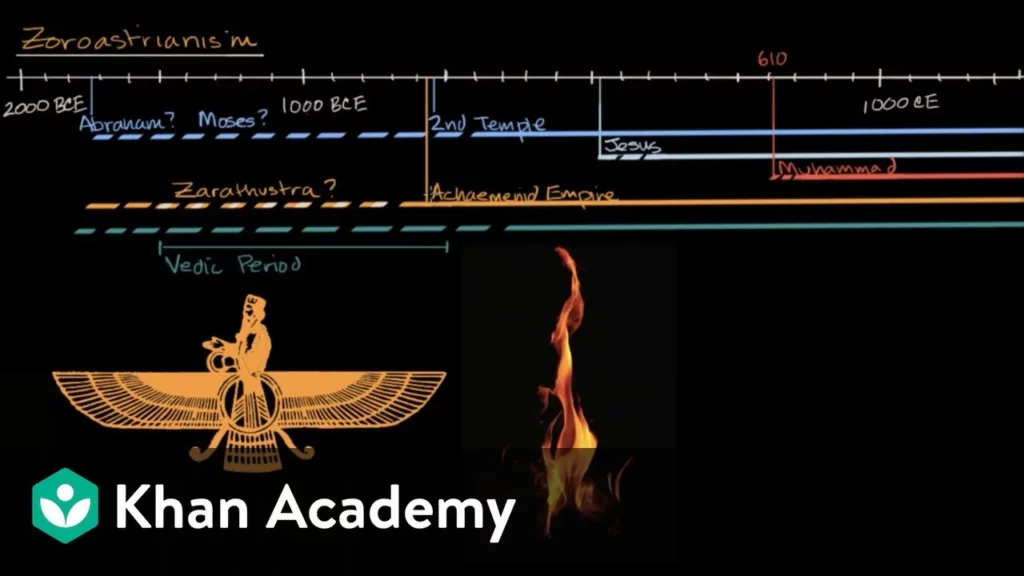
Zoroastrianism, one of the world’s oldest religions, originated in ancient Persia and was significantly promoted during the Achaemenid Empire under Cyrus the Great. Characterized by its dualistic beliefs in the struggle between good and evil, the religion emphasizes the worship of a single god, Ahura Mazda, and the importance of good thoughts, words, and actions. Despite a decline in followers today, Zoroastrianism’s influence on major world religions, including Judaism, Christianity, and Islam, underscores its enduring legacy in shaping spiritual thought throughout history.
Fourier Series introduction
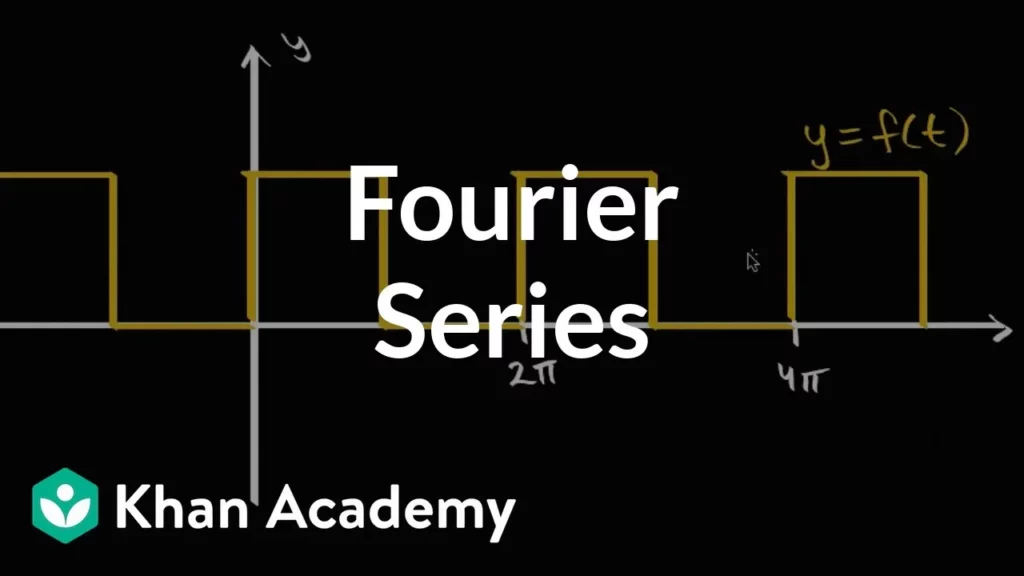
This lesson introduces square waves as periodic functions with a defined frequency and period, and explores their representation through Fourier Series, which express periodic functions as sums of sine and cosine functions. The importance of the coefficients in the Fourier Series is highlighted, as they reveal the frequency components of the original function, making this approach valuable in fields like signal processing and electrical engineering for simplifying complex analyses. The lesson sets the stage for further exploration of calculating Fourier coefficients and advanced signal processing techniques.
Multiplying a matrix by a column vector | Matrices | Precalculus
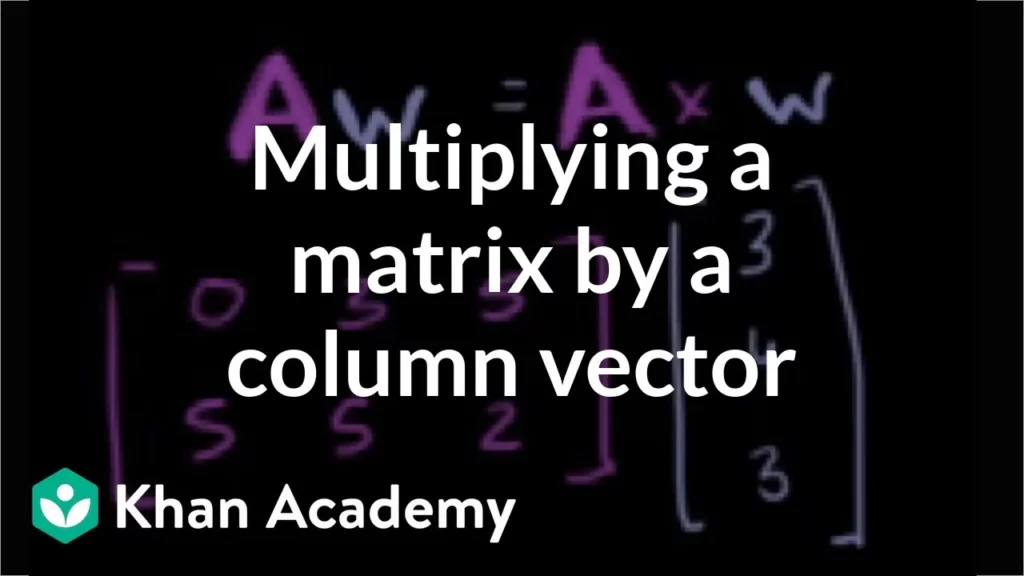
In this lesson, we explored the process of matrix multiplication, specifically focusing on multiplying a matrix by a vector. We defined a 2×3 matrix A and a 3×1 vector w, confirmed the validity of the multiplication, and calculated the resulting 2×1 vector step by step, ultimately finding the output to be a column vector with entries 27 and 41. The lesson emphasizes that understanding and practicing the step-by-step approach can make matrix multiplication more manageable.
Defined and undefined matrix operations | Matrices | Precalculus
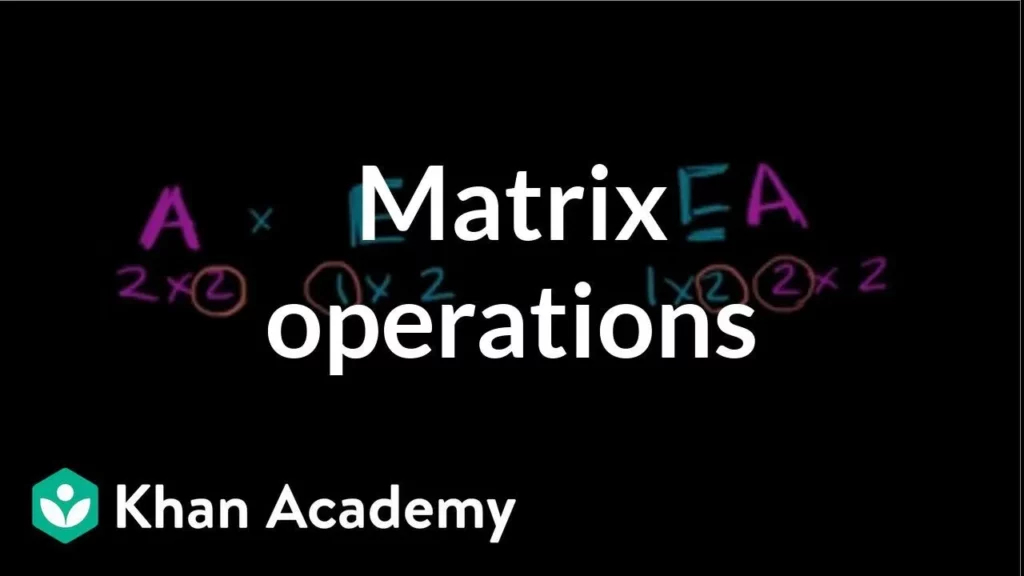
This lesson provides a comprehensive overview of the conditions necessary for matrix multiplication and addition. It emphasizes that matrix multiplication is defined only when the number of columns in the first matrix matches the number of rows in the second, while matrix addition requires both matrices to have the same dimensions. Through specific examples, the guide illustrates these principles, highlighting the importance of matrix dimensions and the order of multiplication.