
The ‘Mountain Or Valley?’ Illusion
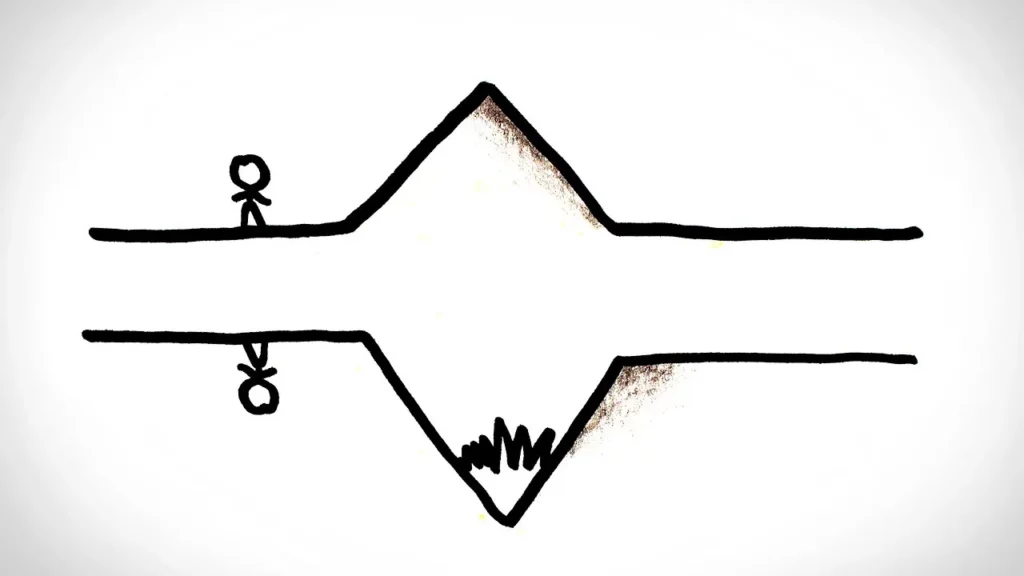
The lesson on multistable perceptual illusions explores how our perception of landscapes can shift between interpretations, such as viewing a feature as a mountain or a valley, based on the direction of light and shadows. This phenomenon is influenced by our ingrained understanding of how sunlight interacts with objects, leading to potential misinterpretations in shaded relief maps and aerial photos. Practical tips, like rotating maps, can help clarify these visual confusions.
Real World Telekinesis (feat. Neil Turok)

The lesson explores the concept of telekinesis, clarifying that it refers to motion at a distance rather than supernatural abilities. It highlights the historical breakthroughs by scientists Michael Faraday and James Clerk Maxwell, who introduced the idea of electromagnetic fields, explaining how forces like magnetism and electricity operate through these fields rather than through direct action at a distance. Their work fundamentally transformed our understanding of physics and established the basis for modern scientific principles regarding motion and energy transfer.
Every Force in Nature (Theory of Everything, Part III)

The lesson explores the dynamic nature of the universe, emphasizing the importance of measurement in understanding interactions between matter. It draws an analogy between economics and physics, illustrating how differences in measurement can lead to profit through arbitrage, similar to how forces operate in physics via exchange particles known as gauge bosons. Ultimately, the lesson highlights that both economic transactions and physical interactions are governed by fundamental principles that shape our understanding of the universe.
Football, Physics, and Symmetry
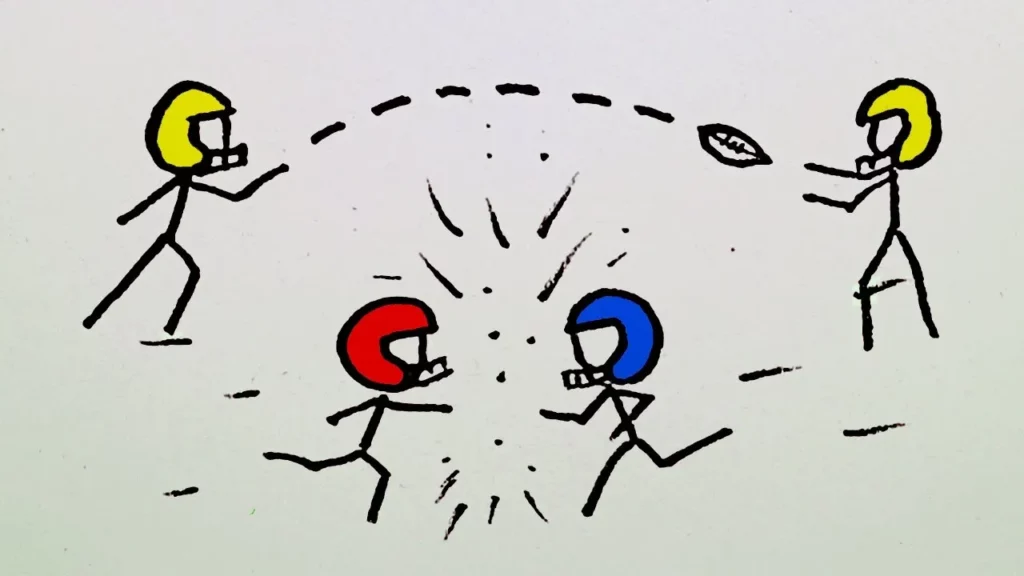
The lesson explores the significance of symmetry in American football, highlighting how it enhances efficiency and consistency in gameplay. While force and torque are commonly discussed in the sport’s physics, the lesson emphasizes that symmetry—both in player formations and the football’s design—plays a crucial role in habit formation and predictable actions on the field. Ultimately, the concept of symmetry is not only vital for the game but also reflects the fundamental principles of physics, allowing for reliable patterns and behaviors in both science and sports.
Feynman’s Lost Lecture (ft. 3Blue1Brown)
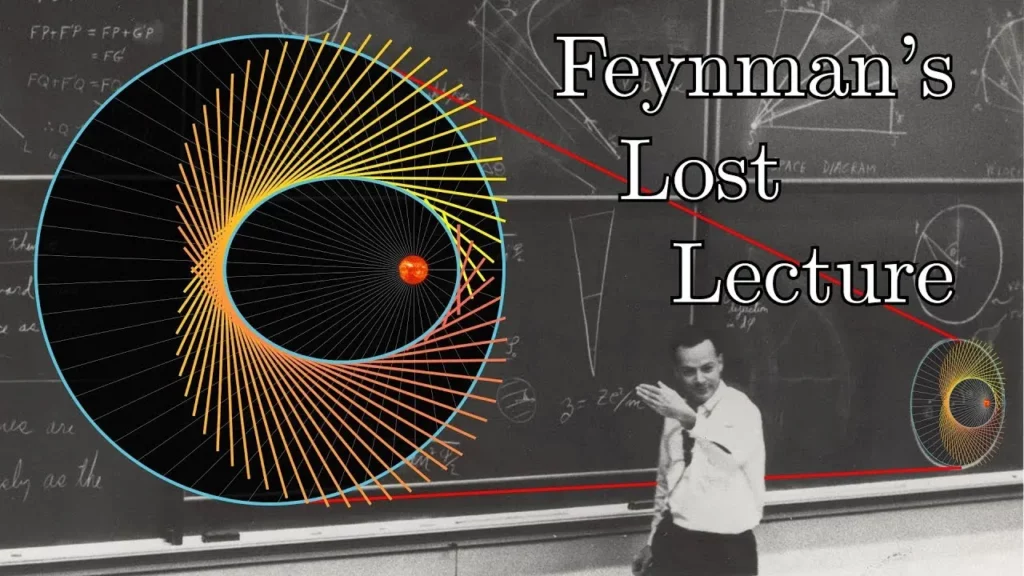
In the lesson “Exploring Elliptical Orbits,” viewers are introduced to the concept of elliptical orbits through a geometric construction inspired by Richard Feynman’s lost lecture on planetary motion. The lesson emphasizes the significance of the inverse square law in explaining why celestial bodies follow elliptical paths, while also connecting geometric principles, such as the construction of an ellipse, to the physics of orbital mechanics. Feynman’s ability to simplify complex ideas into intuitive concepts highlights the elegance of the universe’s design and deepens our understanding of celestial dynamics.
Spacetime Diagrams | Special Relativity Ch. 2
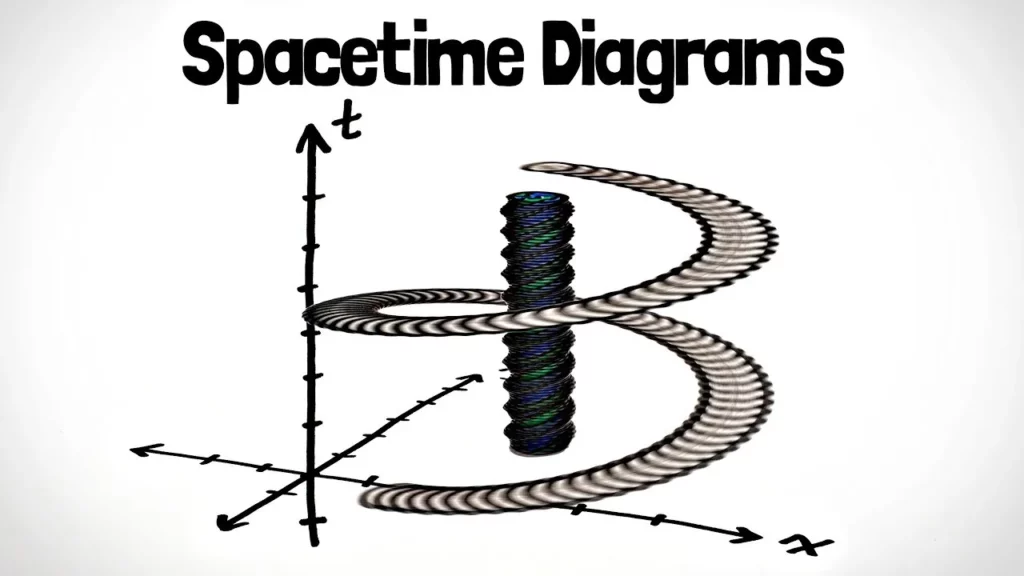
The lesson on relativity introduces the concept of how motion is perceived from different perspectives, emphasizing that while descriptions may vary, certain truths about motion remain constant. It explores the principles of relativity through everyday examples, such as the relative positions of objects, and introduces space-time diagrams as a tool for visualizing motion over time. Ultimately, the lesson highlights the importance of relativity in understanding the dynamics of both celestial and everyday movements, paving the way for a deeper exploration of special relativity.
How to Subtract By Adding
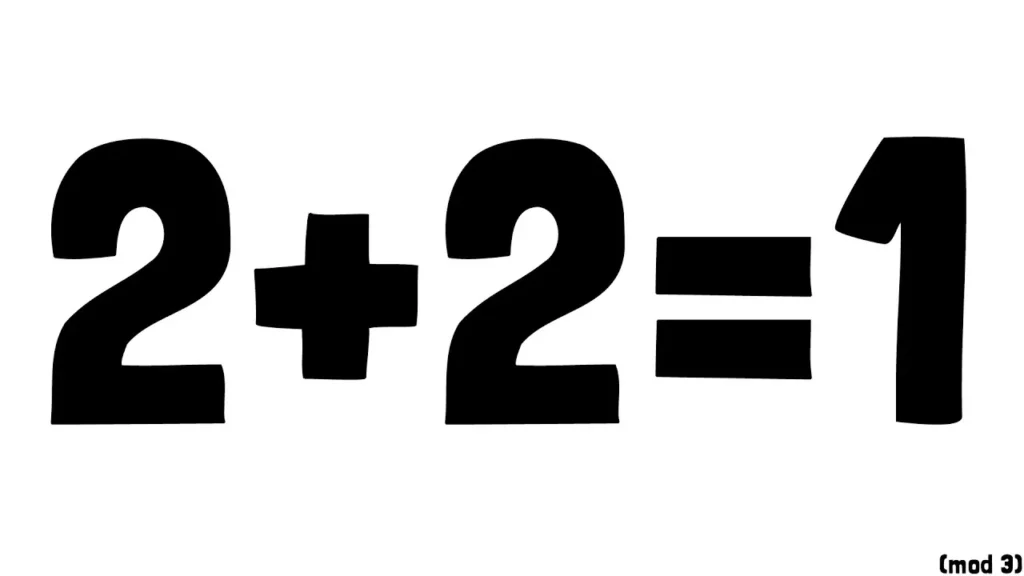
In this lesson, we explore a fun and effective trick for subtracting large numbers by transforming the subtraction process into an addition problem. By replacing each digit of the smaller number with 9 minus that digit (and using 10 minus for the last digit), we can add this new number to the larger number and ignore the first digit of the result to find the difference. This method not only simplifies subtraction for individuals but also mirrors techniques used in computers and machines for efficient calculations.
How To Tell If We’re Beating COVID-19

In this lesson, Henry discusses the concept of exponential growth in the context of the COVID-19 pandemic, emphasizing its rapid nature and the challenges it presents in understanding the trajectory of the virus. He highlights a graph created by Oddish that visualizes the epidemic using a logarithmic scale, focusing on the rate of new cases rather than total cases, which aids in identifying trends and the effectiveness of public health measures. The lesson underscores the importance of recognizing these trends to better anticipate the future of the pandemic and the limitations of the data presented.
Another Physics Misconception
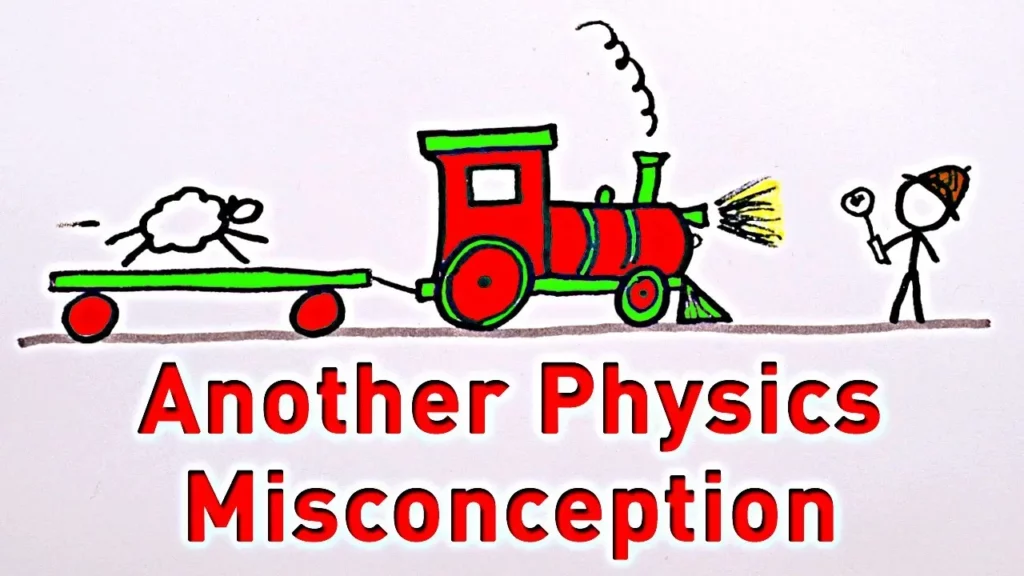
The lesson on momentum highlights the distinction between classical and relativistic momentum, emphasizing that while the basic equation \( p = mv \) is sufficient for everyday speeds, it fails to account for relativistic effects as objects approach the speed of light. In such cases, the momentum equation is modified to \( p = mv / \sqrt{1 – v^2/c^2} \), which incorporates the effects of relativity. Understanding this concept is essential for studying high-energy physics and the behavior of particles in advanced experiments.
Magnetic Levitation

The lesson explores the concept of diamagnetism, a type of magnetism exhibited by all materials, even those that are not inherently magnetic. It explains how diamagnetism occurs when an external magnetic field alters the motion of electrons in a material, creating a weak opposing magnetic field that causes a slight repulsion from the magnet. The lesson highlights fascinating examples, such as the potential for levitation in strong magnetic fields and the unique behavior of certain materials like nitrogen and superconductors.