
Tutorial: Simulating the Universe in After Effects
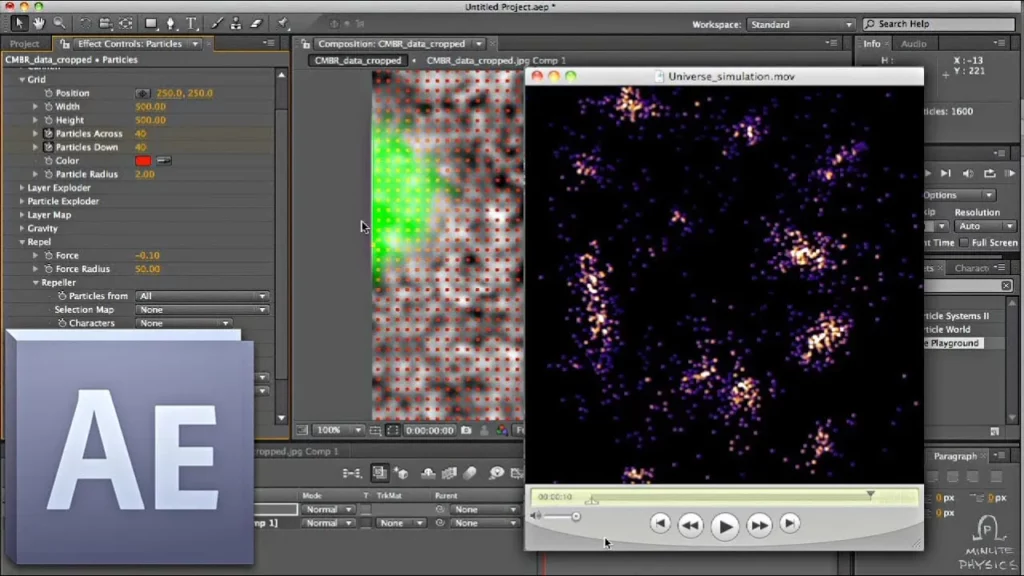
This lesson provides a step-by-step guide on how to simulate the universe using Adobe After Effects, focusing on the early conditions post-Big Bang as captured by the WMAP satellite. It covers the process of creating a composition with cosmic microwave background data, building a particle system to mimic gravitational attraction based on density variations, and enhancing the visual appeal with color and effects to represent cosmic structures like galaxies. By following these instructions, users can create a captivating simulation of the universe on their computers.
Do Cause and Effect Really Exist? (Big Picture Ep. 2/5)

The lesson explores the concept of cause and effect within the framework of physics, highlighting how this relationship is not straightforward at the microscopic level, where particles behave according to consistent patterns rather than causal sequences. However, at the macroscopic scale, cause and effect become relevant, allowing us to understand events like chemical reactions and their directional nature. The lesson emphasizes the importance of leverage in both present and past contexts, illustrating how small changes can lead to significant outcomes and how records of past events can inform our understanding of the present.
Reimagining the Periodic Table
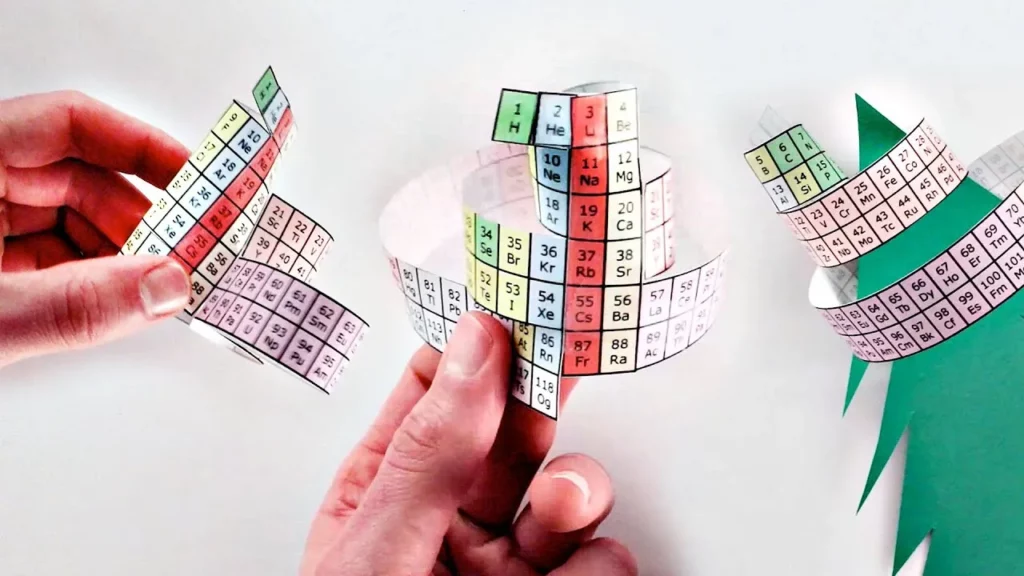
The lesson “Reimagining the Periodic Table: A Creative Exploration” invites students to rethink the traditional layout of the periodic table, which is often seen as awkward and unintuitive. Various alternative arrangements, such as the left-step periodic table, spiral periodic table, and spiral rosette, are explored, each offering unique insights into the relationships between elements while highlighting the versatility of the periodic table as a tool for understanding chemical properties. Ultimately, while these creative designs provide fresh perspectives, the traditional format remains a practical and effective means of studying chemistry.
Why is it Harder to Drive Backwards?
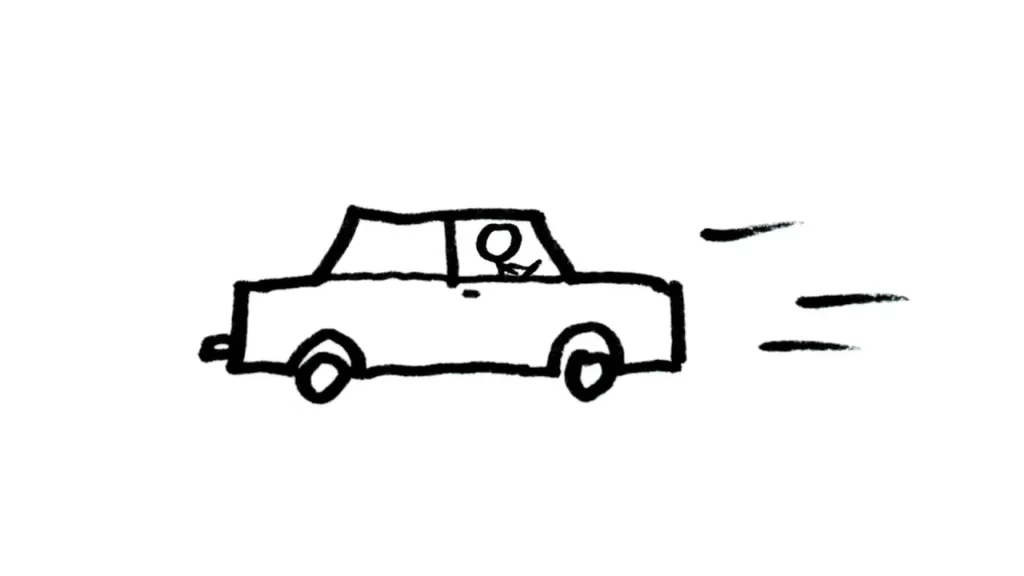
The lesson explains that driving backwards is more challenging than driving forwards due to the different roles of the front and back wheels in steering. While the front wheels guide the car’s direction when moving forward, the back wheels take on this role when reversing, requiring constant adjustments and greater hand-eye coordination to maintain control. The complexity increases further when towing a trailer, as the driver must navigate multiple layers of steering dynamics, making backward driving a more intricate task.
Concrete Does Not Dry Out

This lesson explores the intriguing differences between pasta and concrete, highlighting their transformation from wet to hard states. While both start off moist, pasta dries out and can rehydrate, whereas concrete undergoes a chemical reaction that strengthens it over time, making it durable and capable of supporting heavy structures. Understanding these distinctions reveals the science behind why concrete is used for lasting constructions, unlike pasta, which is meant for consumption.
Why Doesn’t Time Flow Backwards? (Big Picture Ep. 1/5)
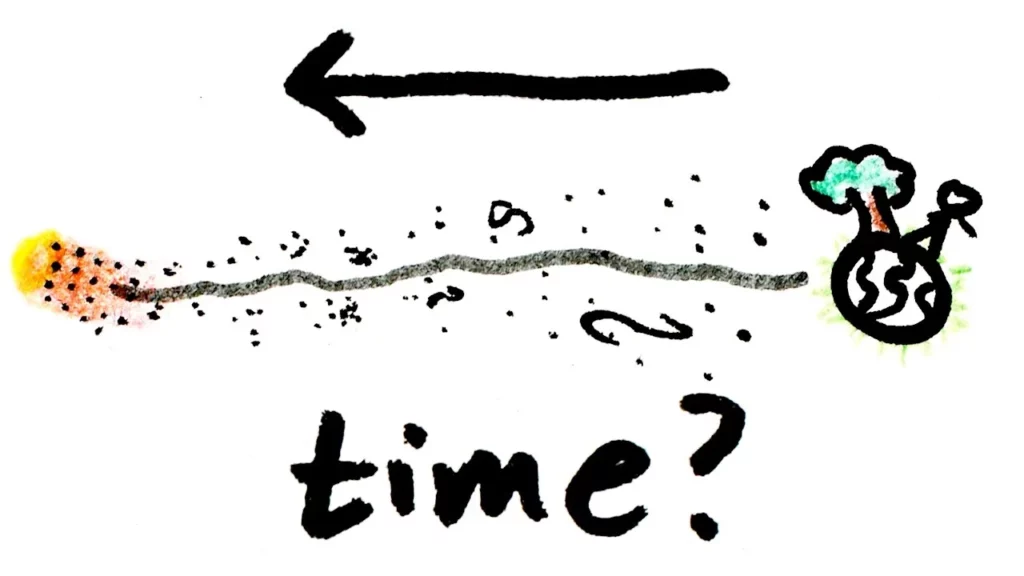
The lesson explores the concept of time’s direction through the lens of entropy and the second law of thermodynamics, which states that entropy tends to increase in isolated systems, introducing a clear arrow of time. It discusses how the universe began in a low-entropy state during the Big Bang, leading to the formation of stars and galaxies, and ultimately progressing towards a high-entropy equilibrium state. This understanding highlights that the flow of time is a consequence of the universe’s initial conditions rather than a fundamental aspect of physical laws.
Quantum SHAPE-SHIFTING: Neutrino Oscillations

The lesson on neutrinos explores their unique ability to change identities based on their interactions and movements, distinguishing them from other particles like electrons. Neutrinos can oscillate between three types—electron, muon, and tau—depending on their mass and the distance they travel, leading to phenomena such as the unexpected detection of fewer solar neutrinos on Earth. This behavior highlights the complexities of particle physics and enhances our understanding of the universe.
How Perspective Shapes Reality
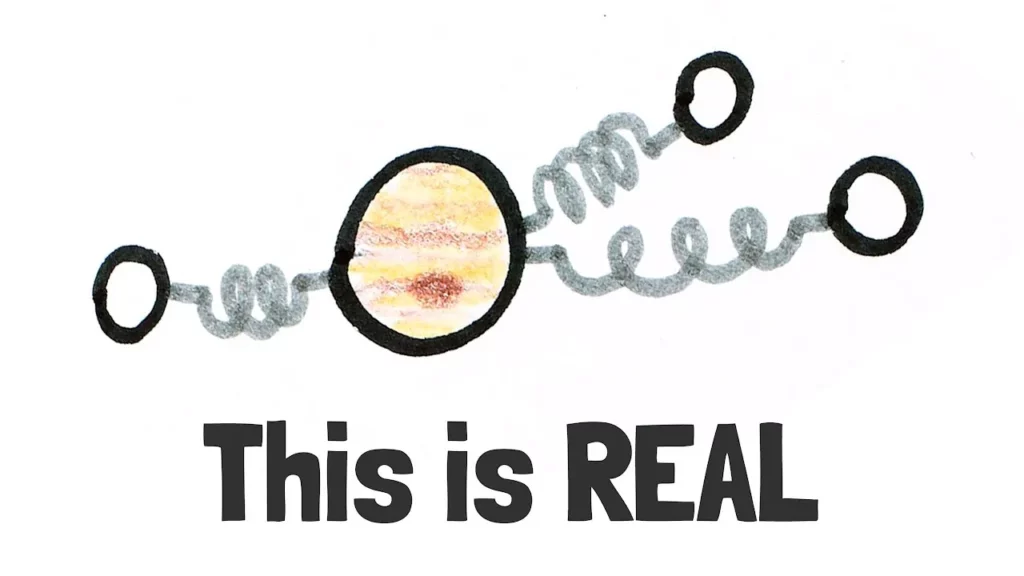
The lesson emphasizes the importance of mathematical models in understanding the universe, illustrating how different perspectives can yield equally valid descriptions of phenomena, such as the motion of Jupiter’s moons and the behavior of projectiles on Earth. It highlights that while models simplify complex realities, they also shape our understanding, urging us to remain open to alternative viewpoints that can enhance our comprehension of the world. Ultimately, embracing multiple models enriches our exploration of the universe and encourages deeper insights into its workings.
Will Batteries Power The World? | The Limits Of Lithium-ion
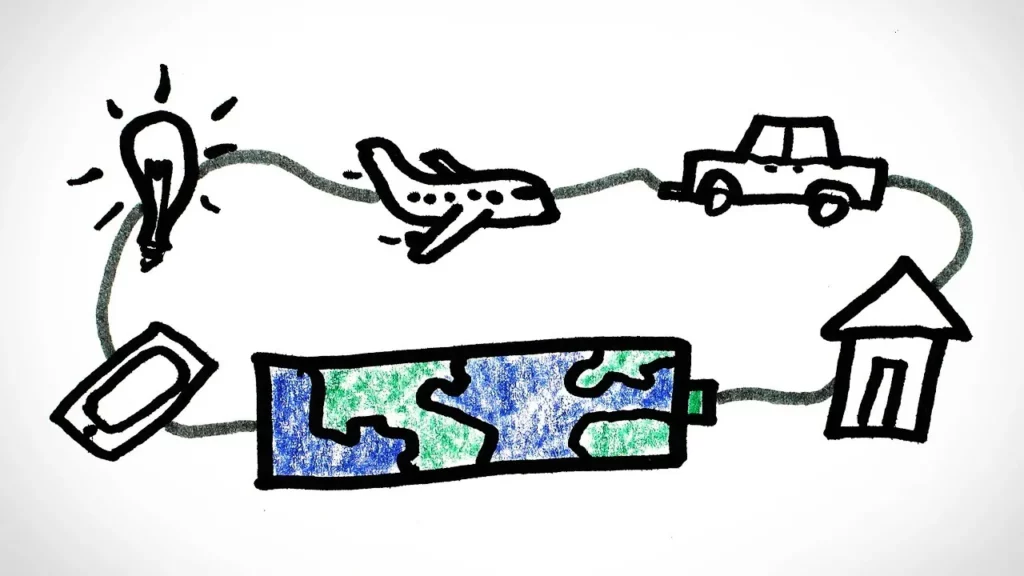
The lesson discusses the advancements in rechargeable battery technology over the past two decades, emphasizing the need for lighter and more energy-dense batteries to meet the growing global demand. It explores the fundamental principles of battery operation, current technologies like lithium-ion batteries, and emerging alternatives such as lithium-sulfur and lithium-oxygen batteries, while also addressing the challenges of achieving significant weight reduction. The lesson concludes by highlighting the importance of innovations in both energy storage and power delivery, as well as the need for scalable production solutions.
The Twins Paradox Primer (Rotating TIME!)
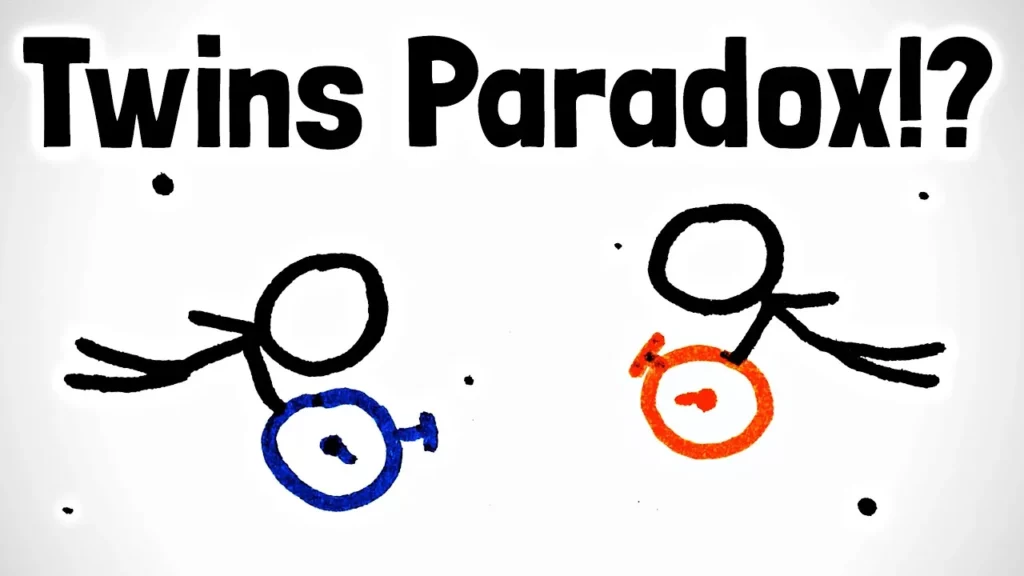
The lesson “Understanding Time: A Journey Through Relativity” explores the concept that time is not absolute but relative, meaning its passage can vary based on speed and acceleration. Through analogies and examples, such as the giraffe measurement and the Twins Paradox, it illustrates how different perspectives can lead to seemingly contradictory observations about time, ultimately emphasizing that these differences are a natural consequence of the way time behaves in relation to motion. The lesson encourages deeper thinking about the nature of time and its implications in physics.