
The genius of Mendeleev’s periodic table – Lou Serico
The lesson highlights the remarkable contributions of Dmitri Mendeleev to the development of the periodic table, emphasizing his unique ability to predict the existence and properties of undiscovered elements. Mendeleev’s foresight, exemplified by his prediction of gallium, showcases his genius in organizing elements based on their properties and relationships, which has had a lasting impact on the field of chemistry. His legacy endures, inspiring future generations of scientists and enthusiasts.
Whatever happened to acid rain? – Joseph Goffman

The lesson discusses the discovery of acid rain in 1963 at the Hubbard Brook Experimental Forest, highlighting its alarming acidity levels and the subsequent environmental threats it posed to ecosystems. It outlines the chemical processes behind acid rain, its human-induced sources, and the initial resistance from industries to acknowledge their role in the problem. The implementation of a cap and trade system in the U.S. effectively reduced emissions, leading to a significant decline in acid rain and showcasing the importance of science-driven policies in environmental protection.
Can you solve ‘Einstein’s Riddle’? – Dan Van der Vieren
In the lesson “Unraveling Einstein’s Riddle: A Logical Journey,” participants engage in a complex riddle involving the disappearance of a rare fish from an aquarium, set against a backdrop of five houses owned by individuals of different nationalities, each with unique drinks, cigars, and pets. By systematically organizing clues and employing logical deduction, learners navigate through the puzzle to identify the thief, ultimately demonstrating the importance of critical thinking and the process of elimination in problem-solving. While the riddle is often misattributed to Einstein, it serves as an excellent exercise in logic akin to solving mathematical equations.
How Mendel’s pea plants helped us understand genetics – Hortensia Jiménez Díaz
The lesson explores the foundational principles of genetics through the pioneering work of Gregor Mendel, who conducted experiments with pea plants in the 19th century to understand heredity. Mendel’s discoveries, including the concepts of dominant and recessive traits, alleles, and the use of the Punnett square to predict genetic combinations, established the basis for modern genetics. His research has significantly advanced our understanding of how traits are inherited, despite the complexities that can arise with multiple characteristics.
Building the impossible: Golden Gate Bridge – Alex Gendler

The lesson outlines the remarkable journey of constructing the Golden Gate Bridge in the mid-1930s, highlighting the engineering challenges faced by Charles Ellis and Joseph Strauss, including initial opposition from various stakeholders and the harsh environmental conditions of the Golden Gate Strait. Innovative solutions, such as the adoption of a suspension bridge design and advancements in steel manufacturing, enabled the project to progress despite significant construction challenges, including underwater foundations and safety concerns. Ultimately, the bridge’s iconic “international orange” color was chosen to harmonize with its natural surroundings, solidifying its status as a symbol of human ingenuity and resilience.
The five major world religions – John Bellaimey

The lesson “The Quest for Meaning: An Exploration of World Religions” examines how various religions have emerged throughout history to address fundamental human questions about existence, purpose, and the afterlife. It highlights the diverse beliefs of major religions, including Hinduism, Judaism, Buddhism, Christianity, and Islam, each offering unique perspectives and practices that guide adherents in their search for meaning and understanding in life. Ultimately, the lesson underscores the universal human desire for purpose and connection to something greater than oneself, despite the differences in religious beliefs and traditions.
Why can’t you divide by zero? – TED-Ed
The lesson explores the complexities and implications of dividing by zero in mathematics, emphasizing that while dividing by numbers approaching zero yields increasingly large results, it does not equate to dividing by zero itself, which is undefined. It delves into the concept of multiplicative inverses, explaining that zero lacks an inverse, making division by zero impossible. The lesson encourages pushing mathematical boundaries and considering alternative frameworks, such as the Riemann sphere, to understand these challenges better.
What if there were 1 trillion more trees? – Jean-François Bastin
The lesson emphasizes the critical role of trees in combating climate change through carbon sequestration, highlighting that while individual trees like the General Sherman can sequester significant amounts of carbon, the scale of human emissions necessitates broader efforts to reduce fossil fuel use and restore ecosystems. It underscores the importance of planting native tree species and maintaining biodiversity to enhance resilience against climate change, while also addressing the complexities and challenges of ecosystem restoration. Ultimately, the lesson advocates for a balanced approach that combines protecting existing forests with strategic restoration efforts to maximize carbon capture and support ecological health.
The threat of invasive species – Jennifer Klos
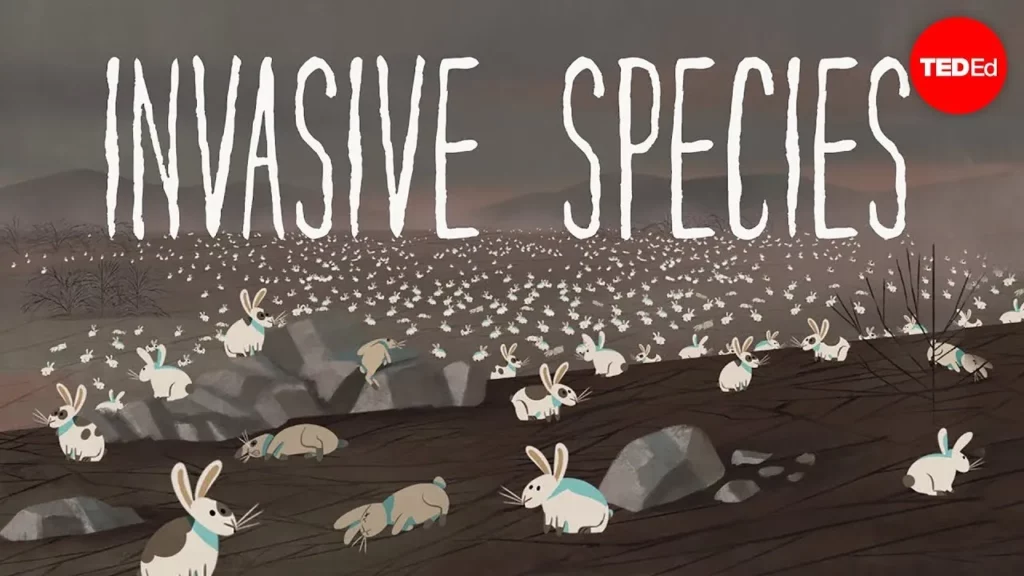
The lesson on invasive species highlights their significant ecological impact, particularly in regions like the southern United States, Florida, and Australia, where non-native organisms disrupt local ecosystems by outcompeting native species for resources. Case studies, such as the kudzu vine and Burmese pythons, illustrate how these species thrive in new environments due to the absence of natural predators, leading to biodiversity loss and ecological imbalance. The lesson emphasizes the importance of understanding and managing invasive species to preserve native ecosystems and maintain ecological stability.
Do personality tests work? – Merve Emre
The lesson discusses the evolution and impact of personality tests, particularly the Myers-Briggs Type Indicator (MBTI), which categorizes individuals into 16 personality types. While these tests have gained widespread popularity and are used in various settings, their effectiveness is questioned due to issues like reliance on self-reporting, inconsistent results, and the evolving definitions of personality traits. Research suggests that personality is not a fixed trait but can change over time, raising concerns about the implications of using these assessments for important decisions in education and employment.