
Guess the U.S. President in the Picture | The President Quiz

In the “Guess the U.S. President in the Picture” lesson, participants engage in a quiz where they identify various U.S. presidents based on their portraits. Each question presents a picture along with multiple-choice options, encouraging players to test their knowledge of presidential history. The activity not only serves as a fun challenge but also enhances understanding of significant figures in American history.
Double-Dabble Method | Repeated Division-by-2 Method | Decimal to Binary Conversion
The lesson introduces the double-dabble method, a simple technique for converting decimal numbers into binary numbers through repeated division by 2. By following a step-by-step process of dividing the decimal number, recording the quotients and remainders, and then reading the remainders from bottom to top, learners can effectively transform decimal values into their binary equivalents. The example of converting the decimal number 115 to binary illustrates this method, resulting in the binary representation 1110011.
Synonyms for Kids | Who Is the Real Synonym Superstar: the Ant or the Grasshopper?
In this lesson, a clever grasshopper and a confident ant engage in a friendly competition to showcase their knowledge of synonyms, words that have similar meanings. Through their playful game, they take turns providing words and their corresponding synonyms, ultimately realizing the importance of practice in mastering vocabulary. The lesson encourages kids to explore synonyms further and suggests resources for enhancing their language skills.
How to Use Commas in English | A Guide to Comma Rules and Usage

In this lesson, Captain Kama guides learners through the essential rules of comma usage in English, emphasizing their importance for clarity in writing. Key topics include using commas to separate items in a series, adjectives, and independent clauses, as well as their application in introductory elements, tag questions, direct address, dates, addresses, and quotations. By mastering these rules, students can enhance their writing style and avoid confusion.
Months of the Year | Learn the 12 Months of the Year | Educational Videos for Kids
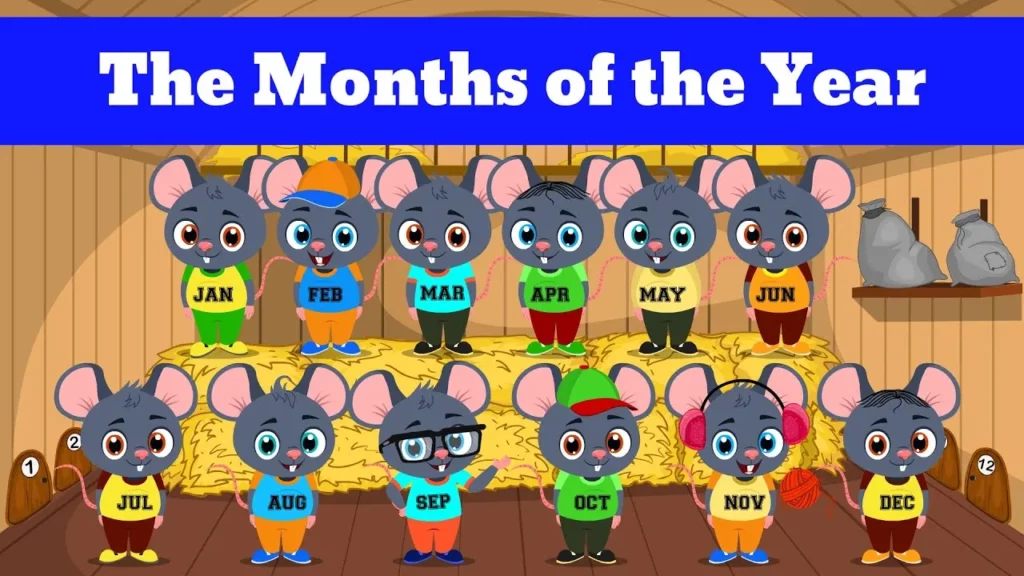
In this lesson, children are introduced to the 12 months of the year through a charming story about 12 mice named after each month. The mice face a challenge when they encounter a cat and need help remembering the order of their names to find their way home. By organizing the months sequentially, learners engage with the concept of time while enjoying a fun narrative.
Divisibility Rule for 7 | Mental Math Fluency
In this lesson, students learn a simple method to determine if a number is divisible by 7 using mental math. The process involves taking the last digit of the number, doubling it, and subtracting that from the remaining digits to check for divisibility. With practice, students can easily apply this rule to various numbers, enhancing their math fluency.
Sieve of Eratosthenes | Finding Prime Numbers
In this lesson, we explored the Sieve of Eratosthenes, an ancient and engaging method for identifying prime numbers, which are defined as numbers that can only be divided by 1 and themselves. By systematically crossing out multiples of each prime number starting from 2, we can efficiently discover all prime numbers within a specified range, such as 1 to 50. This method not only enhances our understanding of prime numbers but also encourages further exploration and practice.
Plant Cell Organelles and Their Functions Quiz | Structure and Functions of Plant Cell Organelles
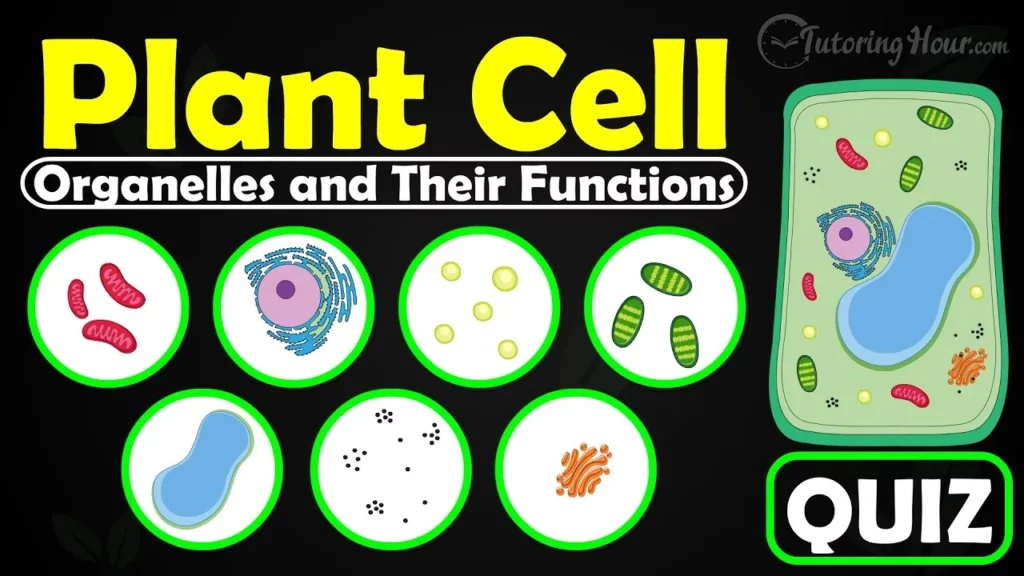
In this lesson, students engage in an interactive quiz to learn about the various organelles of plant cells and their functions. Key components discussed include the cell membrane, cell wall, mitochondrion, cytoplasm, vacuole, Golgi apparatus, chloroplast, endoplasmic reticulum, ribosomes, nucleus, nucleolus, and peroxisomes, each playing a crucial role in the cell’s structure and function. The lesson emphasizes the importance of these organelles in maintaining cellular processes and overall plant health.
Basic Division for Kids | Learn to Divide Using Grouping, Sharing, and Array Models
In this lesson, children learn the basics of division through three engaging methods: grouping, sharing, and arrays. Using relatable examples like wiggly eyes, pullback cars, and fairy fruit wands, students practice dividing quantities into equal groups, ensuring they understand how to find the quotient in a fun and interactive way. By the end of the lesson, they are encouraged to practice these methods to enhance their division skills.
Animal Homes for Kids | Where Do Animals Live?
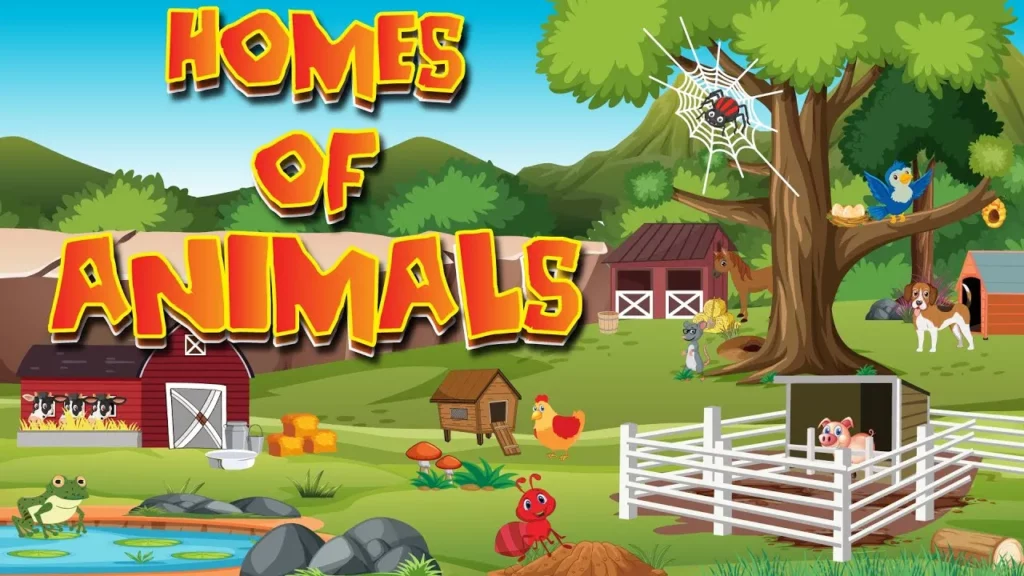
In the lesson “Animal Homes,” Whistler, the Animal Express, takes us on a journey to discover where various animals live. Each stop highlights a different animal and its unique home, such as spiders in webs, cows in sheds, and rabbits in burrows, emphasizing the diversity of animal habitats. The lesson concludes with Whistler saying goodbye as he returns to the station after delivering all the animals to their homes.