
Can steroids save your life? – Anees Bahji
The lesson discusses the vital role of steroids in medical treatments, particularly their use as anti-inflammatory agents derived from cortisol, a natural steroid produced by the body. While commonly associated with muscle building, medicinal corticosteroids are essential for managing various conditions like asthma and skin reactions by modulating the immune response and reducing inflammation. The lesson emphasizes that, despite their potential negative effects when used long-term, steroids can be lifesaving in controlling inappropriate immune reactions.
What yoga does to your body and brain – Krishna Sudhir

The lesson explores the historical origins and modern applications of yoga, highlighting its foundational elements as defined by the sage Patañjali, which include physical postures, breathing exercises, and spiritual contemplation. While yoga is associated with various health benefits such as improved flexibility, strength, and potential therapeutic effects for conditions like chronic pain and lung diseases, research findings are mixed and often inconclusive due to methodological challenges. Despite these uncertainties, yoga remains a valuable practice for physical fitness and psychological well-being, warranting further investigation into its broader health impacts.
First person vs. Second person vs. Third person – Rebekah Bergman
In this lesson, Rebekah Bergman explores the significance of narrative perspective in storytelling, highlighting the differences between first person, second person, and third person viewpoints. Each perspective offers unique advantages and limitations, influencing how readers connect with characters and experience the story. The lesson emphasizes the importance of choosing the right point of view to enhance storytelling, while also acknowledging innovative approaches that may emerge with advancements in technology.
The greatest mathematician that never lived – Pratik Aghor
The lesson explores the intriguing story of Nicolas Bourbaki, a pseudonymous collective of French mathematicians who sought to unify the fragmented field of mathematics in the 1930s. Through their comprehensive work, “Éléments de mathématique,” they established a systematic framework that emphasized rigorous logic and formal proofs, significantly influencing modern mathematical research despite Bourbaki being a fictional character. Ultimately, the group’s legacy highlights the importance of collaboration and structure in advancing the discipline, demonstrating that even an imaginary mathematician can leave a lasting impact.
The tale of the boy who tricked the Devil – Iseult Gillespie
In “The Tale of the Boy Who Tricked the Devil,” a boy with a special birthmark survives an evil king’s plot against him and embarks on a quest to retrieve three golden hairs from the Devil to win the princess’s hand. Along his journey, he helps various villagers by solving their problems, demonstrating kindness and cleverness. Ultimately, he outsmarts the greedy king, secures his marriage to the princess, and proves that intelligence and compassion can triumph over malice.
The race to decode a mysterious language – Susan Lupack
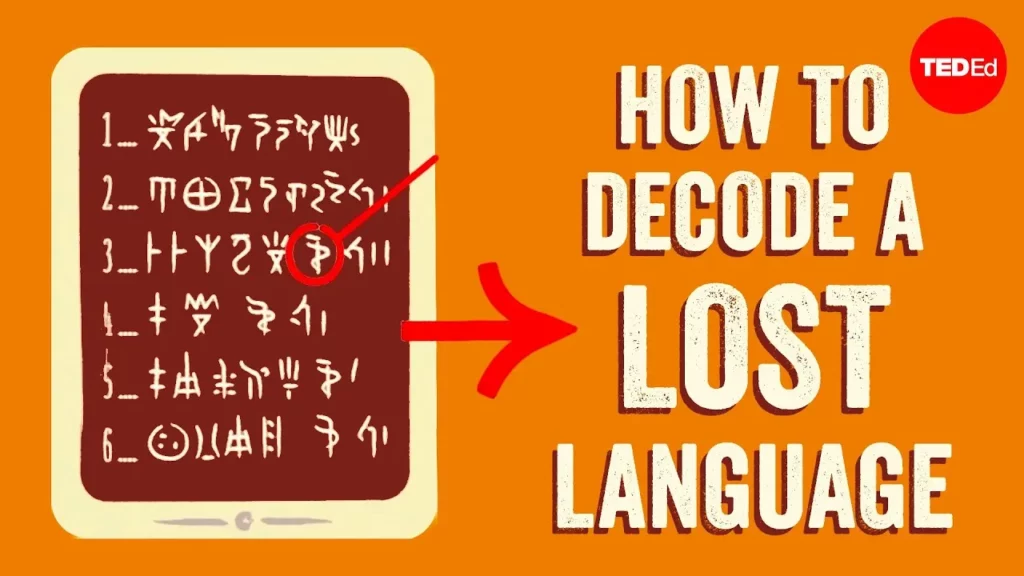
The lesson explores the historical journey of deciphering Linear B, an ancient script discovered by Sir Arthur Evans on Crete, believed to belong to the Minoan civilization. Despite Evans’ initial findings, it was Alice Kober and later Michael Ventris who made significant strides in decoding the script, ultimately revealing that Linear B represented an early form of Greek rather than Minoan. The lesson concludes by highlighting the ongoing mystery of Linear A, the script associated with the Minoans, which remains undeciphered.
The Egyptian myth of the death of Osiris – Alex Gendler
The Egyptian myth of the death of Osiris tells the story of how Set, driven by jealousy, trapped his brother Osiris in a coffin and cast it into the Nile, leading to Osiris’s death. Despite the challenges, Osiris’s wife, Isis, and her sister Nephtys embarked on a quest to find and resurrect him, ultimately succeeding in reassembling his body, though he could not return to the living world. Instead, Osiris became the ruler of the underworld, Duat, while his legacy continued through their son, who would seek vengeance for his father’s fate.
The myth of Jason, Medea, and the Golden Fleece – Iseult Gillespie
The myth of Jason, Medea, and the Golden Fleece tells the story of Jason’s quest to reclaim his throne by obtaining the Golden Fleece from the guarded land of Colchis. With the help of Medea, the king’s daughter and a powerful sorceress, Jason successfully completes three dangerous tasks, ultimately securing the fleece but also facing the consequences of their actions. This tale highlights themes of bravery, love, and the moral complexities of heroism, reminding us that even the most valiant heroes can make grave mistakes.
How do our brains process speech? – Gareth Gaskell
The lesson explores how our brains process speech, highlighting that by age 20, individuals typically know tens of thousands of words, with recognition accuracy reaching 98%. It explains the brain’s parallel processing capabilities, where unique neuron patterns represent words, allowing for rapid identification and meaning extraction, especially when contextual cues are present. Additionally, it discusses how new words are initially stored separately in the hippocampus and gradually integrated into the existing vocabulary during sleep, ensuring our language skills evolve without interference.
Ethical dilemma: The burger murders – George Siedel and Christine Ladwig
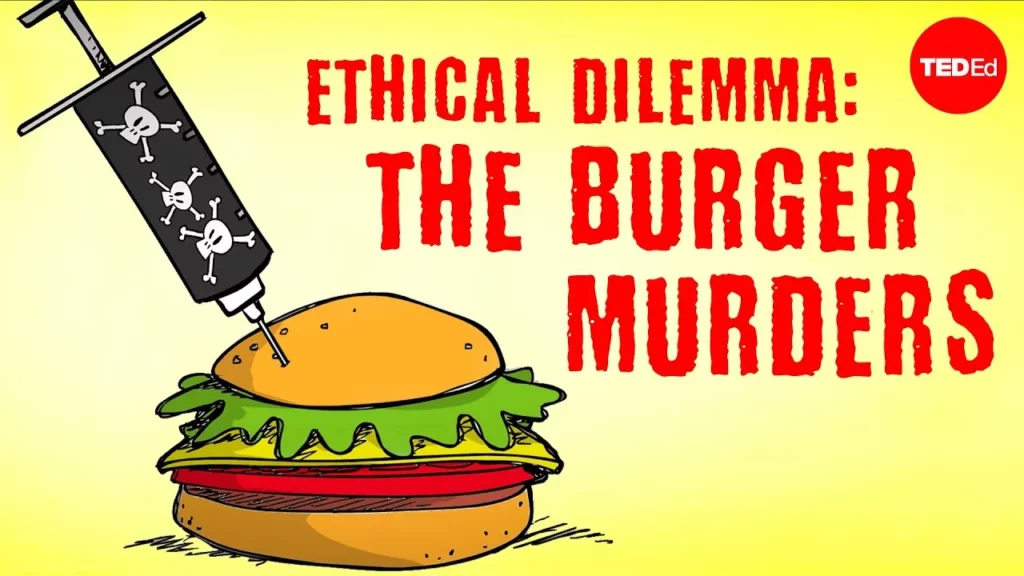
The lesson presents a complex ethical dilemma faced by a meatless burger company after reports of harmful tampering with their products, leading to fatalities. It explores three potential responses—doing nothing, pulling products citywide, or recalling them globally—while emphasizing the importance of stakeholder analysis and ethical tests to guide decision-making. Drawing on the historical example of the Tylenol crisis, the lesson illustrates that prioritizing customer safety can ultimately restore trust and benefit the company, despite the immediate financial repercussions.