
Can you solve the honeybee riddle? – Dan Finkel
In this lesson, you take on the role of a biologist tasked with saving a rare honeybee species by strategically placing the last 60 bees into hexagonal frames to create viable hives. By understanding the mechanics of how bees can transform hexes through chain reactions, you learn to optimize the placement of bees to maximize the number of hives created, ultimately resulting in the establishment of six productive hives that support the survival of the species. The lesson emphasizes problem-solving and strategic thinking in ecological conservation efforts.
Newton’s three-body problem explained – Fabio Pacucci
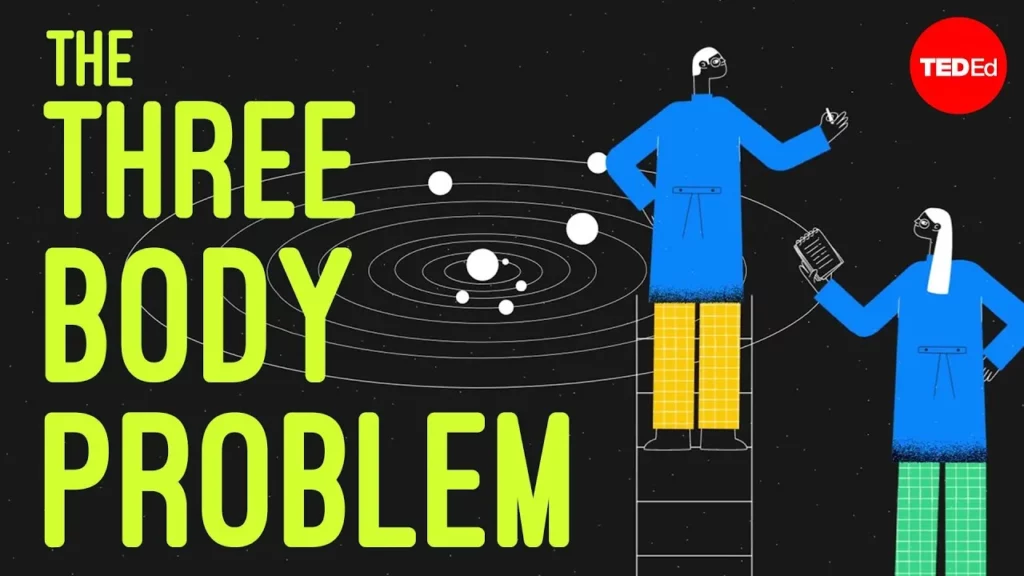
The lesson on Newton’s Three-Body Problem explores the complexities and unpredictability of gravitational interactions in multi-body systems, particularly within our solar system. Through a 2009 experiment that simulated the future positions of planets, researchers demonstrated that even minor variations in initial conditions could lead to significant changes in orbital stability, highlighting the chaotic nature of n-body systems. While Newton’s equations effectively describe two-body interactions, the challenge of accurately predicting the behavior of three or more bodies remains due to the overwhelming number of variables, emphasizing the importance of advanced simulations for space missions and our understanding of cosmic dynamics.
The big-beaked, rock-munching fish that protect coral reefs – Mike Gil
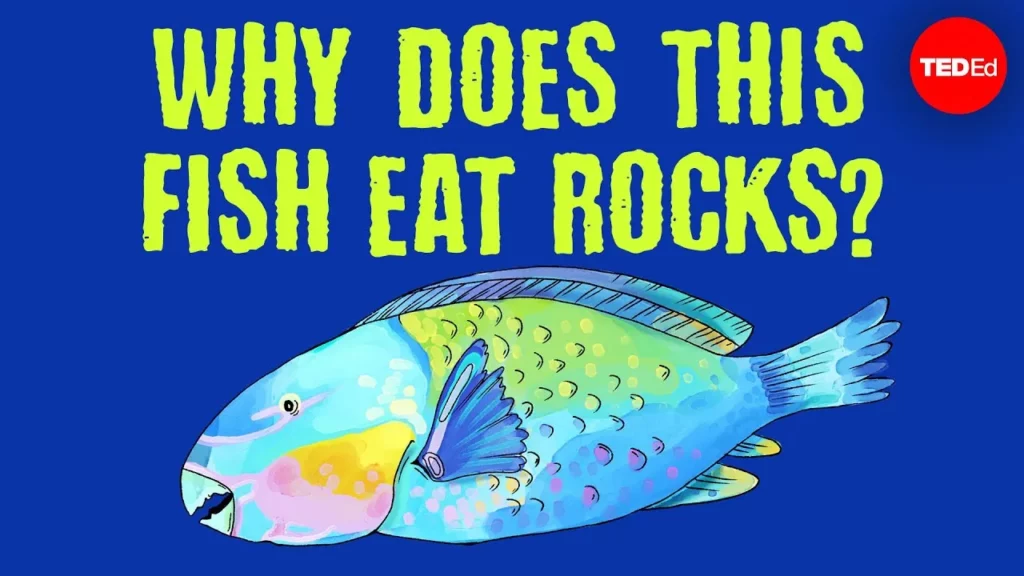
The lesson highlights the crucial role of parrotfish in maintaining the health of coral reefs by controlling seaweed growth, which competes with corals for space and resources. Parrotfish not only consume seaweed with their unique beak-like teeth but also contribute to the social dynamics of reef ecosystems by signaling safety to other fish. However, human activities such as overfishing and pollution threaten these vital ecosystems, underscoring the importance of preserving both parrotfish and coral reefs for marine biodiversity and coastal protection.
Can you outsmart the fallacy that fooled a generation of doctors? – Elizabeth Cox
The lesson explores the historical debate surrounding childbed fever in the 19th century, highlighting the flawed reasoning of Charles Meigs, who mistakenly attributed the illness to abdominal inflammation due to the false cause fallacy. It contrasts this with the insights of Dr. Oliver Wendell Holmes and the groundbreaking work of Ignaz Semmelweis, who emphasized the importance of hygiene in preventing the disease, ultimately leading to Louis Pasteur’s identification of the bacterial cause. This narrative underscores the necessity of questioning assumptions and the value of scientific inquiry in advancing medical knowledge.
Can you solve the cheating royal riddle? – Dan Katz
In this lesson, you are tasked with determining the rightful heir to a kingdom based on a dice-rolling competition among the king’s children. By analyzing their reported scores, you find that Bertram and Cassandra’s scores are impossible due to mathematical constraints, and Draco’s score is not a multiple of 5, leading to their disqualification. Ultimately, Alexa, with a valid score of 385, is deemed the worthy successor to the throne.
The last living members of an extinct species – Jan Stejskal
The lesson highlights the plight of Nájin and Fatu, the last two northern white rhinos, who are functionally extinct due to the absence of a male for natural reproduction. Despite the challenges posed by their health issues and the historical decline of their species due to poaching and habitat loss, scientists are exploring artificial reproduction techniques to create viable embryos using stored sperm and eggs from southern white rhinos. This initiative underscores the broader responsibility humanity has in preserving biodiversity and addressing the consequences of its actions on wildlife.
Evolution’s great mystery – Michael Corballis
The lesson explores the remarkable case of Kanzi, a bonobo who demonstrated advanced communication skills using a keyboard of abstract symbols, sparking debate about the nature of language. It emphasizes that human language is unique in its open-endedness and complexity, distinguishing it from animal communication, which typically conveys specific messages. The lesson also delves into the evolution of language, suggesting that it may have originated from gestural communication and evolved alongside significant changes in human anatomy and cognition, raising profound questions about the relationship between language and human development.
How to outsmart the Prisoner’s Dilemma – Lucas Husted
The lesson explores the dynamics of the Prisoner’s Dilemma through the story of two gingerbread men, Crispy and Chewy, faced with a decision that could lead to mutual betrayal or cooperation. Initially, the characters are likely to sacrifice each other for self-preservation, resulting in a Nash Equilibrium where both end up worse off. However, when the scenario evolves into an Infinite Prisoner’s Dilemma, they can leverage future interactions to foster cooperation, highlighting the importance of valuing future outcomes to achieve better long-term results, a concept applicable to real-world situations like trade and international relations.
Can you solve the sorting hat riddle? – Dan Katz and Alex Rosenthal
In this lesson, students embark on a magical journey at Magnificent Marigold’s Magical Academy, where they must solve a riddle posed by the Sorting Hat to determine their house. By analyzing clues about the founders of four houses and uncovering the identity of a mysterious fifth house, students learn to combine logic and deduction to arrive at the answer: the secret house is Minotaur, which offers treasures but may lack companionship. Ultimately, the lesson emphasizes critical thinking and decision-making in the face of exciting choices.
Are all of your memories real? – Daniel L. Schacter
The lesson explores the fallibility and complexity of human memory, highlighting how easily memories can be influenced, misattributed, and biased by external information and current beliefs. Through various studies, it demonstrates that our recollections are not accurate representations of reality but subjective interpretations shaped by context and suggestion. Understanding the nature of memory is essential, particularly in real-world situations like legal proceedings, where flawed memories can lead to significant consequences.