
What is MSG, and is it actually bad for you? – Sarah E. Tracy
The lesson explores the origins of concerns surrounding monosodium glutamate (MSG), which began with a 1968 letter by Dr. Robert Ho Man Kwok linking MSG to adverse symptoms after dining at a Chinese restaurant. Despite initial fears and biased research, MSG is derived from sodium and glutamate, an amino acid essential for various bodily functions, and is recognized for its umami flavor. Modern research indicates that while excessive consumption may cause some adverse effects in a minority of individuals, moderate use of MSG is generally considered safe and can enhance the flavor of food without the negative connotations previously associated with it.
You could have a secret twin (but not the way you think) – Kayla Mandel Sheets

The lesson explores the intriguing phenomenon of chimerism through the story of Karen Keegan, who discovered that two of her sons were actually her biological nephews due to her having absorbed cells from a fraternal twin during pregnancy. Chimerism, a rare condition where an individual possesses two distinct sets of DNA, can occur through various mechanisms, including twin pregnancies and fetal cell transfer. This revelation challenges conventional notions of genetics and suggests that the presence of multiple genomes in individuals may be more common than previously thought, prompting a reevaluation of our understanding of genetic inheritance.
The secrets of the world’s most famous symphony – Hanako Sawada

The lesson explores the significance of Beethoven’s Symphony No. 5, highlighting its premiere in 1808 under challenging conditions and its immediate impact on audiences. It discusses Beethoven’s innovative departure from Classical traditions towards Romanticism, particularly through the use of the “fate motif,” which symbolizes fate’s persistent presence. The symphony’s groundbreaking instrumentation and emotional journey from C minor to C major further exemplify Beethoven’s genius and the enduring legacy of this iconic work in music history.
Can you solve the rogue submarine riddle? – Alex Rosenthal

In the “Rogue Submarine Riddle,” participants must deduce two distinct positive integers, each less than 7, that represent the launch codes for a missile system. Through a series of logical statements made by Subordinate A and Subordinate B regarding their knowledge of their respective numbers (the sum and product), the puzzle emphasizes critical thinking and reasoning to arrive at the solution, which is determined to be the numbers 5 and 4. This lesson illustrates the importance of logical deduction and understanding how limited information can lead to a clearer picture.
How a concubine became the ruler of Egypt – Abdallah Ewis
The lesson explores the remarkable rise of Shajar Al-Durr, a former concubine who secretly ruled Egypt after the death of her husband, Sultan As-Salih, during the Crusades. Despite her initial status as a slave and the societal challenges she faced, Shajar Al-Durr successfully led Egypt, negotiated with foreign powers, and established her authority as Sultana. Her reign ultimately ended in tragedy due to political intrigue, but her legacy endures through her contributions to Egyptian history and architecture.
The genes you don’t get from your parents (but can’t live without) – Devin Shuman
The lesson explores the unique role of mitochondria, which contain their own distinct set of genes separate from the 23 pairs inherited from our parents. Originating from a symbiotic relationship with a single-celled organism over 1.5 billion years ago, mitochondria are essential for energy production in cells and exhibit dynamic behavior, including independent replication and variation in mitochondrial DNA. This complex relationship highlights the evolutionary significance of mitochondria and their impact on human health, as they are influenced by both maternal inheritance and environmental factors.
Zora Neale Hurston’s “Their Eyes Were Watching God” – Tanya Boucicaut
In Tanya Boucicaut’s lesson on Zora Neale Hurston’s “Their Eyes Were Watching God,” the narrative follows Janie Crawford’s journey of self-discovery and resilience against societal expectations, beginning with her mysterious return to Eatonville after a devastating hurricane. The novel, deeply reflective of Hurston’s own life experiences, explores themes of love, independence, and the quest for authenticity through rich storytelling and regional dialects, ultimately highlighting the struggles and triumphs of Black women in early 20th-century America. Through Janie’s story, Hurston emphasizes the importance of lived experiences in understanding one’s identity and desires.
Can you solve the computer virus riddle? – James Tanton
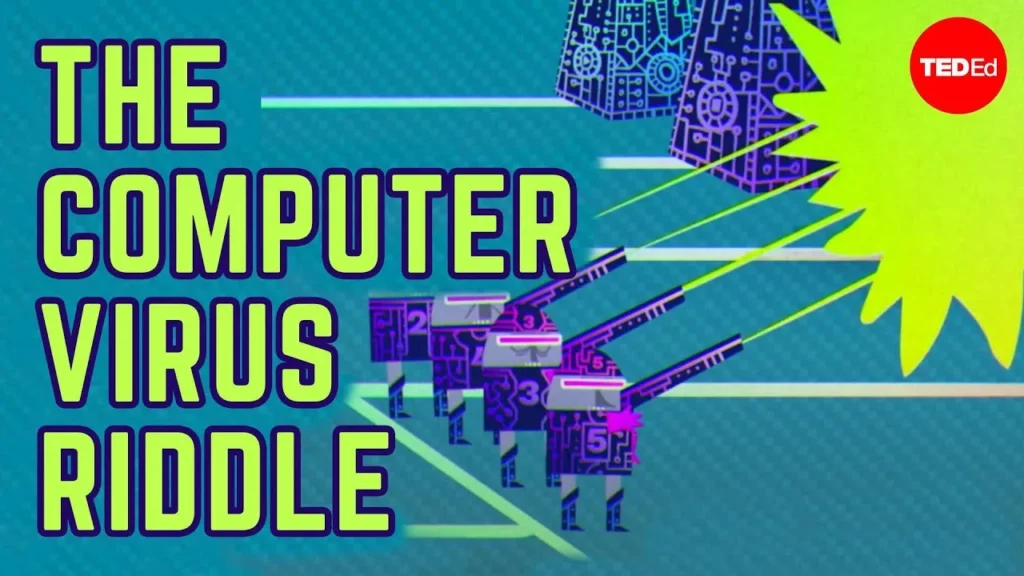
In this lesson, you are challenged to solve a riddle involving a computer virus that corrupts one of four crucial disks in a mainframe. Using binary code and the concept of parity, you must determine which disk is corrupted by observing the status of the disks and strategically flipping one switch to communicate the correct information to your team, ultimately leading to the successful destruction of the virus. The approach can be scaled to systems with any number of disks that are a power of two, demonstrating the versatility of the method.
Why are scientists obsessed with the Black Sea? – Helen Farr and Jon Adams

The Black Sea has captivated scientists due to its unique preservation conditions, which have allowed for the discovery of numerous ancient shipwrecks, including the oldest intact shipwreck dating back to 350-410 BCE. Its meromictic nature, characterized by distinct layers of freshwater and saltwater, prevents oxygen from reaching the depths, creating an ideal environment for preserving organic materials. While these shipwrecks offer invaluable insights into historical maritime activities, they are also fragile, necessitating careful study without disturbing their original forms.
The surprisingly long history of electric cars – Daniel Sperling and Gil Tal
The lesson outlines the historical evolution of electric cars, highlighting their early popularity in the late 1800s due to their ease of use and cleanliness compared to steam and gasoline-powered vehicles. However, challenges with battery efficiency and cost led to the dominance of gasoline cars until the late 20th century, when environmental concerns and advancements in battery technology sparked a renewed interest in electric vehicles. Today, electric cars are rapidly gaining traction as governments push for sustainable transportation solutions, signaling a potential shift away from gasoline-powered vehicles.