
Ice Age Hour of Code – Introduction
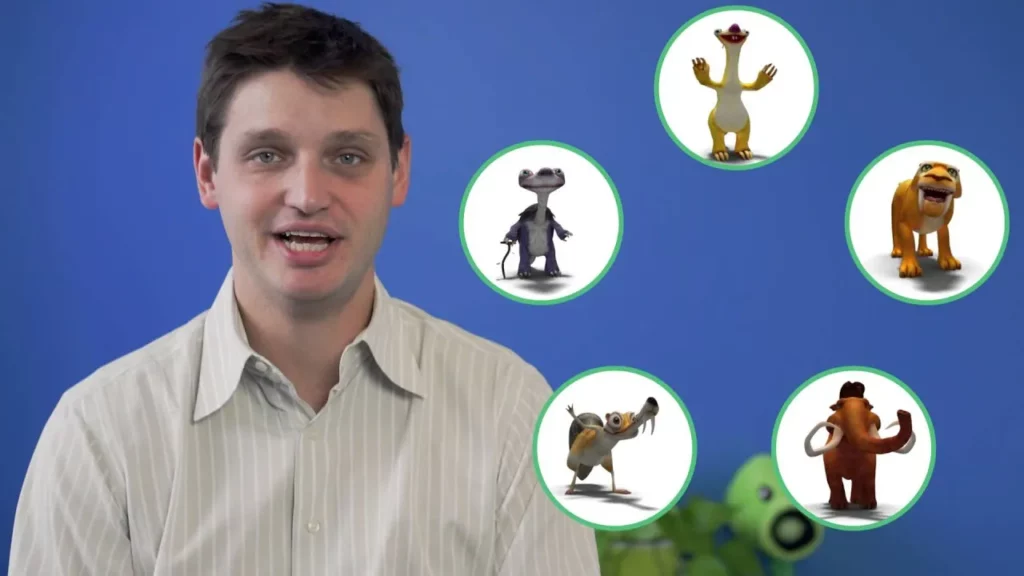
In the “Ice Age Hour of Code – Introduction” lesson, students are introduced to the basics of game creation using the PlayLab tool, emphasizing the importance of storytelling and character interaction in games. They will learn to navigate the game screen, utilize coding blocks from the toolbox, and start programming simple actions, ultimately empowering them to design and share their own games. By the end of the lesson, students will have the foundational skills to bring their creative ideas to life through coding.
CSA: Recursion
This lesson introduces the concept of recursion, a programming technique where a function calls itself to solve problems by breaking them down into smaller, similar tasks. It highlights the two key components of recursion: the base case, which determines when the recursion stops, and the recursive case, which allows the function to continue calling itself. Through the example of putting away plates, the lesson illustrates how recursion can effectively manage repetitive tasks, contrasting it with traditional loops.
CSP: Conditionals pt 2C – if/else if statements
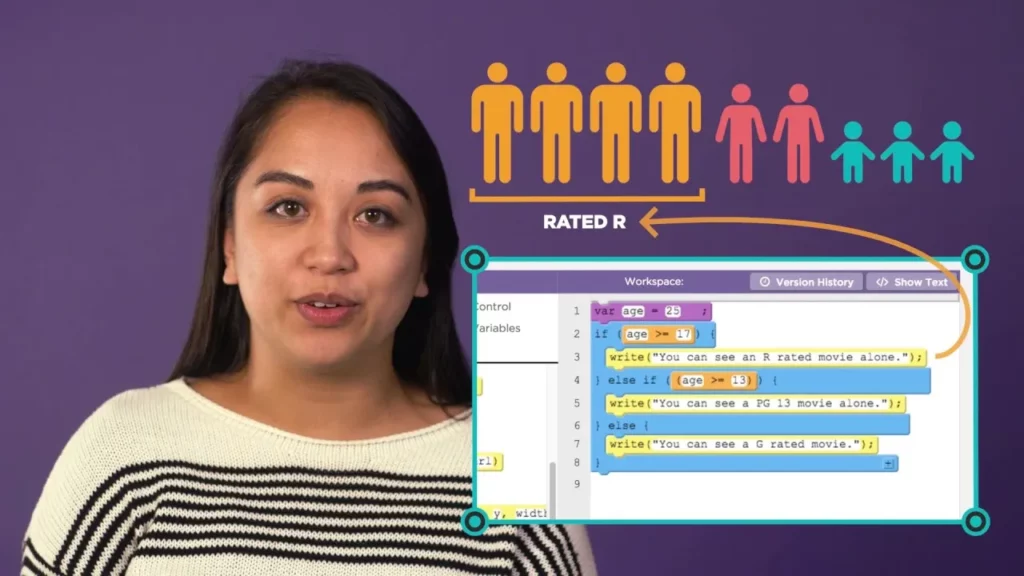
In this lesson, we explored the use of “if,” “else if,” and “else” statements in programming to handle multiple outcomes based on specific conditions, using a movie rating example based on age. We learned that the order of these conditions is crucial; placing the most specific conditions first ensures that the program evaluates them correctly and provides accurate results. By mastering these conditional statements, programmers can create more complex decision-making processes in their code.
App Lab – Getting Started
In the “App Lab – Getting Started” lesson, Mei’lani introduces learners to App Lab, a user-friendly platform for creating apps using coding. The lesson covers the App Lab interface, focusing on the “setProperty” block, which allows users to modify the appearance of app elements, and emphasizes the importance of problem-solving and creativity in computer science. Participants are encouraged to explore both block and text modes while using JavaScript, with guidance available for overcoming challenges as they progress through the tutorial.
Coding with Stephen Curry
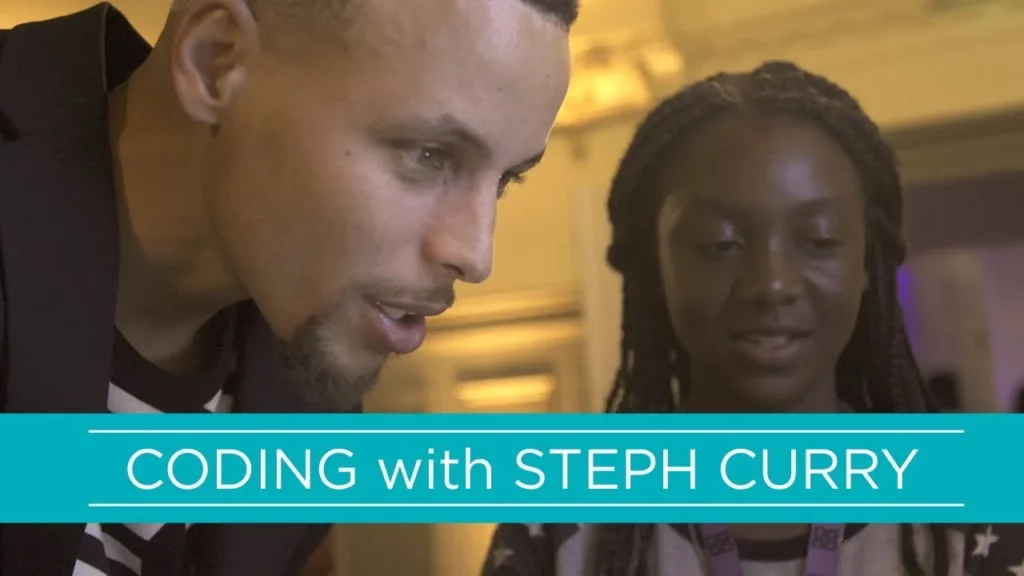
In this lesson, Stephen Curry emphasizes the importance of learning computer science in today’s technology-driven world, highlighting the vast opportunities it offers for creativity and innovation. He encourages perseverance in the face of challenges, drawing parallels between coding and basketball practice, and motivates students to advocate for more computer science education in their schools to explore potential passions and careers in technology.
Dance Party: AI Edition – How AI Works
The lesson “Dance Party: AI Edition – How AI Works” explains that artificial intelligence (AI) is a powerful tool that learns by analyzing vast amounts of data to identify patterns and make decisions. It illustrates how AI can enhance music recommendations and creative processes, allowing users to interact with AI-generated effects through options like regeneration, customization, and starting over. Ultimately, the lesson emphasizes the collaborative potential between humans and AI in creating unique experiences.
CSA: Removing Data from an ArrayList

In this lesson, we explored the use of the `remove` method in ArrayLists, which allows for the elimination of elements while noting that subsequent elements shift left, decreasing the list’s size. While removing elements during traversal can lead to skipped items due to index adjustments, careful management of the loop can prevent this issue. Additionally, using an `Iterator` is recommended for safely removing elements without the complications of index management.
Minecraft – Hour of Code: INTRO
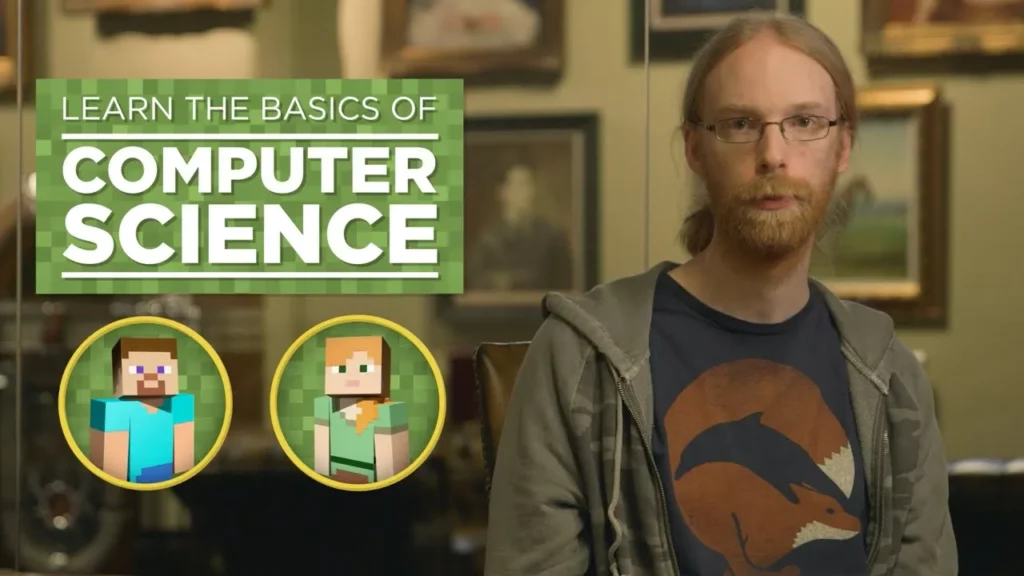
In the lesson “Discovering Minecraft Coding with Jeb,” participants learn the fundamentals of computer science by programming a character, Alex, to navigate a Minecraft world using Blockly, a visual programming tool. By dragging and dropping command blocks, learners create simple programs that translate into JavaScript code, helping them understand essential programming concepts while enjoying the interactive Minecraft environment. The session encourages creativity and exploration in coding, making it accessible and fun for beginners.
CSA: Software Engineering – Introduction
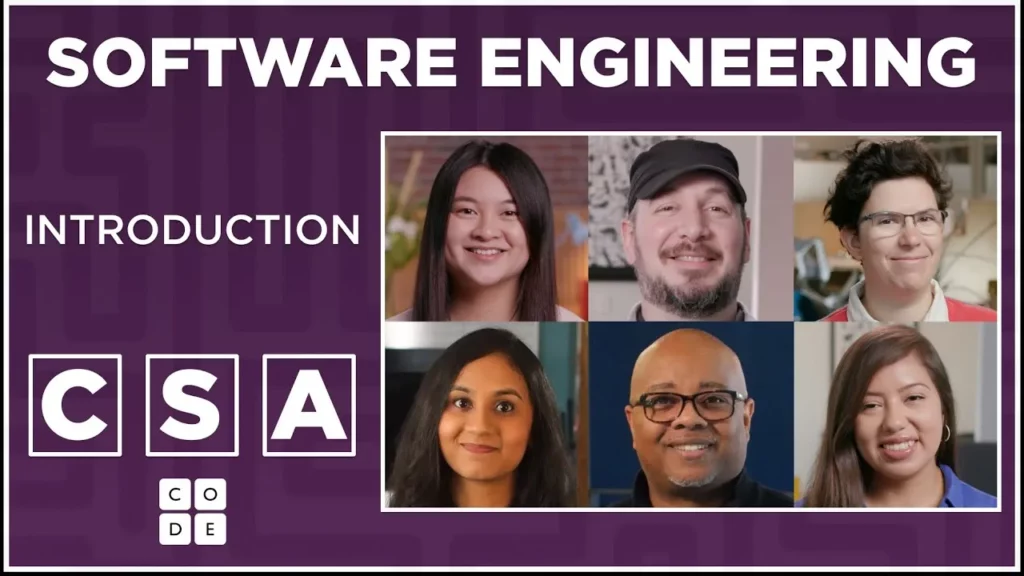
The lesson introduces the field of software engineering, highlighting its creative and problem-solving aspects, as well as the importance of collaboration and continuous learning. It emphasizes that coding is an art form that allows for personal expression and innovation, while also encouraging individuals to embrace challenges and contribute to the vibrant community of software engineers. Ultimately, the lesson conveys that the possibilities within computer science are limitless, making it an exciting and rewarding career path.
Anthony Bau makes it easy to go from blocks to text programming
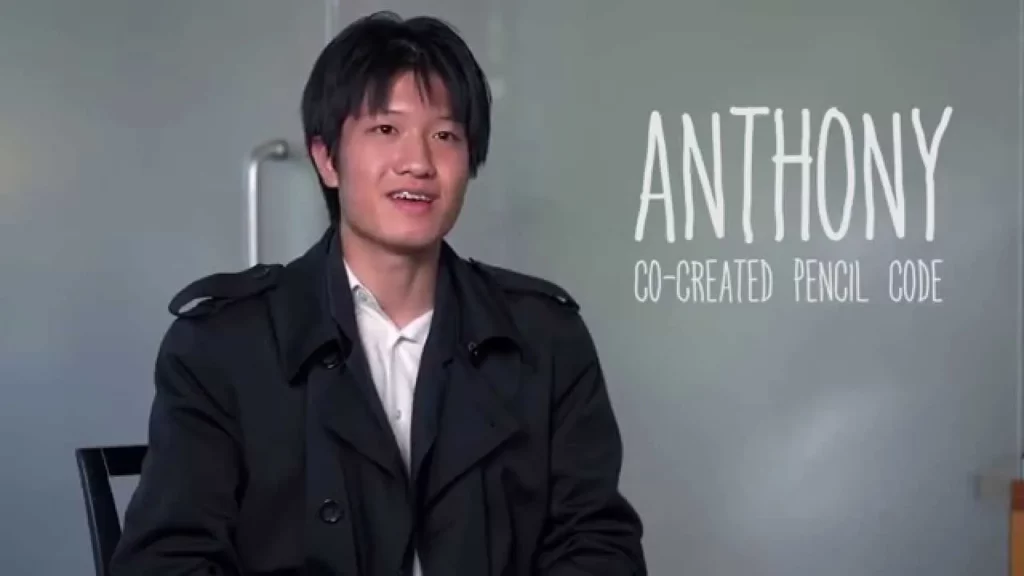
In this lesson, we explore Anthony Bau’s innovative platform, Pencil Code, which facilitates a smooth transition from block-based programming to text programming. Designed for beginners, Pencil Code allows users to learn at their own pace while emphasizing the creative and community aspects of programming. Ultimately, the lesson encourages learners to enjoy the process and engage with projects that inspire them.