
App Lab In the Classroom

The lesson on App Lab highlights its accessibility and versatility as a tool for beginners in computer science to create their own apps. Key features include rapid prototyping, a user-friendly transition from block coding to text coding, and the ability to design interactive apps without prior knowledge of HTML or CSS. Students collaborated to develop a simple game, showcasing the platform’s potential for various programming courses and encouraging further exploration through available tutorials.
Unplugged Lesson in Action – Graph Paper Programming
In this lesson on graph paper programming, students learn about algorithms and programs through a hands-on activity of creating a checkerboard pattern. An algorithm is compared to a recipe, while a program is described as an algorithm written for a computer to understand. By giving clear instructions to fill in squares, students practice computational thinking and problem-solving skills, which are essential in programming and everyday tasks.
CSA: Constructors

In this lesson, we explored the concept of constructors in Java using the example of a sandwich shop’s program. A constructor is a special method that initializes new objects, and in our case, the no-argument constructor for the Sandwich class sets default values for attributes like meat, cheese, and price. Understanding how to create and utilize constructors allows programmers to control the initial state of objects, leading to more efficient and organized code.
Bee Functions with Chris Bosh

In the lesson “Bee Functions with Chris Bosh,” students learn about the concept of functions in programming, which are analogous to plays in basketball. Just as athletes master basic skills before executing complex plays, programmers create functions to simplify and organize their code, allowing for repeated actions without redundancy. By using functions, programmers can efficiently manage tasks and make their code more understandable and easier to modify.
CS Principles: Introduction to Lists – Part 4 Getting Length

In this lesson, we explored the concept of lists in programming, focusing on how to determine their length using the `numList.length` property. We learned about zero-based indexing, which means that the last item in a list can be accessed using `numList.length – 1`. Overall, lists are highlighted as a flexible and powerful tool for managing dynamic data in programming.
CSA: The ArrayList Class

The lesson on the ArrayList class explains how it addresses the limitations of fixed-size arrays in Java by providing a resizable list that can grow dynamically as items are added. It highlights the importance of using ArrayLists for managing collections of objects efficiently, as they automatically handle resizing and allow for the storage of both object types and their corresponding wrapper classes. By learning to create and utilize ArrayLists, programmers can effectively manage dynamic data in their applications.
CS Principles: Conditionals – Part 2 If/Else Statements
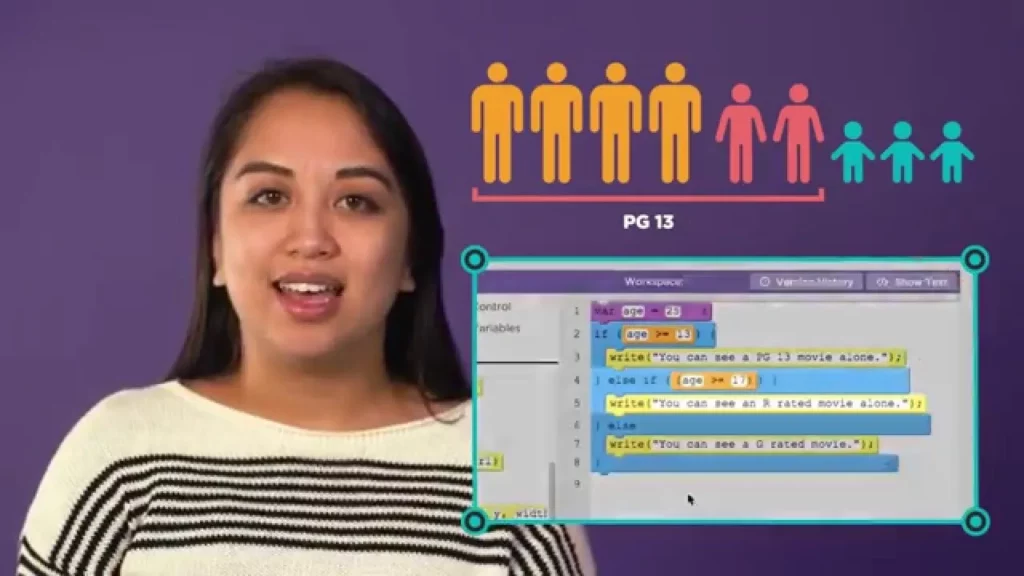
In this lesson on conditionals, students learn how to implement decision-making in computer programs using “if,” “else,” and “else if” statements, drawing parallels to everyday decision-making processes. The lesson emphasizes the importance of evaluating conditions to determine outcomes, such as checking age eligibility for different movie ratings, and highlights the significance of the order of conditions to ensure accurate program behavior. By understanding these concepts, students can create more dynamic and responsive programs.
CSA: Working with 2D Elements
In this lesson, we explored the fundamentals of working with 2D arrays, which are structured like tables with rows and columns. We learned how to access specific rows and individual elements using zero-based indexing, as well as how to modify elements within the array. By grasping these concepts, you’ll be well-equipped to manage and manipulate data in 2D arrays effectively.
How Not To Get Hacked: Phishing

The lesson on phishing emphasizes the importance of being vigilant to avoid falling victim to online scams that can compromise personal information. It explains how hackers often use deceptive emails to trick individuals into providing sensitive data or downloading harmful software. To stay safe, individuals are encouraged to use strong passwords, verify the authenticity of requests for personal information, and only download software from trusted sources.
CS in Algebra: Coordinate Plane
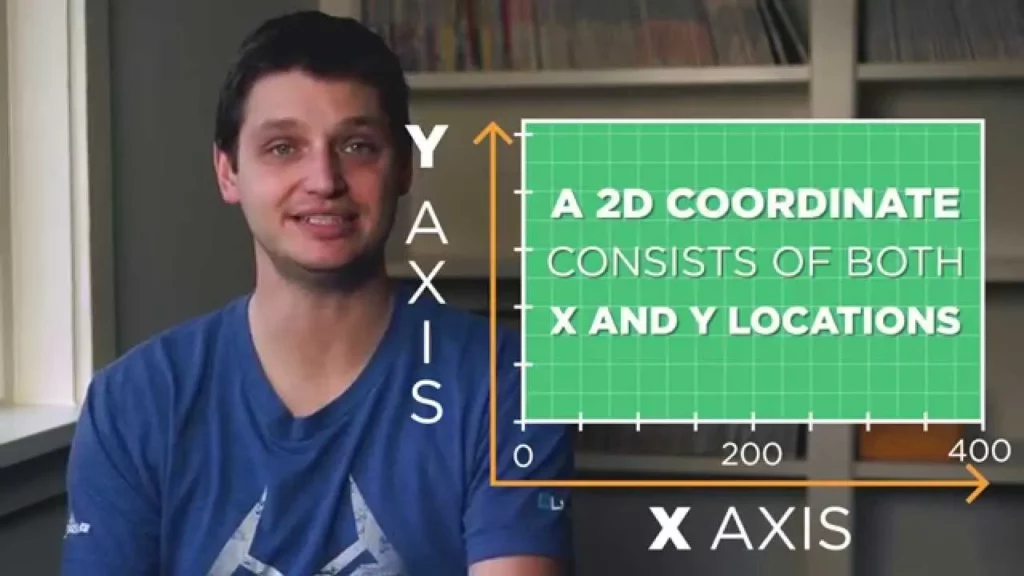
In this lesson, students learn how algebra and geometry are applied in video game development, particularly through the use of the coordinate plane. By understanding how to describe the positions and movements of characters (sprites) using x and y coordinates, learners can create simple 2D games, illustrating the practical application of mathematical concepts in technology and gaming. The lesson also introduces the four quadrants of the coordinate plane, enhancing students’ comprehension of spatial relationships in a digital context.