
Fixing Daylight Saving Time Is THIS Easy
The lesson explores the origins and implications of daylight saving time (DST), tracing its beginnings from Benjamin Franklin’s humorous suggestion to modern implementations aimed at energy conservation. While DST was initially adopted to maximize daylight and save energy, its effectiveness and impact on health and daily life have sparked ongoing debates about its relevance today. The lesson concludes by highlighting the complexities of timekeeping and the potential for future changes in how we manage our clocks.
The Real (Weird) Way We See Numbers
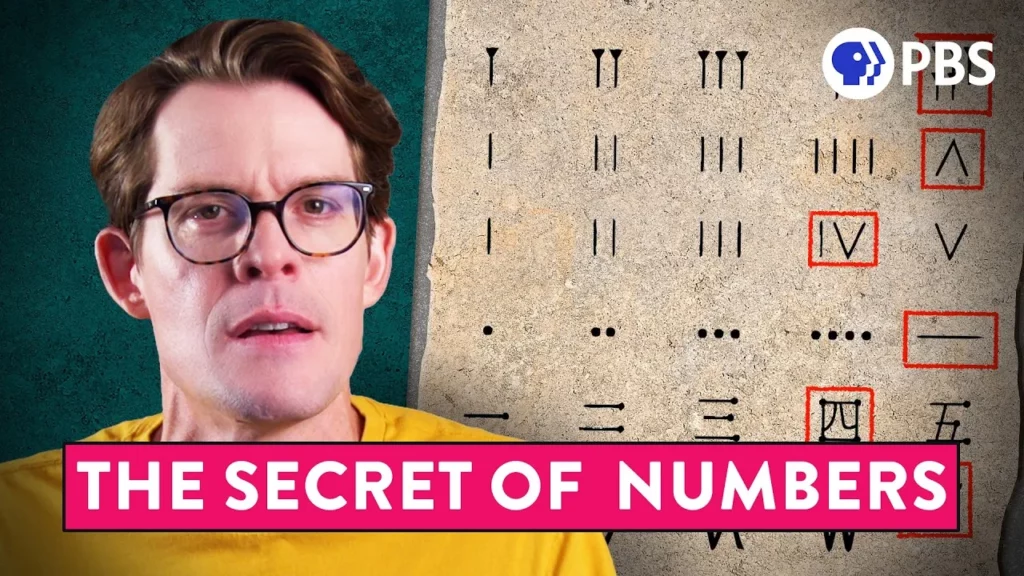
In today’s lesson, we explored how our brains perceive and understand numbers through engaging experiments, revealing that counting small quantities is intuitive, while larger groups become increasingly challenging. We learned that humans possess a natural number sense, allowing us to recognize small quantities without counting, and that this ability is shared with animals. Understanding these concepts is crucial, especially for individuals with dyscalculia, as it highlights the importance of both our innate number sense and the developed language of numbers in facilitating mathematical comprehension.
Why Are There 7 Days In a Week? EXPLAINED
The lesson explores the origins and significance of the seven-day week, highlighting its unique status among time divisions that are based on natural cycles. Rooted in ancient astronomy and astrology, the number seven was associated with seven celestial bodies and became a foundational element of various cultures, spreading through the Roman Empire and adapting to religious practices. Ultimately, the seven-day week reflects a blend of historical beliefs and observations, illustrating how ancient traditions continue to influence our modern calendar.
The Truth About Butterfly Metamorphosis (It’s VERY WEIRD)

The lesson explores the fascinating process of metamorphosis, detailing the four stages of a butterfly’s life cycle: egg, caterpillar, chrysalis, and adult butterfly. It highlights the unique transformations that occur at each stage, emphasizing the importance of this process for survival and adaptation in nature. Ultimately, the lesson encourages curiosity about the wonders of the natural world and the incredible journey from caterpillar to butterfly.
Where Did Life Come From? (feat. PBS Space Time and Eons!)
In this lesson, Joe explores the origins of life on Earth, highlighting Stanley Miller’s groundbreaking 1952 experiment that demonstrated how simple chemicals could form amino acids, the building blocks of life. He discusses the timeline of Earth’s formation and the conditions necessary for life to emerge, emphasizing the role of RNA as a precursor to DNA and proteins. Ultimately, the lesson concludes that while we can define life and understand its evolution, the question of why life exists remains unanswered, inviting further curiosity and exploration.
Why Do We Go to Space?

The lesson on “The Exciting Journey of Space Exploration” highlights the evolution of space travel from military rockets to groundbreaking missions that have expanded our understanding of the universe. It emphasizes the significance of human experiences in space, the collaborative efforts of nations through initiatives like the International Space Station, and the ongoing quest for knowledge exemplified by missions to Mars. Ultimately, the lesson encourages embracing the spirit of discovery to inspire future generations and unlock new possibilities in space exploration.
Apollo’s Most Important Discovery (Inside NASA’s Moon Rock Vault!)
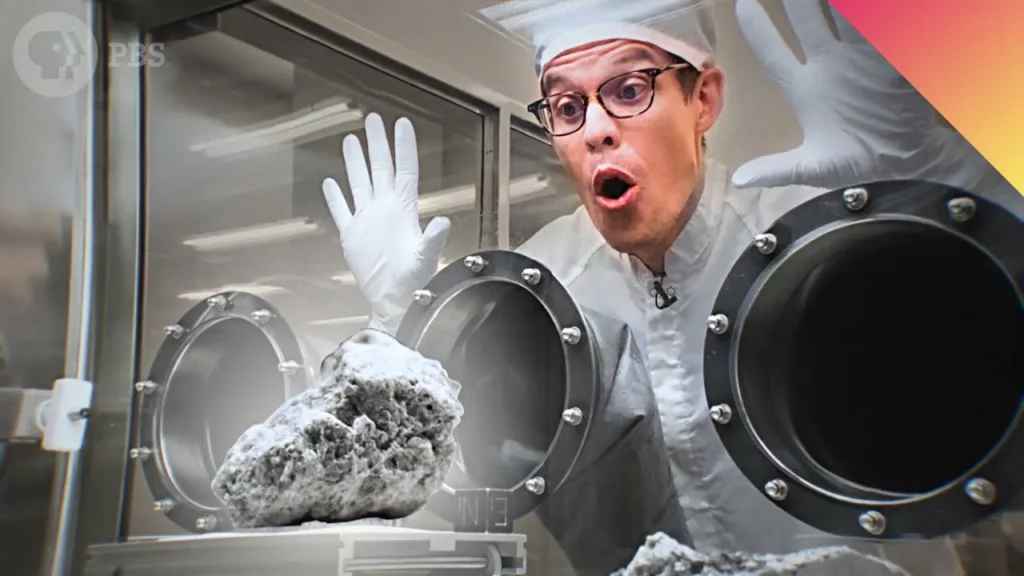
In this lesson, we explored the unique characteristics of the Moon, particularly its size relative to Earth and the mysteries surrounding its formation. The discussion highlighted the significance of Moon rocks collected during the Apollo missions, which provided crucial evidence for the giant impact hypothesis, suggesting that the Moon formed from debris after a collision between Earth and a Mars-sized body. The lesson emphasizes the ongoing importance of lunar research in understanding both the Moon’s history and the future of space exploration.
The Unbelievable Science of How We Read
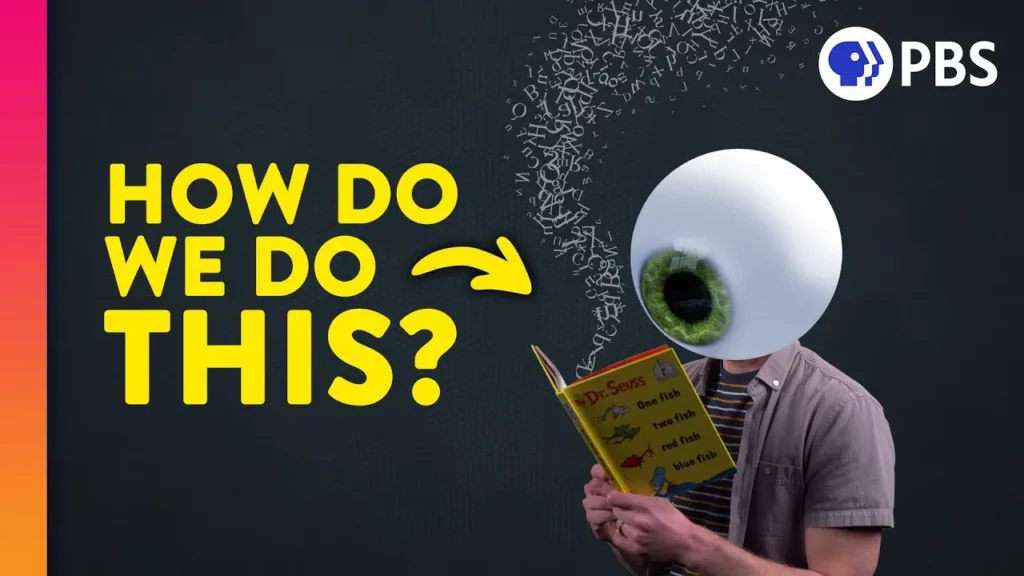
In the lesson “Understanding the Magic of Reading,” Joe explores the intricate processes involved in reading, highlighting how our brains perceive letters and words through optical illusions and neural mechanisms. He explains that while reading may seem automatic, it involves complex cognitive functions, such as recognizing words as whole units rather than individual letters, and utilizing quick eye movements called saccades to process text efficiently. The lesson emphasizes the remarkable adaptability of our brains in mastering a skill that has only been around for a few thousand years.
7 Scientific Urban Legends Debunked!

The lesson “Understanding Scientific Misconceptions” highlights how widely accepted beliefs, such as the 10-to-1 ratio of microbes to human cells and the effectiveness of vitamin C in preventing colds, often stem from outdated or flawed information. It emphasizes the importance of questioning common knowledge and verifying sources, as misconceptions can persist due to the repetition of unverified facts and limited access to scientific research. Encouraging curiosity and a willingness to update our understanding is essential for fostering accurate scientific knowledge.
Why Being Embarrassed Is Good For You

The lesson “Understanding Embarrassment: A Fun Exploration” delves into the complex emotion of embarrassment, highlighting its evolutionary purpose and social implications. It explains how embarrassment is a self-conscious emotion influenced by social norms and the fear of negative judgment, and discusses its triggers, physiological signs, and benefits in fostering social connections. Ultimately, the lesson emphasizes that while embarrassment can feel uncomfortable, it plays a crucial role in helping us learn from our mistakes and strengthen our relationships.