
The Absurd Mindset That Changes Everything
The lesson explores the journey of Cam and Maria as they navigate change and seek meaning in their lives after relocating to Houston. Through their experiences and reflections, particularly inspired by an older man digging in his yard, they learn that happiness can be found in the present moment and the act of trying, rather than solely in achieving specific outcomes. Ultimately, the lesson emphasizes the importance of embracing uncertainty and cherishing small joys as they search for purpose amidst life’s challenges.
These Simple Words Can Change How You Think About The Past – Nietzsche
The lesson on Nietzsche’s concept of *amor fati* emphasizes the importance of embracing life in its entirety, including both joys and challenges. Through the idea of eternal recurrence, Nietzsche invites us to reflect on whether we would willingly relive our lives as they are, advocating for a perspective that finds beauty in all experiences. Ultimately, *amor fati* encourages acceptance and appreciation of our fate, transforming our approach to existence and fostering resilience in the face of adversity.
The Darkest Philosopher in History – Arthur Schopenhauer
The lesson on Arthur Schopenhauer highlights his significant contributions to philosophy, particularly his exploration of the “will” as a driving force behind existence and his pessimistic view of life characterized by suffering and insatiable desires. Schopenhauer’s integration of Eastern philosophies and his advocacy for coping mechanisms such as art and asceticism reflect his deep understanding of the human condition. His legacy continues to influence various fields, prompting ongoing discussions about the complexities of existence and the nature of reality.
How To Unf**k Your Brain
The lesson of Anastasia’s journey after trauma emphasizes the challenges of memory loss and the importance of self-discovery in the face of adversity. Through the support of her family and the power of creative expression, she learns to reconnect with her identity and embrace a new beginning, illustrating the resilience of the human spirit. Ultimately, her story serves as a reminder that while our past shapes us, it does not define us, and that self-exploration can lead to healing and renewal.
If Everyone Believes It, It’s Probably Wrong – The Philosophy of Socrates (& Plato)
The lesson explores the profound influence of Socrates and his student Plato on Western philosophy, highlighting Socrates’ method of inquiry and emphasis on virtue, as well as Plato’s development of structured philosophical ideas, including the Theory of Forms and the Allegory of the Cave. Despite the challenges in understanding Socrates due to his lack of written records, his legacy encourages critical thinking and the pursuit of knowledge, which continue to resonate in contemporary philosophical discourse. Ultimately, their contributions laid the groundwork for ethical understanding and the nature of reality, inspiring ongoing inquiry and reflection.
Paradoxes That No One Can Solve

The lesson on paradoxes explores their nature and significance across various fields, illustrating how they challenge our understanding of logic and reality. It categorizes paradoxes into three types—falsitical, veritical, and antinomy—each revealing different aspects of human reasoning and the limitations of knowledge. Ultimately, paradoxes serve as a reminder of the complexities of existence and encourage continuous exploration and critical thinking in our pursuit of understanding.
Most People Have Never Been Adults
The lesson explores the remarkable journey of humanity, highlighting the significant growth of the global population and the dramatic changes in life expectancy over time. It emphasizes how advancements in health, medicine, and technology have transformed human existence, allowing for longer, healthier lives and unprecedented opportunities compared to our ancestors. The lesson concludes by reflecting on the importance of understanding our historical context as we look toward a future filled with potential for further innovation and improvement.
The Art of Letting Go – The Philosophy of the Buddha
The lesson on Buddhism outlines the journey of Siddhartha Gautama, who became the Buddha after seeking answers to life’s suffering and challenges. Central to his teachings are the Four Noble Truths and the Noble Eightfold Path, which provide a framework for overcoming suffering through ethical living, mental discipline, and wisdom. The concept of non-self emphasizes the fluid nature of existence, encouraging non-attachment and a deeper understanding of oneself, making Buddhism a relevant philosophy for addressing contemporary human experiences.
Don’t Believe in Anything – The Philosophy of Nihilism
The lesson on nihilism delves into its philosophical roots, various forms, and the responses it has elicited from thinkers throughout history. It highlights existential nihilism, which posits that life lacks inherent meaning, and discusses how philosophers like Nietzsche and Kierkegaard approached this concept, offering perspectives that range from despair to the empowerment of creating personal meaning. Ultimately, the lesson emphasizes the ongoing relevance of nihilism in contemporary philosophical discourse as humanity continues to seek understanding in an increasingly complex universe.
How to Waste Your Life & Regret Everything
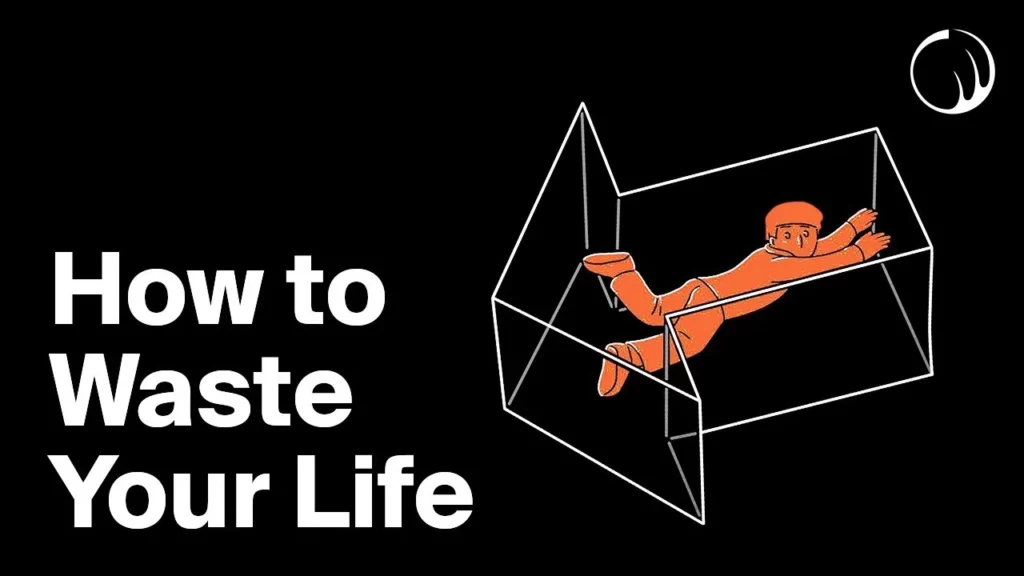
The lesson explores Armand’s lifelong pursuit of immortality through mind uploading, highlighting his early fascination with the concept and the sacrifices he made to achieve his goal. Despite the technological advancements that eventually allowed for mind uploading, Armand’s experience reveals the limitations of this technology, as the uploaded consciousness lacked the continuity of self that defines identity. Ultimately, the narrative raises profound philosophical questions about the nature of consciousness and what it truly means to live, challenging the notion of immortality itself.