
The Stickiest *Non-Sticky* Substance

The lesson explores the innovative technology behind gecko-inspired adhesives, which mimic the unique adhesion mechanisms of gecko feet to create a non-sticky yet highly effective bonding material. Developed in Professor Mark Cutkosky’s lab at Stanford University, these adhesives utilize microscopic structures and Van der Waals forces to achieve remarkable grip, leading to applications in robotics, space exploration, and more. The potential for future advancements in this field is vast, promising to revolutionize various technologies.
Chaos: The Science of the Butterfly Effect

The lesson on the Butterfly Effect explores how small actions can lead to significant changes, illustrating the unpredictability inherent in chaotic systems. Originating from chaos theory, particularly through the work of Ed Lorenz, it highlights that while some systems may appear deterministic, their sensitivity to initial conditions makes long-term predictions challenging. Ultimately, the Butterfly Effect emphasizes the limits of our predictive capabilities and the complex interplay between order and chaos in the universe.
What Is Gravity?

The lesson on gravity explains that it is a fundamental force that pulls objects toward each other, keeping us grounded on Earth and influencing the movement of celestial bodies in space. It highlights the importance of mass in determining gravitational strength, illustrating how larger objects like Earth and the Sun exert significant gravitational pull on smaller ones, such as the Moon and planets. Ultimately, understanding gravity reveals the interconnectedness of all objects in the universe and the balance it creates within the cosmos.
Thomson’s Plum Pudding Model of the Atom
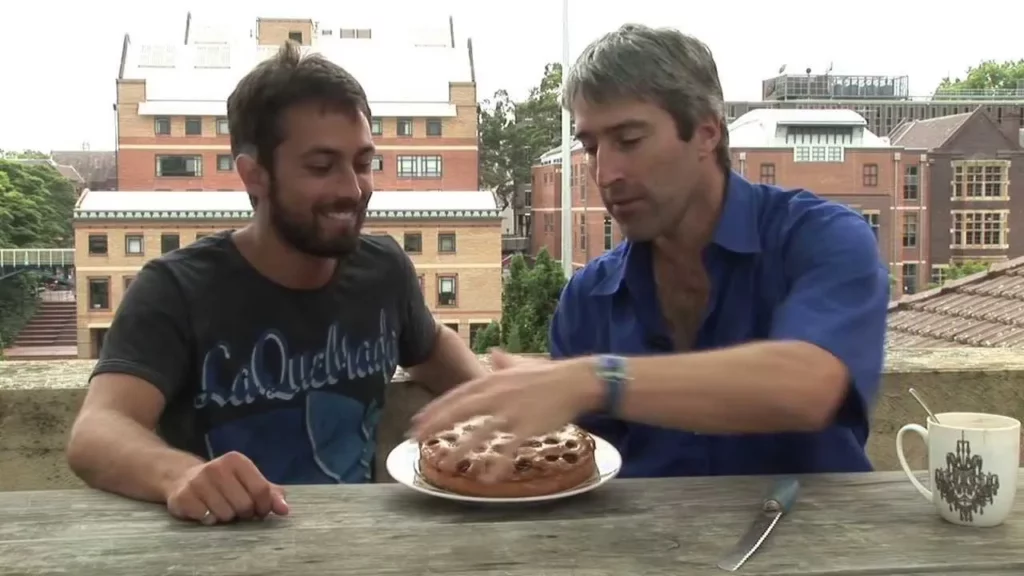
The lesson explores the evolution of the concept of the atom, beginning with ancient Greek ideas of indivisible particles and progressing to modern understandings that include subatomic particles like electrons. Key developments, such as J.J. Thomson’s discovery of the electron and the introduction of models like the “plum pudding” model, illustrate how scientific advancements have reshaped our understanding of atomic structure. This journey highlights the dynamic nature of scientific inquiry and the continuous refinement of theories about matter.
The kg is dead, long live the kg

The lesson discusses the historic redefinition of the kilogram and other base SI units, which will be voted on by representatives from nearly 60 countries in Versailles, France. The current definition, based on a physical object, is being replaced by a standard based on Planck’s constant, enhancing measurement consistency and reliability. This change not only improves scientific precision but also signifies a transformative shift in our understanding of measurement, paving the way for future advancements.
The Best Test of General Relativity (by 2 Misplaced Satellites)

The lesson discusses the launch of the Galileo Satellites 5 and 6 by the European Space Agency, which faced significant challenges due to a malfunction that placed them in elliptical orbits instead of the intended circular paths. Despite these setbacks, scientists seized the opportunity to conduct groundbreaking tests of general relativity, refining measurements of gravitational redshift and paving the way for future explorations into the nature of gravity and the universe. This experience highlights the resilience of scientific inquiry and the potential for unexpected discoveries amidst challenges.
What I Wish I Knew When I Was Younger

The lesson emphasizes the importance of overcoming learned helplessness in the pursuit of one’s dreams, particularly in the context of a personal journey toward a career in filmmaking. It highlights how awareness of this psychological concept can empower individuals to take control of their lives and navigate challenges, rather than succumbing to passivity. Ultimately, the message encourages embracing obstacles and recognizing that the power to shape one’s future lies within each person.
World’s Highest Jumping Robot

The lesson discusses a groundbreaking small robot that can jump an astonishing 31 meters, far surpassing previous records in robotic jumping. It explores the mechanics behind its design, including the use of carbon fiber and elastic bands for energy storage, and introduces the concept of work multiplication, which allows the robot to efficiently release energy for impressive leaps. This innovation has significant implications for future exploration, particularly in challenging environments like the Moon, showcasing the intersection of engineering, physics, and biology in robotics.
Why Mosquitoes Bite Some People More Than Others
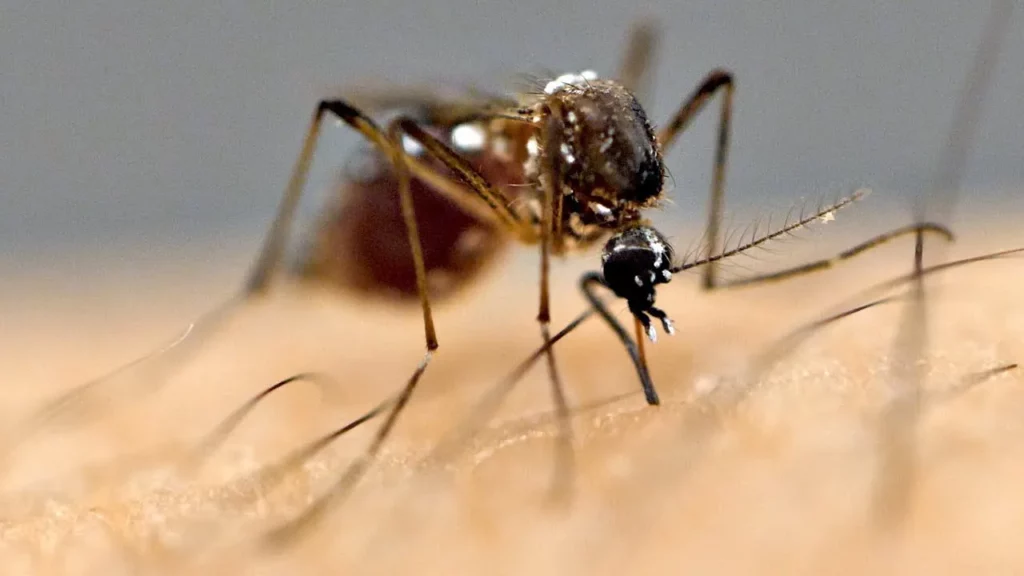
This lesson explores the reasons behind why some individuals are more attractive to mosquitoes than others, highlighting the significant role of genetics in this phenomenon. Through an experiment conducted with Professor Immo Hansen, it was demonstrated that specific genetic markers influence mosquito attraction, as evidenced by a personal comparison of mosquito bites between the author and his wife. The findings suggest that body chemistry, shaped by genetic differences, affects how appealing a person is to mosquitoes, which has broader implications for public health and understanding mosquito-borne diseases.
The Inverse Leidenfrost Effect

The lesson explores the inverse Leidenfrost effect, a phenomenon where droplets levitate on a bath of liquid nitrogen due to a vapor layer formed from the nitrogen itself. Through a simple experimental setup, students observe how silicone oil droplets float and move on the nitrogen surface, driven by instabilities at the droplet’s interface. This effect has potential applications in fields like cryopreservation, where precise manipulation of droplets can enhance techniques for preserving biological materials.