
Spinning Black Holes
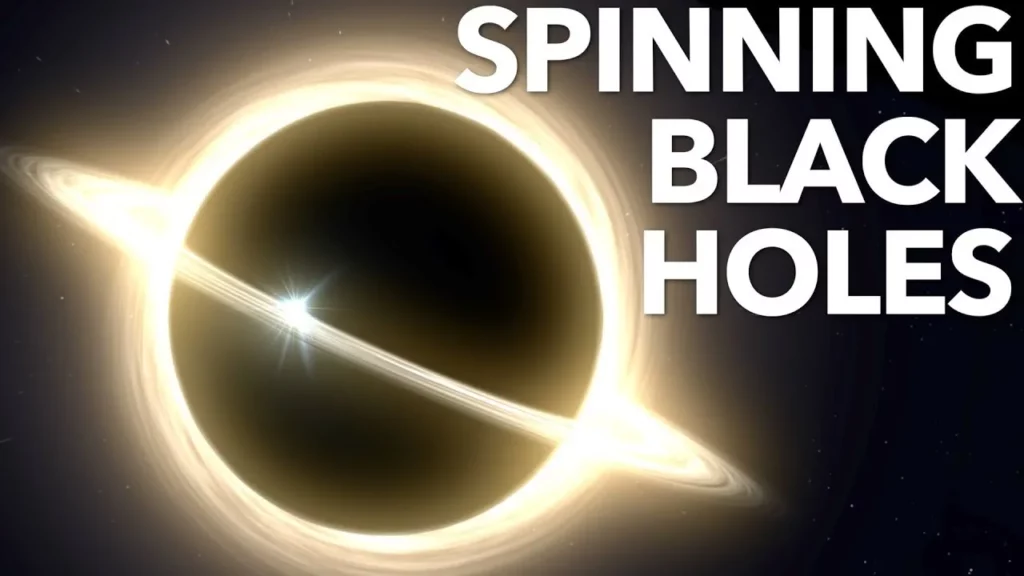
The lesson discusses Tidal Disruption Events (TDEs), which occur when a star gets too close to a supermassive black hole and is torn apart by its gravitational forces, creating an accretion disk that emits observable X-rays. A significant TDE observed in 2014 allowed scientists to measure the spin of the black hole involved, revealing insights into its growth and the dynamics of black holes in relation to their galaxies. This research enhances our understanding of black hole formation and evolution in the universe.
Quantum Entanglement & Spooky Action at a Distance
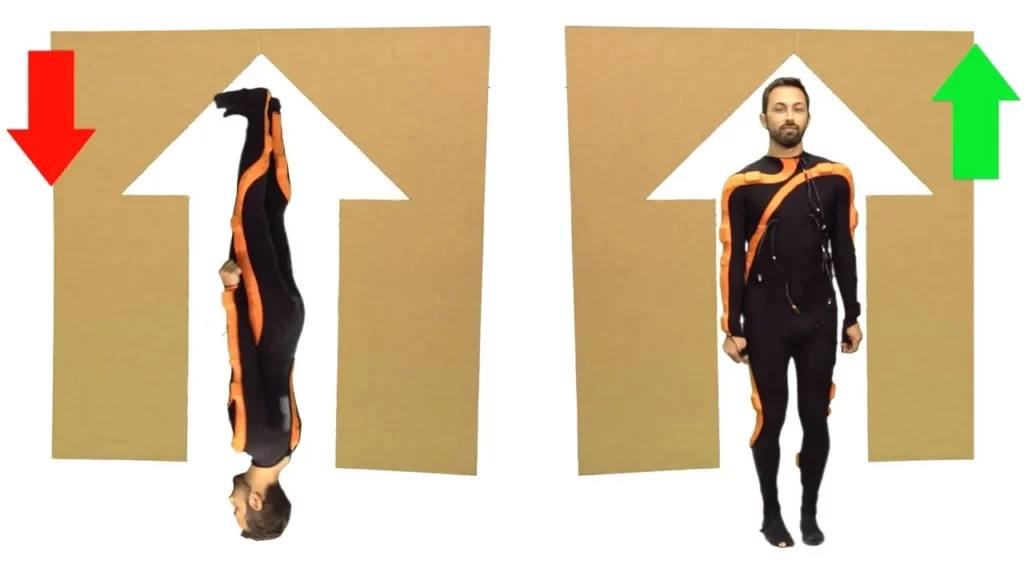
The lesson explores Albert Einstein’s concerns about quantum mechanics, particularly the concept of “spooky action at a distance,” which suggests that entangled particles can instantaneously affect each other’s states regardless of distance. Through the examination of particle spin, measurement outcomes, and John Bell’s experiments, it is revealed that entangled particles do not possess hidden information but instead exhibit correlations that challenge traditional notions of locality and randomness. Ultimately, the findings deepen our understanding of quantum mechanics while affirming that these phenomena do not violate the principles of relativity.
Slinky Drop Extended
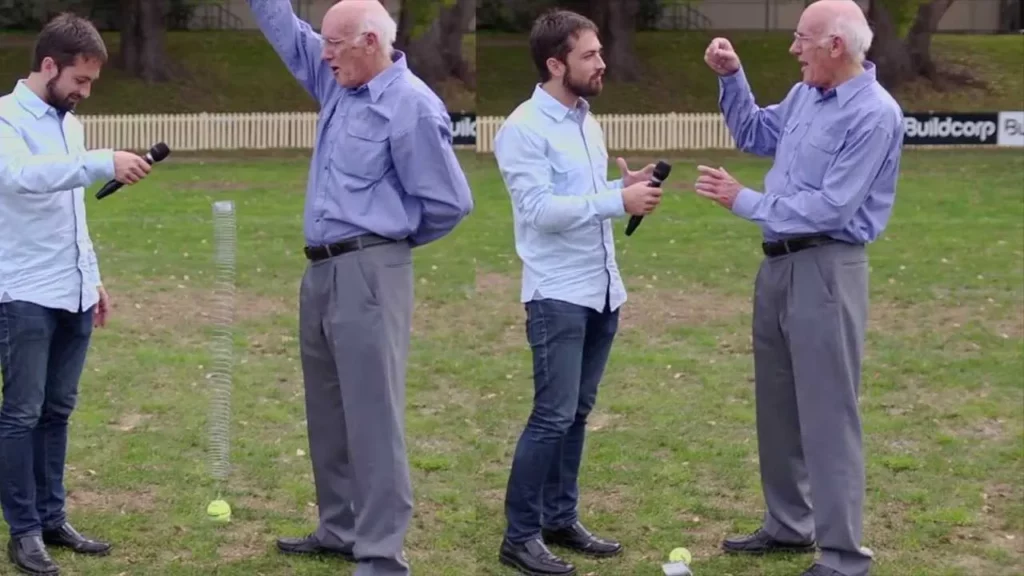
In this lesson, we explore a physics experiment involving a Slinky and a tennis ball to demonstrate the effects of tension and gravity. When the Slinky is dropped, the tennis ball surprisingly remains stationary until the Slinky has fully fallen, illustrating the balance of forces at play. This experiment highlights the counterintuitive nature of physics and encourages curiosity about the complexities of motion and forces.
4 Revolutionary Riddles Resolved!
In this lesson, we explored the solutions to four intriguing riddles that illustrate key concepts in physics and mechanics. Each riddle, ranging from the behavior of a rolling cylinder to the complexities of average speed and bicycle mechanics, encourages critical thinking and deepens our understanding of motion through practical demonstrations and viewer insights. By engaging with these puzzles, we gain a clearer appreciation of how various physical principles interact in everyday scenarios.
How Cod Saved the Vikings

The lesson explores the critical role of cod in the survival of the Vikings in the harsh environment of Scandinavia, highlighting how their diet, particularly the consumption of cod rich in vitamin D, helped them avoid rickets despite limited sunlight. It emphasizes the importance of cultural practices and knowledge transmission in their communities, contrasting this with the downfall of the Greenland Vikings who neglected these dietary traditions. Ultimately, the lesson underscores the value of both traditional knowledge and scientific understanding in ensuring health and survival.
Your Mass is NOT From the Higgs Boson
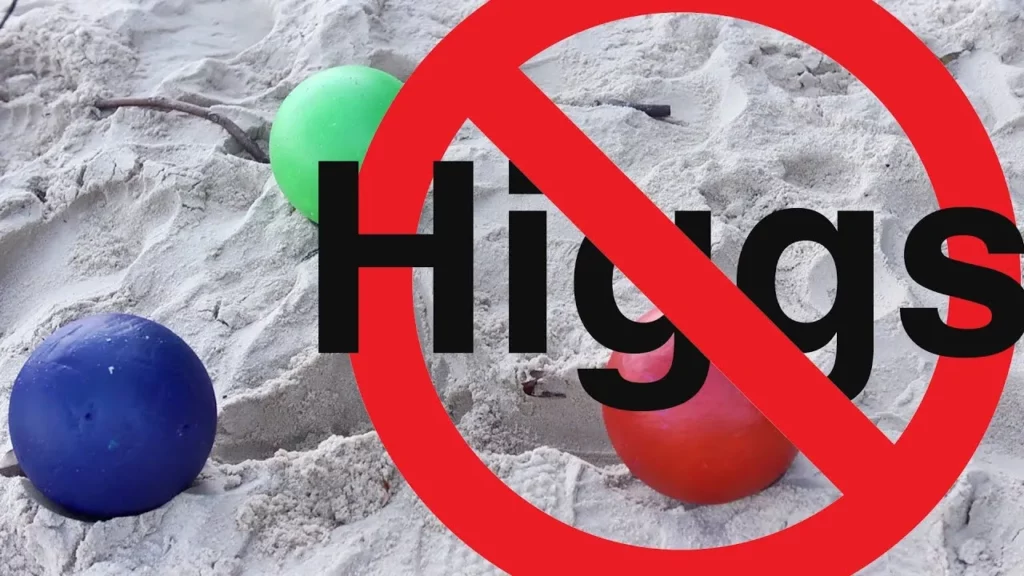
This lesson explores the concept of mass in relation to quarks and the Higgs mechanism, highlighting that while electrons contribute minimally to our mass, the majority arises from protons and neutrons, which are composed of quarks. Quarks interact through quantum chromodynamics, forming particles like protons, where their mass primarily derives from energy fluctuations in the gluon field rather than directly from the Higgs field. Ultimately, this understanding reveals the intricate connections between fundamental particles and the forces that shape the matter we perceive.
Scientific Notation – Example
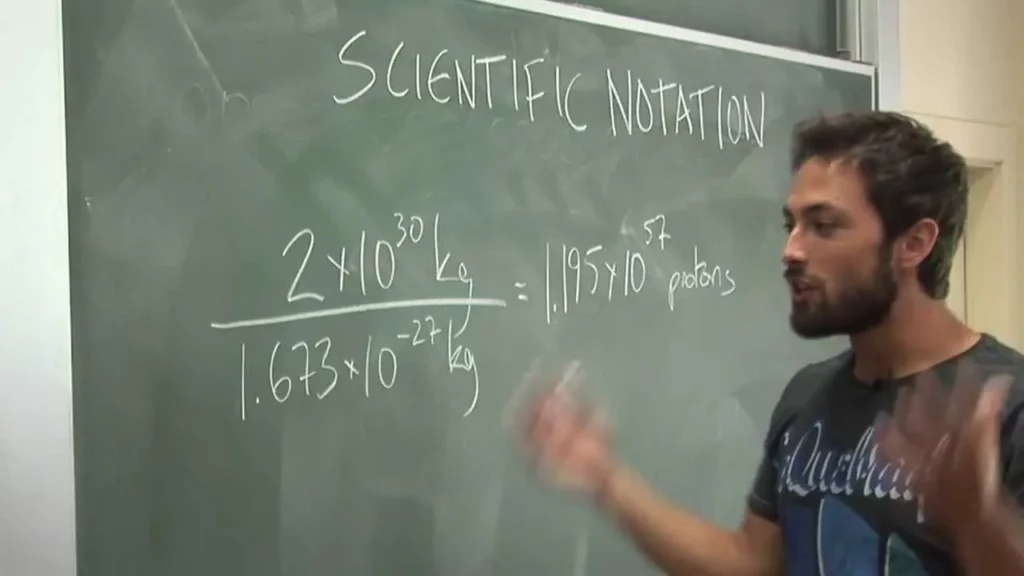
In this lesson, we explored the hypothetical scenario of the Sun being composed entirely of protons and calculated the total number of protons that would fit into its mass of approximately \(2 \times 10^{30}\) kilograms. By dividing the Sun’s mass by the mass of a single proton, we found that there would be about \(1.95 \times 10^{57}\) protons, illustrating both the immense scale of the Sun and the significance of protons in the composition of matter in the universe.
The Absurdity of Detecting Gravitational Waves
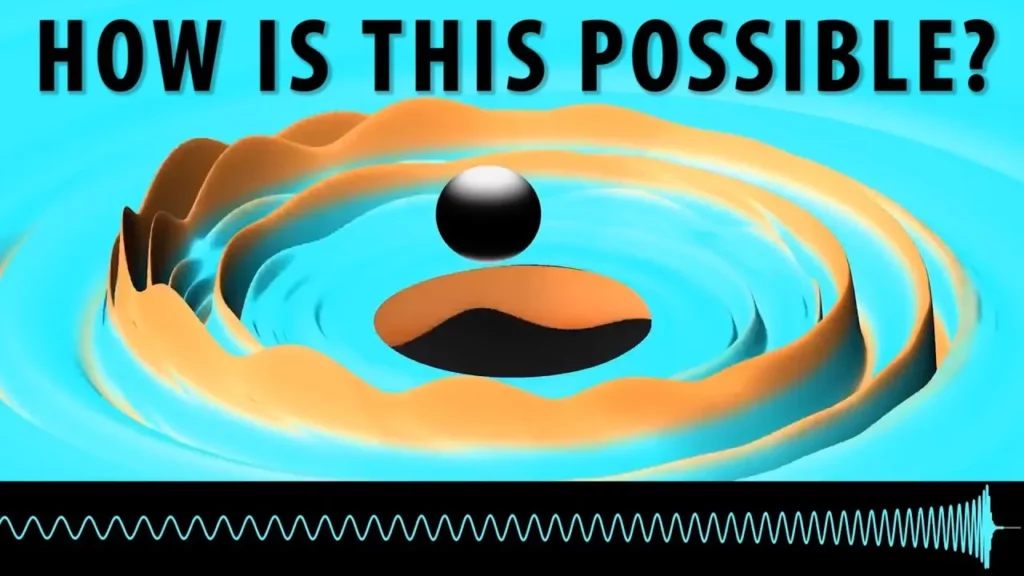
The lesson on “The Discovery of Gravitational Waves” explores the groundbreaking detection of gravitational waves generated by colliding black holes, which has transformed our understanding of the universe. It highlights the immense challenges faced in measuring these minuscule distortions in space-time, including the need for advanced technology, precise laser stabilization, and environmental noise reduction. As researchers continue to innovate, the potential for further discoveries in astrophysics remains promising, paving the way for continuous monitoring of cosmic events.
This Particle Breaks Time Symmetry
The lesson explores the intricate relationship between time, symmetry, and particle physics, highlighting the concept of time-reversibility and the role of entropy in understanding the directionality of time. It discusses key symmetries—time (T), charge (C), and parity (P)—and the groundbreaking parity violation experiment by Chien-Shiung Wu, which revealed that particles can indeed exhibit a preference for a specific direction in time. Ultimately, the lesson emphasizes that while significant progress has been made in understanding these fundamental principles, the true nature of time and its direction remains one of the greatest mysteries in physics.
What is NOT Random?
The lesson explores the concepts of predictability, information, and entropy, highlighting how certain aspects of the universe follow consistent patterns while others remain unpredictable. It discusses Laplace’s determinism, the role of redundancy in information theory, and the relationship between entropy and information, emphasizing that while some events can be anticipated, quantum mechanics introduces randomness that allows for free will and unexpected occurrences. Ultimately, this interplay enriches our understanding of the universe and the nature of existence.