
Scientific Notation – Explained!
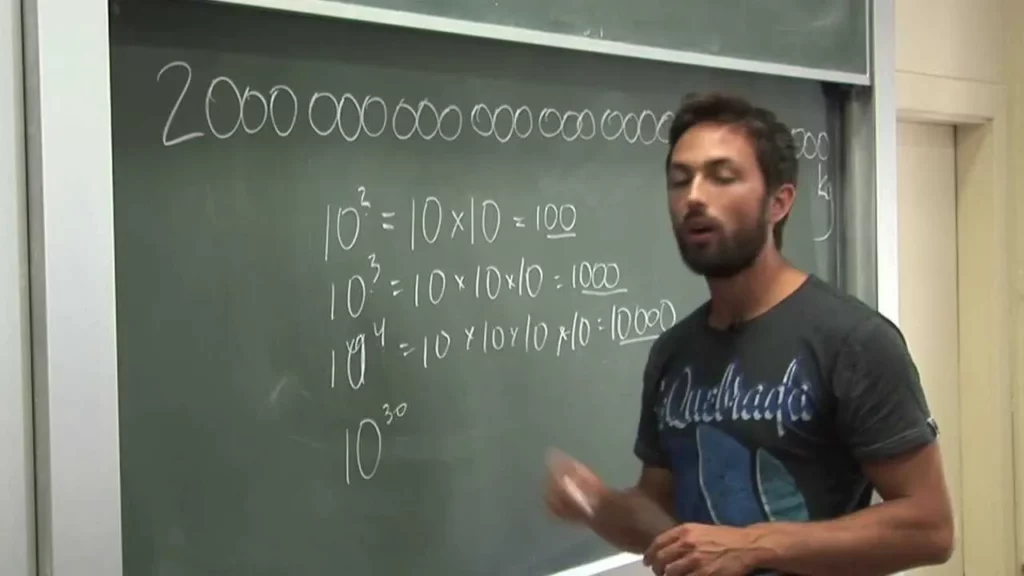
This lesson focuses on understanding large and small numbers in science through the use of scientific notation, which simplifies the representation of these numbers. For example, the mass of the sun is expressed as \(2 \times 10^{30}\) kilograms, while the mass of a proton is represented as \(1.673 \times 10^{-27}\) kilograms, making it easier to read and work with extreme values. The lesson also includes a challenge question to reinforce the application of scientific notation in practical scenarios.
Misconceptions About Heat

In this lesson, students embark on a baking adventure to explore the concept of temperature through hands-on experiments. They learn how different materials, such as metal and paper, conduct heat differently, affecting our perception of temperature, as demonstrated by comparing a cake and its metal tin. The key takeaway is that even if objects are at similar temperatures, their thermal conductivity can influence how hot or cold they feel to the touch, highlighting the importance of scientific inquiry and experimentation.
What the Fahrenheit?!

The lesson explores the intriguing history of the Fahrenheit temperature scale, developed by Daniel Gabriel Fahrenheit in the early 18th century. It details his influences, including Ole Rømer’s temperature scale, and how Fahrenheit refined his measurements to create a more precise system, ultimately leading to the scale we know today. The lesson concludes by noting the decline of the Fahrenheit scale in favor of the more globally accepted Celsius scale, emphasizing the evolution of scientific measurement.
Misconceptions About the Universe
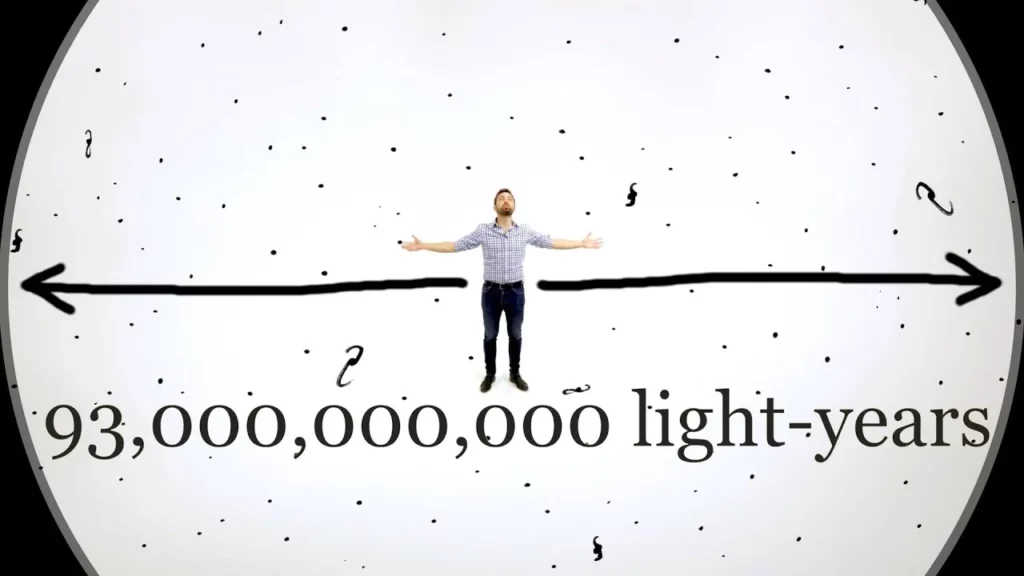
The lesson on “The Expanding Universe: Understanding Superluminal Motion” explores the concept of cosmic expansion, highlighting that parts of the universe can move away from each other faster than the speed of light due to the expansion of space itself, rather than objects moving through space. It discusses how this phenomenon aligns with Einstein’s theory of relativity, the observations made by Edwin Hubble regarding distant galaxies, and the implications of an infinite universe. Ultimately, the lesson emphasizes the complexity and intrigue of the universe’s expansion and its impact on our understanding of motion and distance.
How long does it take for the earth to go around the sun?

The lesson explains that Earth’s orbit around the Sun takes approximately 365.25 days, which is commonly referred to as a year. It addresses common misconceptions that people may have about the duration of this orbit, clarifying that while we often measure time in days, a complete trip around the Sun actually takes much longer. The lesson emphasizes the significance of understanding this concept to better appreciate Earth’s movement in the solar system.
How An Infinite Hotel Ran Out Of Room

The lesson on Hilbert Hotel illustrates the intriguing nature of infinity through a thought experiment involving a hotel with infinitely numbered rooms. It demonstrates how to accommodate both finite and infinite groups of guests using clever strategies, such as shifting current occupants or employing a systematic assignment method. Ultimately, the lesson reveals the distinction between countably infinite and uncountably infinite sets, highlighting that while the hotel can host a countably infinite number of guests, it cannot accommodate an uncountably infinite number, showcasing the complexities and wonders of infinity in mathematics.
Can You Go the Speed of Light?

This lesson delves into the intriguing concept of riding a beam of light, primarily through the lens of Albert Einstein’s theories. It discusses the principle of relativity, which posits that the laws of physics are the same for all observers regardless of their speed, and explores the implications of light speed as a universal constant. Ultimately, while traveling at light speed remains impossible, the lesson encourages ongoing exploration and curiosity about the nature of space, time, and the universe.
Slinky Drop Answer

The Slinky Drop Experiment demonstrates the principles of tension and gravity by showing how a Slinky behaves when dropped, particularly how the bottom remains stationary for a moment after the top is released. Using slow-motion video, we observe that the bottom only moves once a compressional wave, caused by the change in tension, reaches it, illustrating the delay in physical interactions. This concept has real-world applications, especially in sports, where players may not immediately feel the impact of a ball due to the time it takes for the force to travel through the equipment.
Heisenberg’s Uncertainty Principle Explained

The lesson explores Heisenberg’s Uncertainty Principle through an experiment involving a green laser passing through a narrow slit. As the slit narrows, the expected behavior of the laser spot initially aligns with common sense, but it unexpectedly spreads out, illustrating the principle that increased precision in measuring position leads to greater uncertainty in momentum. This experiment not only highlights the counterintuitive nature of quantum mechanics but also raises questions about the dual wave-particle nature of light.
Making SOLID Nitrogen!

This lesson explores the relationship between boiling points and pressure, highlighting that the boiling point of a liquid, such as water, varies with atmospheric pressure. It explains the phenomenon of water boiling at room temperature, which cools the remaining liquid, and demonstrates how manipulating pressure can lead to the formation of solid nitrogen and dry ice. Overall, the lesson illustrates the fascinating behaviors of substances under different conditions, enhancing our understanding of fundamental scientific concepts.