
Backspin Basketball Flies Off Dam
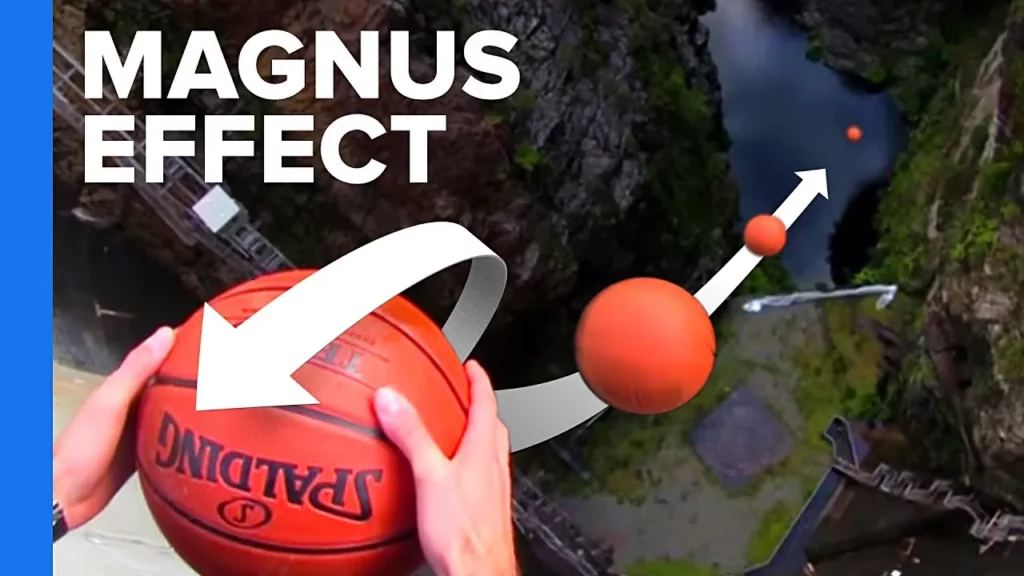
The lesson explores the Magnus effect, a fascinating physical phenomenon demonstrated by a group of friends at the Gordon Dam in Tasmania. By dropping a basketball with backspin, they observed how the ball curved due to differences in air pressure created by its spin, illustrating the Magnus effect’s principles. This phenomenon has broader implications beyond sports, with potential applications in engineering and transportation, such as in sailing and aviation, highlighting its significance in both recreational and practical contexts.
Microwaving grapes makes plasma

In this lesson, we explore how to create plasma using grapes and a microwave, demonstrating a simple yet fascinating experiment. By cutting a grape or placing two grapes together in the microwave, strong electromagnetic fields are generated, leading to the ionization of air and the formation of plasma. This experiment not only provides a visual spectacle but also illustrates key principles of physics, highlighting the connection between everyday objects and scientific phenomena.
The Damaged Chernobyl Reactor
The Chernobyl nuclear reactor, site of a catastrophic accident in 1986, continues to pose significant environmental challenges due to lingering radioactive contamination. Efforts are underway to construct a new confinement structure to replace the deteriorating sarcophagus, but the long-term implications of radiation, particularly from uranium-238, will last for billions of years, underscoring the need for ongoing vigilance in nuclear safety and waste management.
How Far Away is the Moon? (The Scale of the Universe)
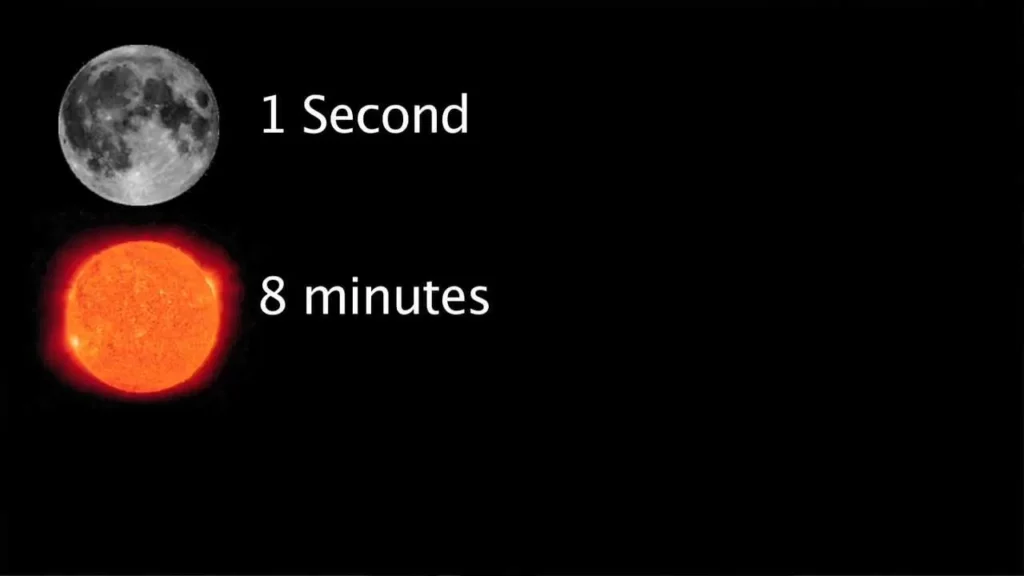
This lesson explores the distance between Earth and the Moon, emphasizing that while they may seem close, the average distance is actually about 238,855 miles (384,400 kilometers). It highlights the importance of understanding this distance in the context of the vastness of the universe, illustrating how light travel times from the Moon and other celestial bodies further emphasize the immense scale of space. Ultimately, the lesson encourages appreciation for the true size of the universe and our place within it.
I call this the ‘No, You Don’t’ Law
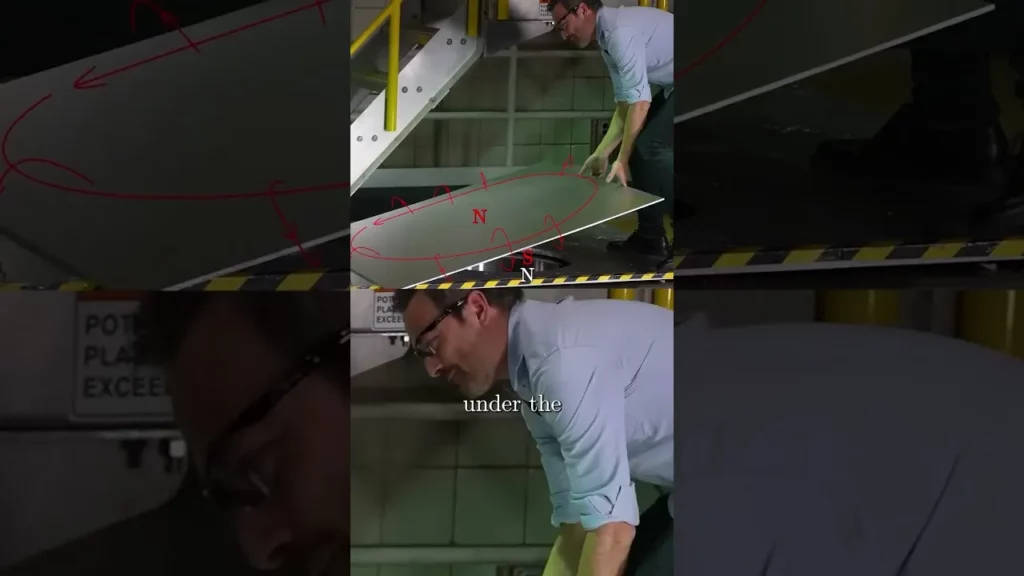
Lenz’s Law, often referred to as the “no, you don’t” principle, illustrates how nature resists changes in magnetic fields and motion by inducing currents that create opposing magnetic fields. This principle is exemplified in real-world scenarios, such as a falling plate that generates currents to slow its descent or a plate being lifted that creates a magnetic pull back toward the source. Ultimately, Lenz’s Law highlights the inherent balance in nature, emphasizing the powerful forces at play in electromagnetism and the dynamics of motion.
World’s strongest magnet!
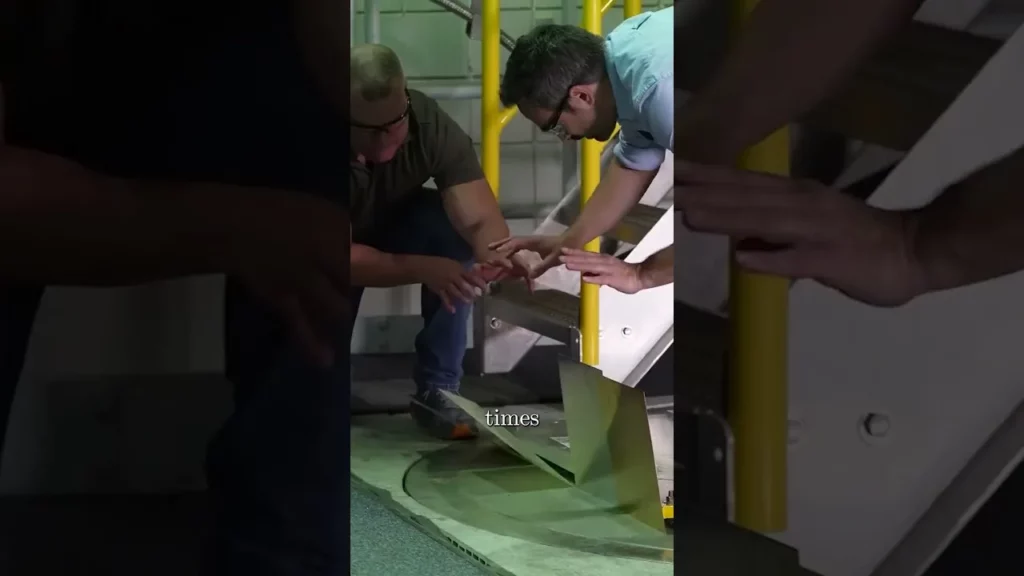
The lesson explores the remarkable capabilities of the world’s strongest magnet, which generates a magnetic field of 45 Tesla—nearly a million times stronger than Earth’s magnetic field. Through engaging experiments, such as using a modified Nerf football and demonstrating the behavior of ferrofluid, the lesson highlights the magnet’s ability to attract ferromagnetic materials and the fascinating patterns created by magnetic fields. Overall, it emphasizes the captivating nature of magnetism and its significance in scientific exploration.
The illusion only some can see
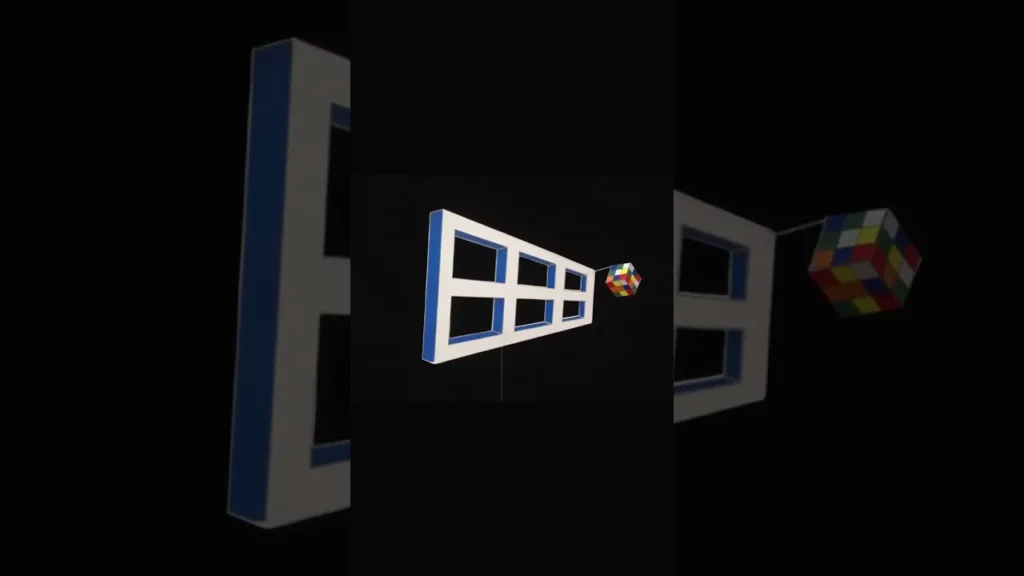
In this lesson, we explore a captivating optical illusion that challenges our perception of motion, beginning with a window that appears to turn and then unexpectedly reverses direction. By incorporating a spinning Rubik’s Cube and later a ruler, the experiment reveals how our brains interpret visual stimuli, often leading us to perceive impossible movements as real. This intriguing investigation into optical illusions highlights the complexities of human perception and sets the stage for further exploration in the upcoming parts of the series.
Why do we launch rockets from Florida?

Rockets are frequently launched from Florida due to two main factors: the Earth’s rotation and safety considerations. The eastward spin of the Earth provides a significant speed advantage, allowing rockets to use less energy to reach space, while Florida’s location enables launches to occur over the Atlantic Ocean, minimizing risks to populated areas in case of launch failures. Despite its unpredictable weather, these advantages make Florida an ideal site for rocket launches.
The most dangerous problem in math
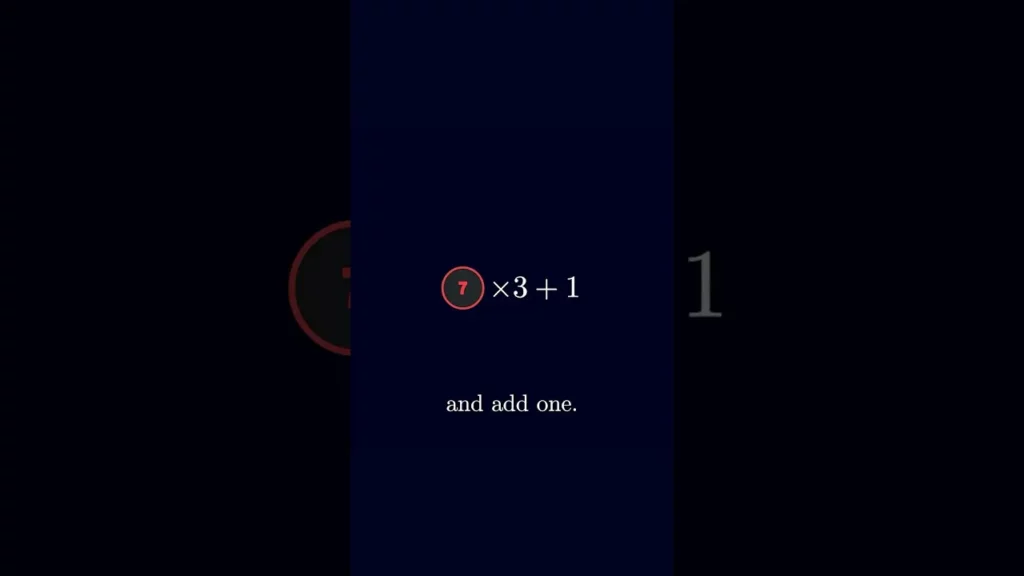
The lesson introduces the Collatz Conjecture, a captivating mathematical problem that involves a simple set of rules applied to any positive whole number. By following these rules—multiplying odd numbers by 3 and adding 1, and dividing even numbers by 2—one eventually reaches a repeating cycle that includes the number 1. Despite its straightforward nature, the conjecture remains unproven, highlighting its status as one of mathematics’ most enigmatic challenges.
The ring on a chain trick
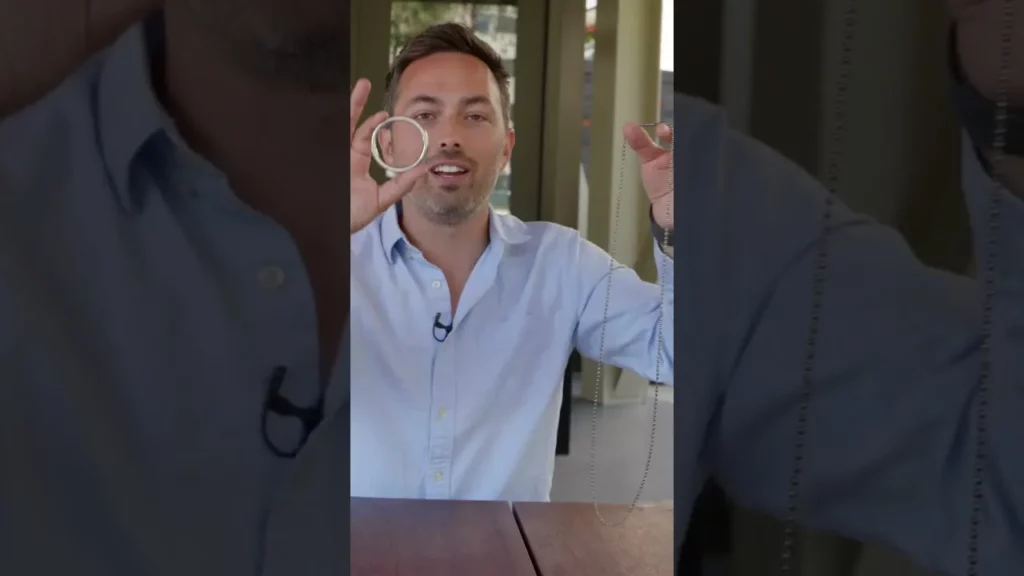
The lesson explores an engaging experiment involving a metal ring and a loop of chain, demonstrating the fascinating interactions between objects and the underlying physics principles. Initially, the ring falls straight through the chain, but with a specific technique, it can surprisingly loop around the chain instead. This experiment highlights the importance of understanding forces and motion, encouraging curiosity about the science behind everyday phenomena.