
Trademarks and Avoiding Consumer Confusion: Intellectual Property #5
This lesson introduces Grade 11 learners to the concept of trademarks, explaining their role in identifying products and services, their importance in consumer decision-making, and the legal protections surrounding them. It covers the different types of trademarks, the criteria for their distinctiveness, the process of registration, and the implications of trademark disputes and dilution. Understanding trademarks is essential for navigating the marketplace and making informed choices as consumers.
Poverty & Our Response to It: Philosophy #44
The lesson explores the moral obligation to address extreme poverty, highlighting the shocking reality of child mortality due to preventable causes and the ethical dilemmas surrounding charitable giving. Philosopher Peter Singer argues that we have a duty to help those in need, regardless of their distance from us, while Garrett Hardin presents a contrasting view that prioritizes national interests and resource limitations. Ultimately, the lesson calls for reflection on our responsibilities toward global poverty and the potential impact of our actions.
The New Astronomy: History of Science #13
The lesson explores the evolution of heliocentrism, highlighting the contributions of key astronomers such as Tycho Brahe, Johannes Kepler, and Galileo Galilei. It details how Brahe’s precise observations, Kepler’s laws of planetary motion, and Galileo’s telescopic discoveries collectively challenged the geocentric model and advanced the understanding of the universe, ultimately laying the groundwork for modern science. Their experiences illustrate the interplay of scientific inquiry, personal challenges, and societal influences during a transformative period in astronomy.
International IP Law: Intellectual Property #6
The lesson on Understanding International Intellectual Property Law highlights the complexity of IP rights, which are territorial and governed by individual country laws rather than universal standards. It emphasizes the role of international treaties, such as the Berne Convention and TRIPS Agreement, in establishing minimum protection standards and the principle of national treatment, which ensures foreign creators receive equal protection. Additionally, the lesson discusses the impact of globalization on IP rights, illustrating the tensions between developed and developing nations regarding the balance between strong IP protections and access to essential technologies.
Psychology of Gaming: Games #16
The lesson explores the psychological motivations behind gaming, highlighting how games fulfill various needs as outlined in Maslow’s hierarchy, from basic satisfaction to self-fulfillment. It discusses the social dynamics of gaming, categorizes different gaming experiences, and examines player types through the Bartle Test, emphasizing the immersive “flow” state that games can create. Additionally, the lesson touches on the ongoing debate regarding the impact of video games on real-life behavior, particularly concerning violence, while underscoring the complex interplay between gaming and our psychological and social needs.
Prejudice and Discrimination: Psychology #39
The lesson on “Understanding Implicit Bias and Prejudice: A Psychological Perspective” examines the tragic case of Amadou Diallo to illustrate how implicit biases can lead to severe consequences, such as discrimination and violence. It discusses the nature of prejudice, the role of the Implicit Association Test (IAT) in uncovering hidden biases, and the psychological roots of prejudice, including ingroup-outgroup dynamics and the just-world phenomenon. Ultimately, the lesson emphasizes the importance of recognizing and addressing these biases to foster empathy and promote a more equitable society.
Silicon, Semiconductors, & Solar Cells: Engineering #22

This lesson highlights the crucial role of semiconductors, particularly silicon, in modern technology, emphasizing John Bardeen’s groundbreaking contributions to electrical engineering. It explains the concepts of N-type and P-type semiconductors, their functionality in diodes and transistors, and their ability to generate electricity in solar cells. Overall, semiconductors are portrayed as foundational elements that drive innovations in electronics and energy generation.
Why Do We Have Fewer Outbreaks? Epidemiological Transition: Outbreak Science #3
The lesson on the evolution of public health highlights the significant changes in mortality rates and disease patterns over the past century, primarily through the lens of the epidemiological transition theory. As societies evolve, they shift from high death rates due to infectious diseases to increased prevalence of non-communicable diseases, influenced by factors such as technological advancements, economic growth, and social changes. Despite notable progress, challenges like health inequalities and the emergence of new diseases continue to complicate public health efforts, underscoring the need for ongoing attention and effective strategies.
Redox Reactions: Chemistry #10
This lesson on redox reactions highlights the critical role of electron transfer in chemical processes, likening electrons to currency in an economy. It explains the concepts of oxidation and reduction, the importance of tracking oxidation states to understand these reactions, and provides examples such as the Haber process and the silver diamine reaction to illustrate these principles. Understanding redox reactions is essential for grasping many biological and industrial processes in chemistry.
Peripheral Nervous System: Anatomy & Physiology #12
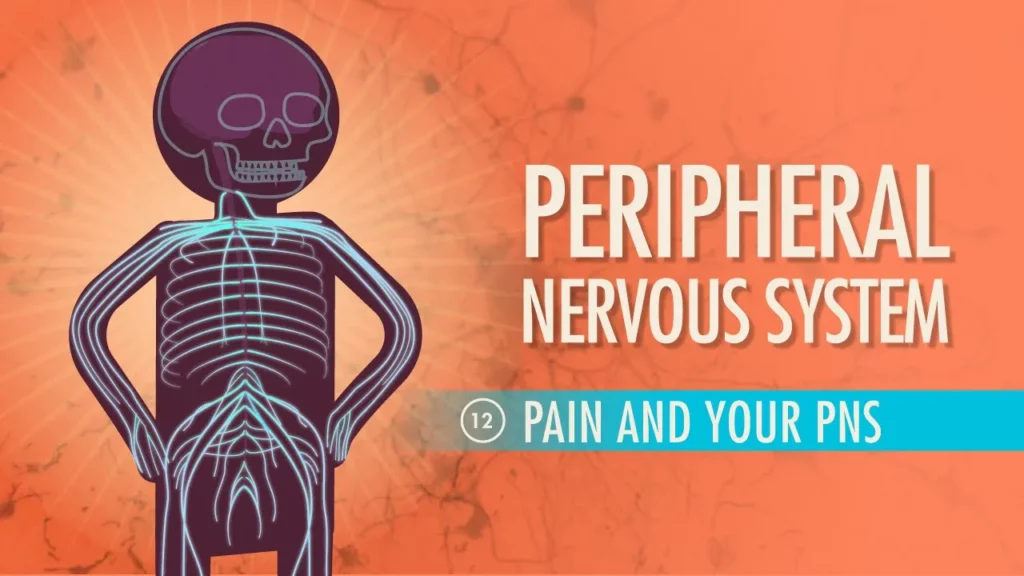
The lesson highlights the critical role of the peripheral nervous system (PNS) in connecting the brain to the body and facilitating the sensation of pain through nociceptors. Pain serves as an essential protective mechanism, alerting us to potential harm and prompting immediate reflexive actions to avoid injury. Understanding this process underscores the importance of pain as a vital signal for maintaining safety and health.