
Latin American Revolutions: World History #31
The lesson on “Revolution and Independence in Latin America” explores the complex history of the region’s struggle for independence from colonial powers, primarily Spain and Portugal. While the independence movements, influenced by figures like Simón Bolívar and events such as Napoleon’s invasion, led to the formal end of colonial rule, they did not significantly alter the existing social hierarchies or address issues like land reform and economic justice, leaving many societal structures intact and leading to ongoing instability. Ultimately, the revolutions were pivotal in shaping Latin America’s identity but often fell short of their revolutionary aspirations.
Intro to Economics: Econ #1

In the first episode of Crash Course Economics, hosts Jacob Clifford and Adriene Hill introduce viewers to the fundamentals of economics, emphasizing that it is about understanding human choices rather than just money. They discuss key concepts such as scarcity, opportunity cost, and the distinction between microeconomics and macroeconomics, highlighting how these ideas apply to everyday decisions and public policy. The hosts aim to make economics engaging and relevant, encouraging viewers to appreciate its role in improving decision-making skills in daily life.
The Inventor Who Vanished: Recess #1

The lesson explores the life and mysterious disappearance of Louis Le Prince, an innovative figure in early cinematography who developed the world’s first motion picture camera technology in the late 1880s. Despite his groundbreaking contributions, including the use of celluloid film, Le Prince vanished in 1890 while en route to unveil his invention, leading to speculation about the circumstances of his disappearance and the subsequent overshadowing of his legacy by other inventors like Thomas Edison. Ultimately, the lesson highlights the enduring impact of Le Prince’s work on cinema, despite the tragedy and legal struggles faced by his family in seeking recognition for his achievements.
Marginal Analysis, Roller Coasters, Elasticity, and Van Gogh: Economics #18
The lesson on microeconomics introduces key concepts such as marginal analysis, the law of diminishing marginal utility, and the supply and demand model, which help explain individual decision-making in markets. It emphasizes how these principles guide businesses and governments in making choices, such as hiring workers or pricing products, and illustrates real-world applications through examples like the Diamond-Water Paradox and elasticity of demand and supply. Understanding these concepts equips individuals to make informed decisions and comprehend market dynamics.
Malcolm X and the Rise of Black Power: Black American History #38
The lesson on Malcolm X highlights his transformative journey from a troubled youth involved in crime to a prominent leader in the civil rights movement. It emphasizes the significant impact of his experiences, particularly during his time in prison, where he embraced education and the teachings of the Nation of Islam, ultimately shaping his vision for black empowerment and justice. Malcolm X’s legacy serves as an enduring inspiration for ongoing struggles for equality and social justice.
Check Yourself with Lateral Reading: Navigating Digital Information #3

The lesson “Navigating Digital Information: A Guide to Critical Reading” emphasizes the importance of critically evaluating online content to discern its reliability and credibility. It teaches readers to understand the motives behind information production, utilize lateral reading techniques to verify sources, and recognize the diverse nature of media to avoid misinformation. By actively engaging with digital content, individuals can become more informed consumers of information and contribute to a healthier information environment.
The Big Bang: Big History #1

The lesson on Big History explores the expansive narrative of the universe, beginning with the Big Bang 13.8 billion years ago and encompassing various fields such as cosmology, geology, and biology. It emphasizes the interconnectedness of all life and events, illustrated by the “Earthrise” photo, and highlights key scientific discoveries that support our understanding of the universe’s evolution. Ultimately, Big History invites us to recognize our shared human story within the broader context of cosmic history, encouraging ongoing exploration and discovery.
Uranus & Neptune: Astronomy #19
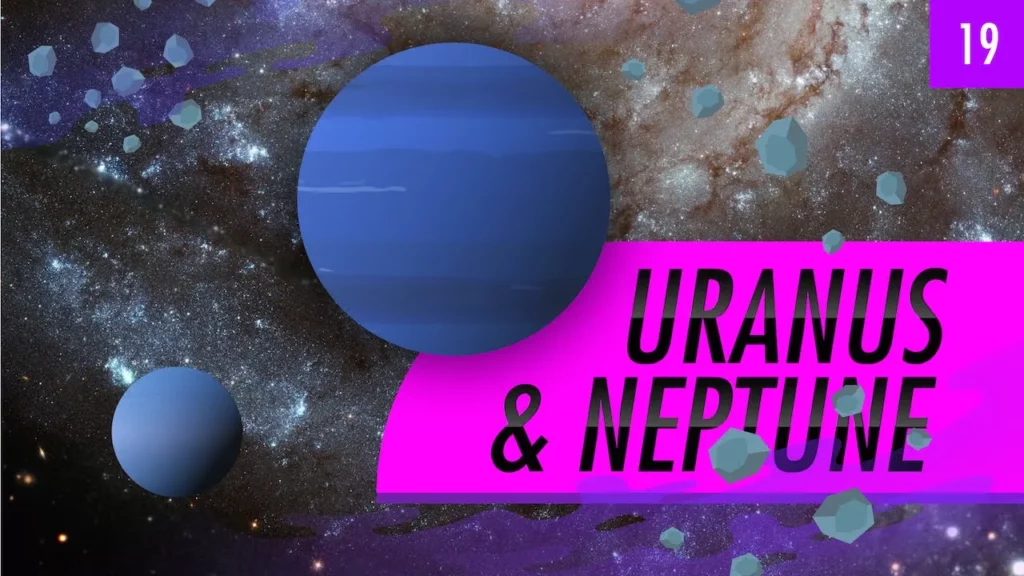
The lesson explores the ice giants of our solar system, Uranus and Neptune, highlighting their unique characteristics and discoveries. Uranus, discovered by William Herschel in 1781, features a peculiar tilt and a composition that may include diamond rain, while Neptune, discovered mathematically in 1846, is known for its dynamic atmosphere and the Great Dark Spot. Both planets possess intriguing ring systems and moons, with Triton standing out for its geological activity, emphasizing the ongoing mysteries and complexities of these distant worlds.
Photosynthesis: Biology #8
Photosynthesis is a vital process that enables plants to convert sunlight, carbon dioxide, and water into glucose and oxygen, sustaining life on Earth. It consists of two main types of reactions: light-dependent reactions, which occur in the thylakoid membranes of chloroplasts and produce ATP and NADPH, and the Calvin Cycle, which uses these energy-rich molecules to convert carbon dioxide into glucose. Understanding photosynthesis highlights the essential role plants play in providing oxygen and energy for various life forms.
Coal, Steam, and The Industrial Revolution: World History #32
The Industrial Revolution, spanning from 1750 to 1850, marked a significant transformation in global society, shifting economies from agriculture to machine-driven production, particularly in Europe. Key innovations, such as the steam engine and advancements in the textile industry, fueled this change, while factors like abundant coal and high wages in Britain created an environment conducive to industrial growth. This era not only reshaped economies but also highlighted the interconnectedness of global contributions, particularly from regions like India and China, in the evolution of modern industrial society.