
Memory: Study Skills #3
This lesson explores the intricacies of memory formation, detailing its stages from sensory memory to long-term retention, and highlights the importance of techniques like chunking, mnemonics, and active recall for enhancing memory. It emphasizes the significance of spaced repetition in learning, illustrating how strategically timed study sessions can improve retention and understanding. By applying these methods, learners can optimize their study habits and boost their overall memory skills.
Contractarianism: Philosophy #37

The lesson on contractarianism, rooted in Thomas Hobbes’ philosophy, explores the necessity of social contracts for establishing morality and security in society. It argues that without rules, individuals would face chaos and insecurity, leading them to willingly give up some freedoms for the benefits of cooperation. The concept emphasizes that morality evolves through collective agreements, highlighting the importance of implicit contracts and the balance between individual interests and societal obligations.
Slavery in the American Colonies: Black American History #2
The lesson explores the origins and evolution of slavery in the American colonies, highlighting its economic significance and the legal frameworks that supported it. It discusses the transition from indentured servitude to chattel slavery, the impact of key legal cases like John Punch’s, and the religious justifications that perpetuated the institution. Ultimately, the lesson emphasizes the lasting implications of slavery on racial and economic inequalities in contemporary American society.
Was Gatsby Great? The Great Gatsby Part 2: English Literature #5

This lesson delves into F. Scott Fitzgerald’s *The Great Gatsby*, examining its complex characters, rich language, and the themes of aspiration and the American Dream. It highlights Gatsby’s tragic pursuit of an idealized past and critiques the carelessness of the elite, ultimately warning readers about the dangers of chasing unattainable dreams. Through Gatsby’s story, we learn that true greatness lies not in achievement but in the awareness of the dreams we choose to pursue.
Wait For It…The Mongols!: World History #17
The lesson on the Mongols highlights their complex legacy, showcasing them as more than just brutal conquerors. While their military prowess and conquests under leaders like Genghis Khan significantly influenced trade and cultural exchange across Eurasia, their rule was also marked by violence and destruction, raising ethical questions about their impact on history. A balanced understanding of the Mongols involves recognizing both their contributions to world history and the darker aspects of their empire.
Mesopotamia: World History #3
In this lesson, John Green explores Mesopotamia, often referred to as the “Cradle of Civilization,” highlighting its significant contributions to human development, such as the invention of writing and the establishment of city-states. The lesson discusses the evolution of power from priests to kings, exemplified by Hammurabi’s code of laws, and the rise and fall of empires like the Assyrian Empire, illustrating the complex interplay of innovation, conflict, and governance that shaped this ancient civilization.
The Atomic Bomb: History of Science #33
The Manhattan Project was a pivotal event in history that combined scientific innovation and political urgency, leading to the development of the atomic bomb during World War II. Initiated by concerns over Nazi Germany’s potential nuclear capabilities, the project involved thousands of scientists and culminated in the bombings of Hiroshima and Nagasaki, which significantly impacted global conflict and initiated the Cold War. Its legacy continues to provoke discussions about the ethical implications of nuclear technology and the responsibilities that accompany scientific advancements.
The Periodic Table: Chemistry #4

The lesson highlights the significance of the periodic table of elements, a groundbreaking achievement by Dmitri Mendeleev, who identified patterns among known elements and organized them based on their properties. Mendeleev’s work not only facilitated the prediction of undiscovered elements but also established a foundational framework for modern chemistry. His legacy endures as a testament to the power of scientific inquiry and the beauty of the natural world.
Roman Engineering: History of Science #6
The lesson explores the legacy of Roman engineering, highlighting their remarkable achievements in infrastructure, such as aqueducts and the use of concrete, which have influenced modern engineering. While the Romans excelled in practical applications of Greek scientific knowledge, their contributions to theoretical science were limited, reflecting a focus on knowledge as a tool for political power and military advancement. Ultimately, the lesson underscores the complex interplay between engineering, knowledge, and societal needs in ancient Rome.
Thermodynamics: Physics #23
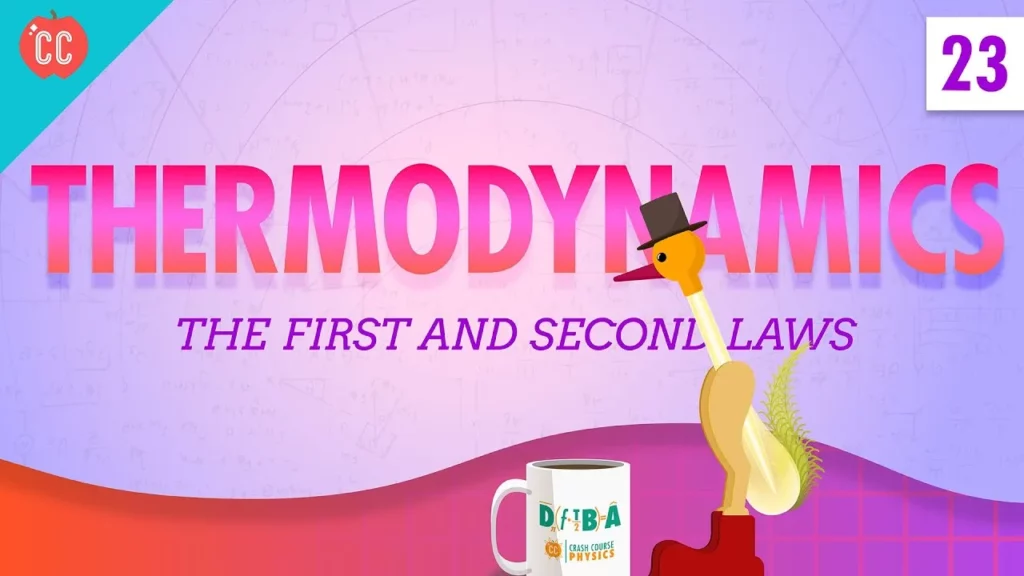
The lesson on the Drinking Bird illustrates key concepts in thermodynamics, specifically the first and second laws. The first law explains how energy is conserved and transformed within the system, while the second law introduces the concept of entropy, highlighting the natural tendency for heat to flow from hot to cold. Through the operation of the Drinking Bird, students learn that it requires an external energy source to function and that energy changes and entropy play crucial roles in its cyclical motion.