
Tea, Taxes, and The American Revolution: World History #28
The lesson on the American Revolution emphasizes understanding the underlying reasons and implications of the conflict rather than just its key events and figures. It highlights how the revolution stemmed from colonial grievances against British taxation and governance, the emergence of local governance through Committees of Correspondence, and the influence of Enlightenment ideals on the quest for independence. Ultimately, while the revolution introduced concepts of equality and self-governance, it also revealed the limitations of these ideals, as many groups continued to face inequality and oppression in the new society.
What Is Statistics: Statistics #1

The lesson on “Understanding Statistics: A Crash Course” highlights the significance of statistics in everyday decision-making, from personal choices to policy formulation. It distinguishes between descriptive statistics, which summarize data, and inferential statistics, which allow predictions about larger populations based on smaller samples. Ultimately, the lesson emphasizes the importance of critically interpreting statistical data while acknowledging its inherent uncertainties.
Monkeys and Morality: Psychology #19
The lesson on “Understanding Attachment: The Foundations of Human Development” emphasizes the crucial role of attachment in children’s growth and emotional security. Key findings from the Harlow experiments and Ainsworth’s “strange situation” illustrate how attachment styles, influenced by caregiving, impact a child’s ability to form relationships and develop a positive self-concept. Additionally, the lesson highlights the significance of parenting styles and moral development in shaping a child’s overall well-being and future interactions.
Polar & Non-Polar Molecules: Chemistry #23

This lesson explores the classification of molecules as polar or non-polar based on their electron distribution and geometric shape, highlighting the significance of polarity in chemical interactions. Polar molecules exhibit uneven charge distribution and can dissolve in polar solvents like water, while non-polar molecules have balanced charges and do not interact similarly. Understanding these concepts is crucial for grasping various chemical principles, including solubility and the role of hydrogen bonding in biological processes.
Gamma-Ray Bursts: Astronomy #40
Gamma-ray bursts (GRBs) are among the most powerful events in the universe, first discovered during the Cold War when the U.S. launched Vela satellites to monitor for nuclear explosions. Initially detected in 1967, GRBs were found to originate from deep space, leading to decades of research that revealed their connection to cosmic phenomena like supernovae and neutron star collisions. Today, advancements in satellite technology, such as NASA’s Swift, allow astronomers to detect and study these bursts more effectively, enhancing our understanding of their origins and potential impacts on Earth.
Russia, the Kievan Rus, and the Mongols: World History #20
The lesson explores the historical evolution of Russia, beginning with the Kievan Rus and its trade-based society, through the Mongol invasion that fragmented the region, to the rise of Moscow as a powerful entity under leaders like Ivan III and Ivan IV. It highlights how these events shaped Russia’s unique cultural and political identity, while also addressing the stereotypes surrounding its history of autocracy and brutality. Ultimately, the lesson emphasizes the importance of understanding Russia’s complex past to gain a more nuanced perspective on its present.
The Anthropocene and the Near Future: Big History #9
The lesson on the Anthropocene explores the profound impact humans have had on the planet, marking a new era characterized by significant environmental changes and technological advancements since 1800. While collective learning and innovation have accelerated, challenges such as economic disparities, environmental degradation, and potential societal collapse loom large. The future of humanity hinges on our ability to address these issues through education, sustainable practices, and collaborative efforts, with the hope of achieving stability and creativity by the end of the century.
The Rise of Cotton: Black American History #13
The lesson explores the profound economic impact of cotton production in the United States, highlighting its reliance on enslaved Black labor and the brutal conditions faced by those workers. By the Civil War, cotton had become a cornerstone of the U.S. economy and a key player in the global market, yet the wealth generated from this industry was built on the exploitation of enslaved individuals, leading to lasting economic disparities that continue to affect Black Americans today. Understanding this history is essential for addressing ongoing inequalities and fostering a more equitable society.
Computational Linguistics: Linguistics #15
The lesson on Natural Language Processing (NLP) explores the intricate relationship between human language and computer understanding, highlighting the challenges machines face in grasping language nuances such as context and emotion. It outlines the key steps involved in NLP, from inputting and parsing text to understanding meaning and generating output, while also addressing the importance of training data and the potential biases that can arise in language technology. Ultimately, the lesson emphasizes the need for ethical considerations in the development of NLP systems to create more inclusive and effective technologies.
The Skeletal System: Anatomy & Physiology #19
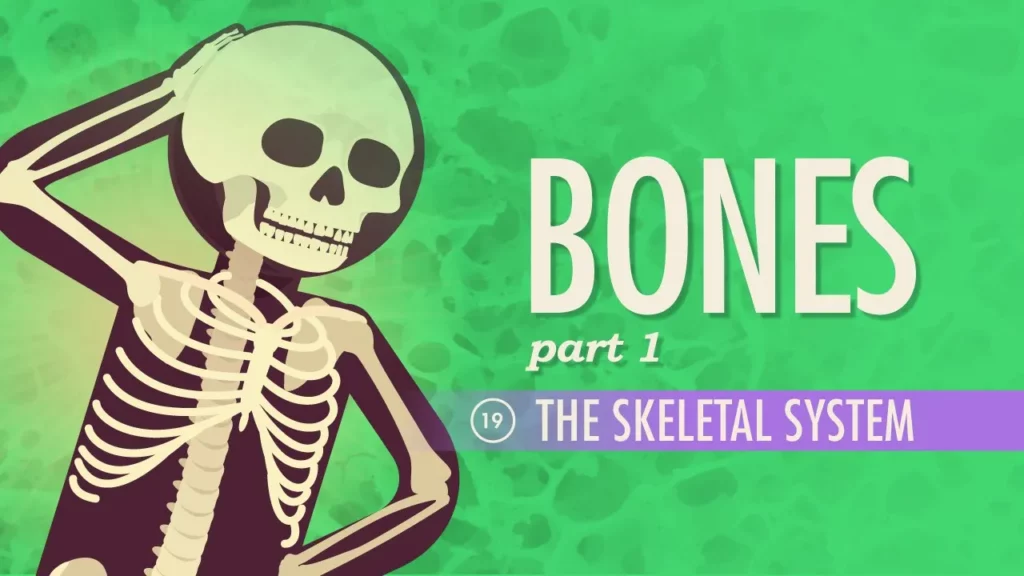
The lesson explores the effects of microgravity on bone health, drawing insights from Scott Kelly’s year-long mission aboard the International Space Station. It highlights how astronauts can lose significant bone mass—up to 20%—due to the lack of gravitational stress, which disrupts the balance of bone remodeling. Understanding bone structure and the remodeling process is essential for developing strategies to mitigate bone loss during extended space missions.