
Bureaucracy Basics: Government and Politics #15
The lesson on bureaucracies highlights their essential role in organizing large institutions and ensuring efficient governance. Bureaucracies, composed of specialized experts, are crucial for implementing laws, creating regulations, and maintaining stability within the government. Despite their often negative reputation, they provide necessary services and continuity, making them vital to both public and private sectors, while also raising important questions about accountability and the balance of power within the government.
Structure of the Court System: Government and Politics #19
The lesson provides an overview of the U.S. court system, highlighting its hierarchical structure, which includes trial courts at the state and federal levels, appellate courts, and the Supreme Court as the final arbiter. It explains the appeals process, criteria for federal jurisdiction, and the factors influencing the Supreme Court’s selection of cases, emphasizing the importance of understanding how legal disputes are resolved within this organized framework. Overall, the lesson underscores the complexity and efficiency of the U.S. court system in managing a diverse range of legal issues.
Presidential Power: Government and Politics #11
This lesson explores the role and powers of the U.S. Presidency, emphasizing the constitutional framework that defines the office and its qualifications. It categorizes presidential powers into military, judicial, diplomatic, legislative, and executive, highlighting the balance between formal powers outlined in the Constitution and the informal powers that have evolved over time. Ultimately, the lesson underscores how the presidency has expanded beyond its original limitations, reflecting changes in American governance and politics.
Introduction: U.S. Government and Politics
In the introductory lesson of Crash Course Government and Politics, host Craig emphasizes the significance of understanding government and politics as essential for informed citizenship. He explains that government consists of rules and institutions that facilitate societal cooperation, while politics involves the distribution of power and decision-making processes. The lesson encourages active participation beyond voting, highlighting various ways citizens can engage in the political system to influence change and become more involved in their communities.
Congressional Delegation: Crash Course Government and Politics #13
The lesson on “Understanding Delegation in U.S. Government” explores the concept of delegation, where Congress assigns certain powers to the Executive branch, impacting the balance of power within the federal government. It highlights the reasons for delegation—practical efficiency, expertise, and political strategy—and discusses how this shift of power can vary based on historical contexts and political dynamics. Ultimately, the lesson emphasizes the importance of understanding delegation in the interaction between the legislative and executive branches of American governance.
Elasticity of supply | Elasticity | Microeconomics
The lesson on “Understanding Elasticities of Supply” explains how the elasticity of supply measures the responsiveness of the quantity supplied to changes in price. Using a practical example of a lemonade stand, it illustrates how to calculate elasticity and discusses different scenarios, such as perfectly inelastic and perfectly elastic supply, to highlight how producers react to price fluctuations. This understanding is vital for analyzing market dynamics and making informed economic decisions.
Worked example: Finding derivative with fundamental theorem of calculus
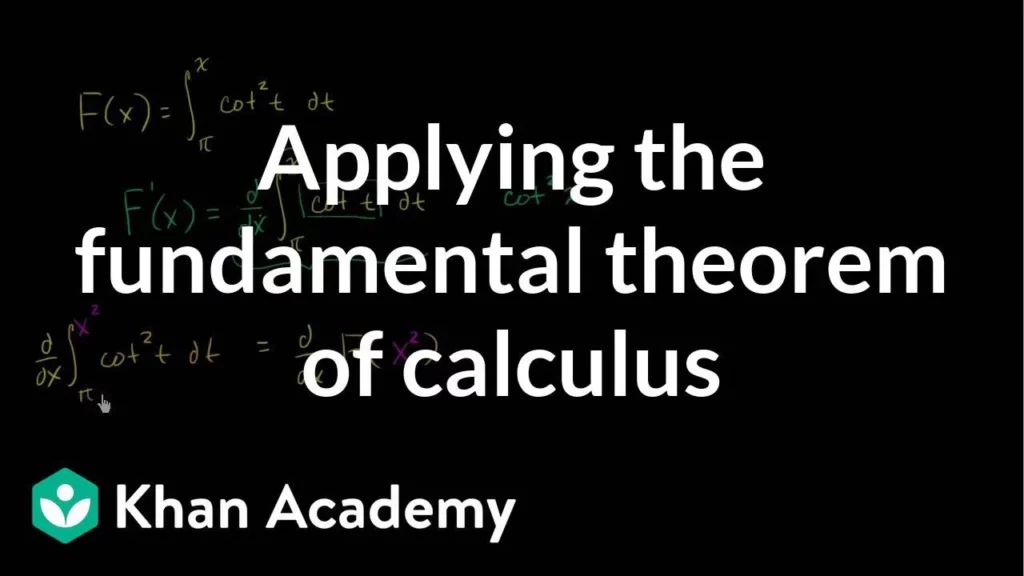
This lesson focuses on understanding how to find the derivative of a definite integral using the fundamental theorem of calculus. It demonstrates that for a function defined as \( F(x) = \int_{\pi}^{x} \cot^2(t) \, dt \), the derivative can be directly computed as \( F'(x) = \cot^2(x) \). Additionally, it explores a more complex scenario where the upper limit of integration is \( x^2 \), illustrating the application of the chain rule to arrive at the derivative \( \frac{d}{dx} F(x^2) = 2x \cot^2(x^2) \).
Two-sided limit from graph | Limits | Differential Calculus
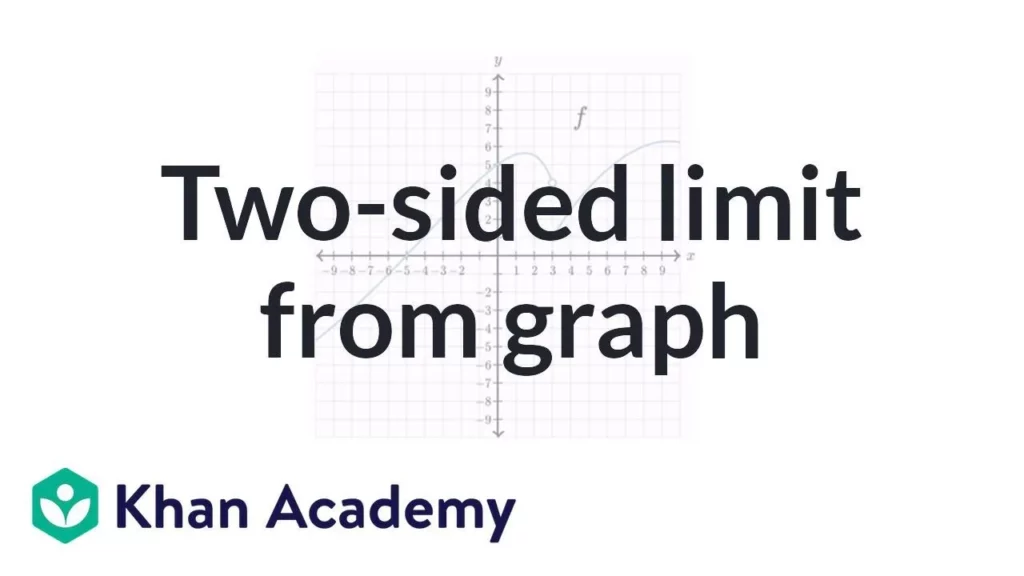
In this lesson, we explored the concept of limits in calculus by analyzing the behavior of a function as \( x \) approaches 3. We found that the left-hand limit is 4 while the right-hand limit is 1, indicating that the overall limit does not exist since the two values do not converge to the same point. This highlights the critical requirement for limits to be defined, which is that both the left-hand and right-hand limits must be equal.
Graphical limit at point discontinuity
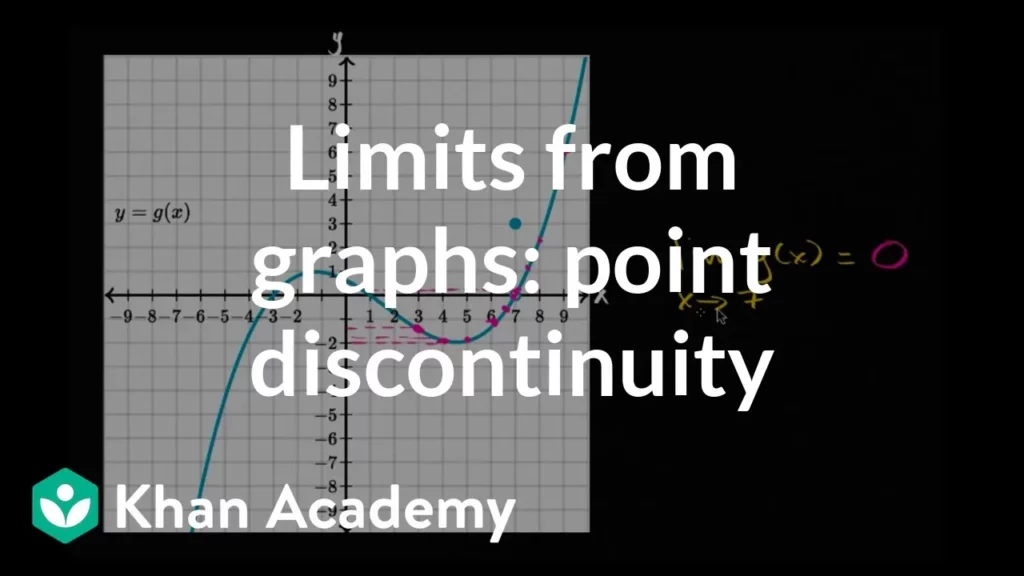
This lesson explores the concept of limits in relation to points of discontinuity in functions, specifically examining the function \( g(x) \) as \( x \) approaches 7. It demonstrates that while the limit of \( g(x) \) from both the left and right sides as \( x \) nears 7 is 0, the actual value of the function at that point is 3, indicating a removable discontinuity. Understanding this relationship is crucial for analyzing function behavior in calculus.
Oligopolies and monopolistic competition | Forms of competition | Microeconomics
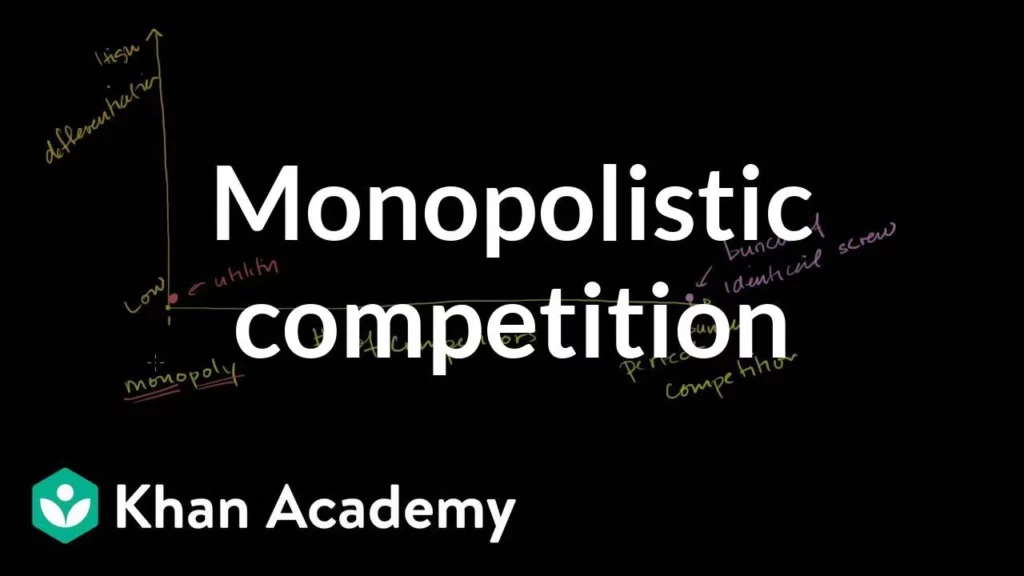
The lesson on market structures outlines the spectrum ranging from monopolies to perfect competition, emphasizing the number of competitors and product differentiation as key factors. It explains that monopolies have a single dominant player with low differentiation, while perfect competition features many identical products with numerous competitors. Additionally, it introduces intermediate structures like oligopolies and monopolistic competition, highlighting the complexities of real-world markets where businesses must balance competition and differentiation to thrive.