
Polynomial remainder theorem | Polynomial and rational functions | Algebra II
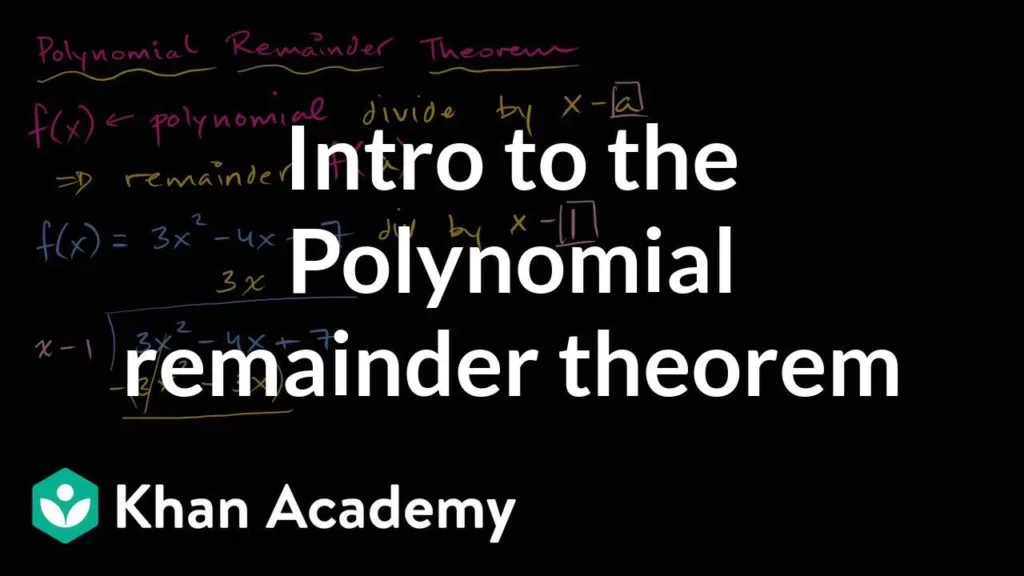
The Polynomial Remainder Theorem states that when dividing a polynomial \( f(x) \) by \( x – a \), the remainder is equal to \( f(a) \). This theorem simplifies the process of finding remainders, as demonstrated through an example where the polynomial \( f(x) = 3x^2 – 4x + 7 \) is divided by \( x – 1 \), yielding a remainder of 6, which matches the value of \( f(1) \). This theorem is significant as it allows for quicker calculations in polynomial division, enhancing efficiency in algebra.
Explicit and recursive definitions of sequences | Precalculus
In this lesson, students are introduced to the concept of sequences in mathematics, which are ordered lists of numbers that can be either finite or infinite. The lesson covers how to define finite sequences with a specific number of terms and infinite sequences that continue indefinitely, along with explicit and recursive definitions for calculating terms within these sequences. By understanding these foundational concepts, students will be better equipped to tackle more advanced mathematical topics.
Introduction to ratios | Ratios, proportions, units, and rates | Pre-Algebra
In this lesson, students learn about ratios as a method for comparing quantities and understanding their relationships. They explore how to express ratios in different forms, simplify them using the greatest common divisor, and apply this knowledge to real-life situations, including finding quantities based on given ratios. By the end of the lesson, students will have a solid grasp of both simple and complex ratios, enabling them to analyze relationships between different items effectively.
Consumption function basics | Macroeconomics
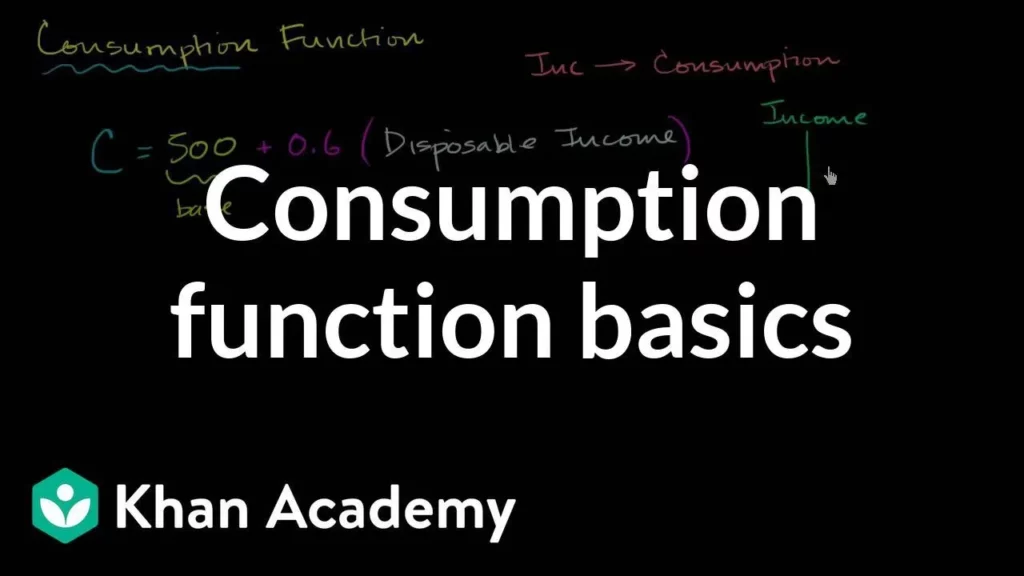
The lesson on the consumption function explains how total income influences overall consumption within an economy, emphasizing the relationship between disposable income and spending behavior. By constructing a hypothetical model with a base level of consumption and a constant marginal propensity to consume (MPC), the lesson illustrates how consumption changes as disposable income varies. It also acknowledges that real-world complexities can lead to non-linear consumption patterns, particularly as income levels change.
Changes in Market Equilibrium
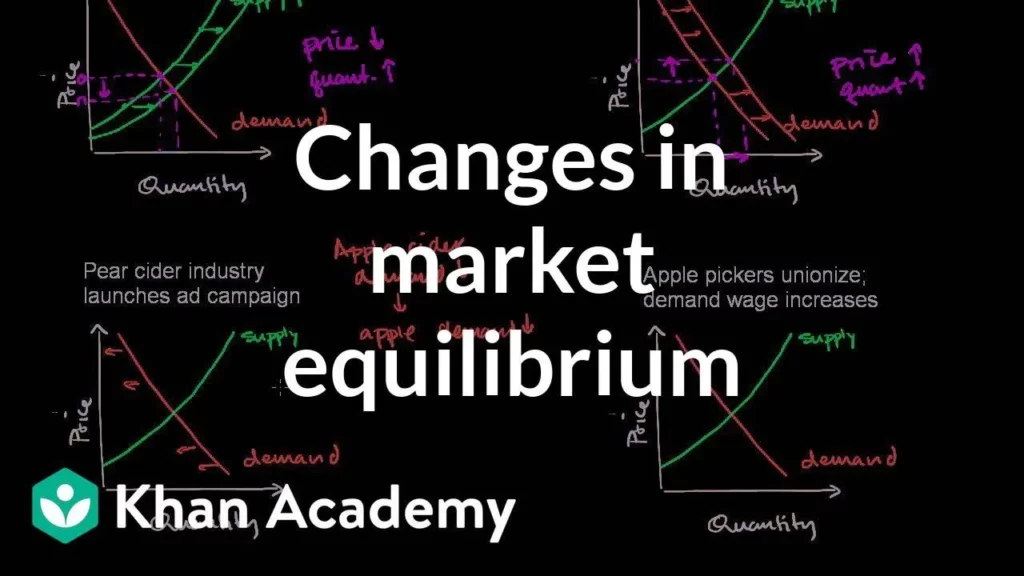
The lesson explores how changes in supply and demand influence market equilibrium, focusing on various scenarios such as the introduction of disease-resistant apples, shifts in consumer preferences, and changes in production costs. Each scenario demonstrates how these factors can lead to shifts in equilibrium price and quantity, highlighting the importance of understanding market dynamics to predict outcomes. By examining these principles, learners can apply the concepts to different markets and better grasp the effects of external influences on supply and demand.
The social contract | Foundations of American democracy | US government and civics

The lesson explores the necessity of government through a philosophical lens, particularly drawing on Thomas Hobbes’ ideas about the “state of nature” and the social contract. It argues that while a government-less society may initially seem appealing due to the promise of unlimited freedoms, it ultimately leads to chaos and conflict as individuals infringe on each other’s rights. The lesson emphasizes that a strong central government is essential for maintaining order and protecting fundamental rights, prompting further inquiry into the structures and functions of governance.
Flux and magnetic flux
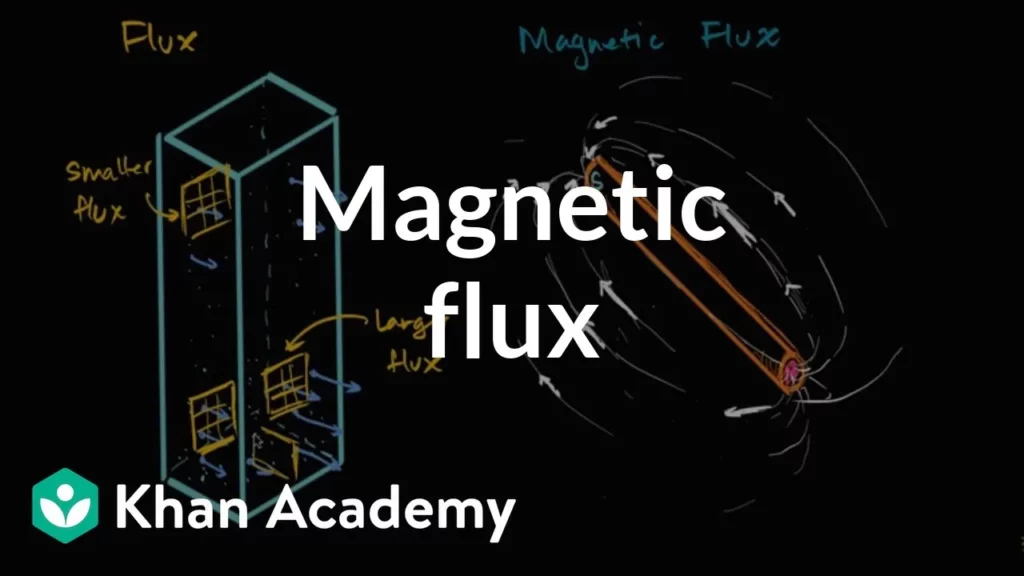
This lesson explores the concepts of flux and magnetic flux, emphasizing their definitions and the principles that govern them. Flux refers to the quantity flowing through a surface over time, influenced by factors such as density, velocity, orientation, and surface area. Magnetic flux, a related concept, measures the amount of magnetic field passing through a surface, with its magnitude affected by the strength of the magnetic field and the surface’s orientation relative to the field lines. Understanding these concepts is crucial for grasping fluid dynamics and electromagnetism.
Representing data with matrices | Matrices | Precalculus
This lesson explores the significant price differences of common grocery items, such as toilet paper and toothpaste, between Duluth, Minnesota, and New York City. It emphasizes the use of a grocery price matrix to effectively compare these prices, while highlighting the importance of maintaining consistency in the matrix’s structure to ensure accurate data representation and analysis. Proper organization is crucial to avoid misinterpretations of the pricing information.
Sine and cosine of complements example | Basic trigonometry | Trigonometry
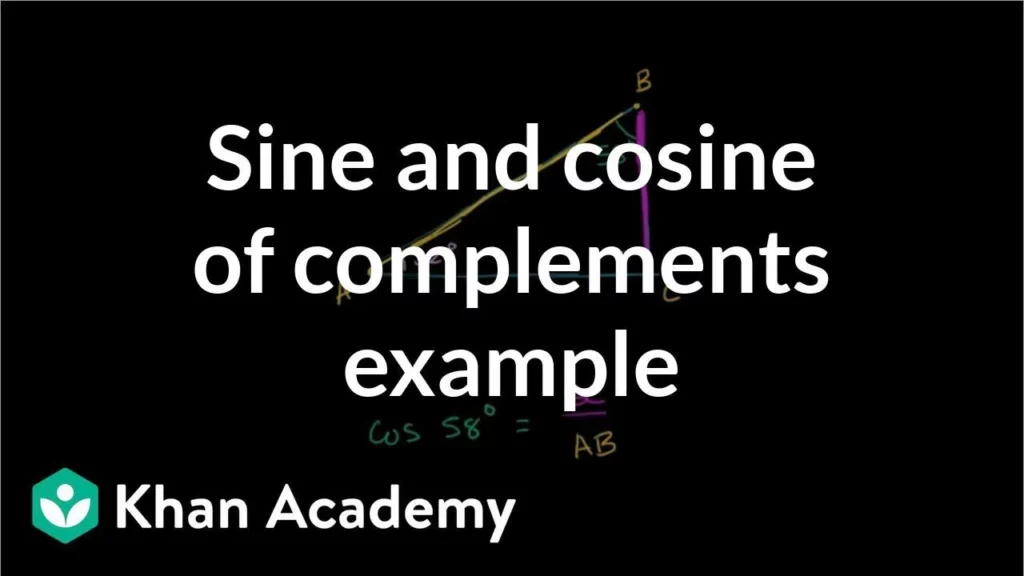
This lesson explores the relationship between sine and cosine in trigonometry, particularly through the concept of complementary angles in right triangles. By demonstrating that the sine of an angle is equal to the cosine of its complementary angle (e.g., sin(32°) = cos(58°)), the lesson emphasizes the practical application of the SOHCAHTOA definitions to simplify calculations and enhance understanding of triangle properties. Overall, this relationship serves as a valuable tool for solving trigonometric problems.
Synthetic division | Polynomial and rational functions | Algebra II
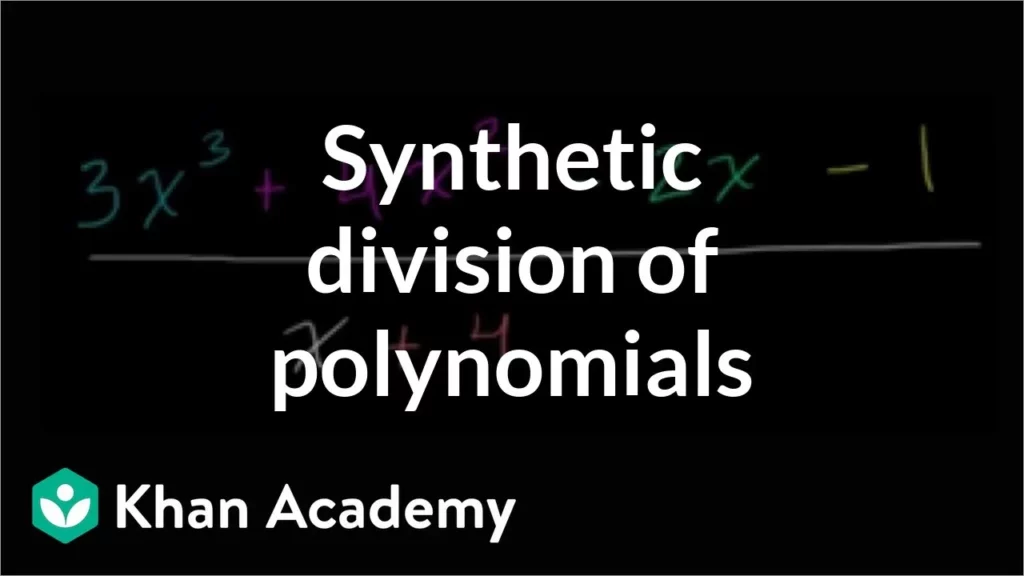
This lesson introduces synthetic division as an efficient method for dividing polynomials, particularly when the divisor is a simple linear polynomial like \(x – c\). It outlines the necessary conditions for using synthetic division, provides a detailed step-by-step example, and explains how to interpret the results, ultimately demonstrating that synthetic division simplifies polynomial expressions effectively.