
Hexadecimal number system | Applying mathematical reasoning | Pre-Algebra
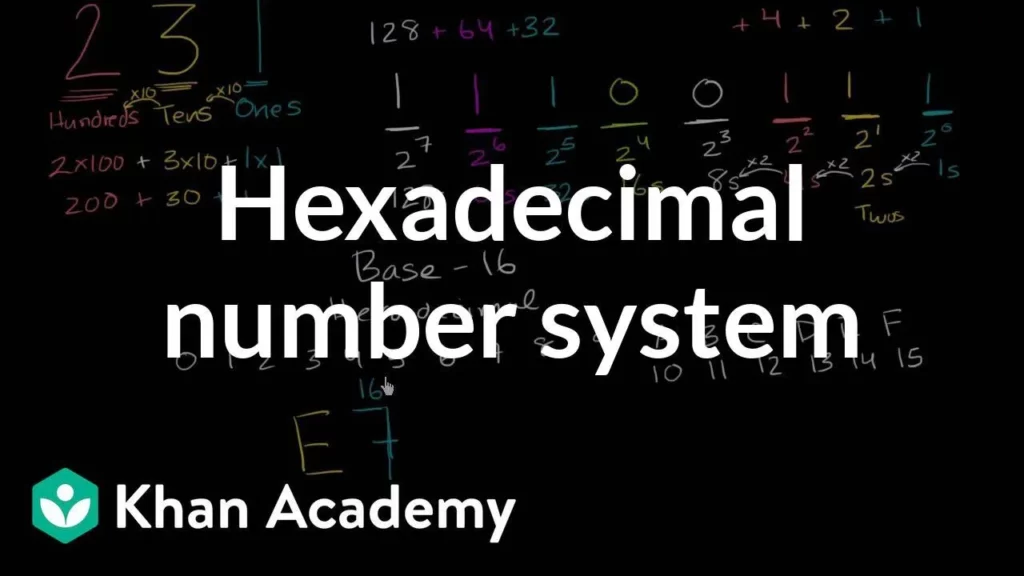
The lesson introduces the hexadecimal number system, which is a base 16 system that includes the digits 0-9 and the letters A-F to represent values from 0 to 15. It explains how to interpret hexadecimal numbers using place values and highlights the importance of converting between number systems, particularly in computing and web development, where hexadecimal is commonly used for color representation. Understanding hexadecimal enhances efficiency in numerical representation and is valuable for various applications in technology.
Inferring limit from numerical data | Limits | Differential Calculus
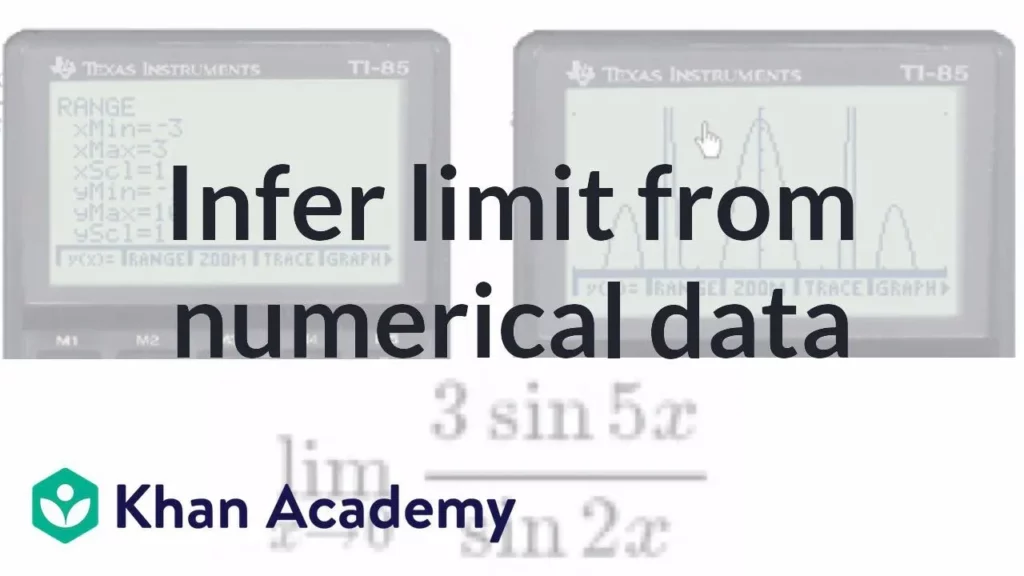
In this lesson, we examined the limit of the function \( f(x) = \frac{3 \sin(5x)}{\sin(2x)} \) as \( x \) approaches 0, finding that the function values converge to 7.5 from both the negative and positive sides. This conclusion is supported by numerical evaluations and graphical representation, confirming that \(\lim_{x \to 0} f(x) = 7.5\).
Example: Using soh cah toa | Basic trigonometry | Trigonometry
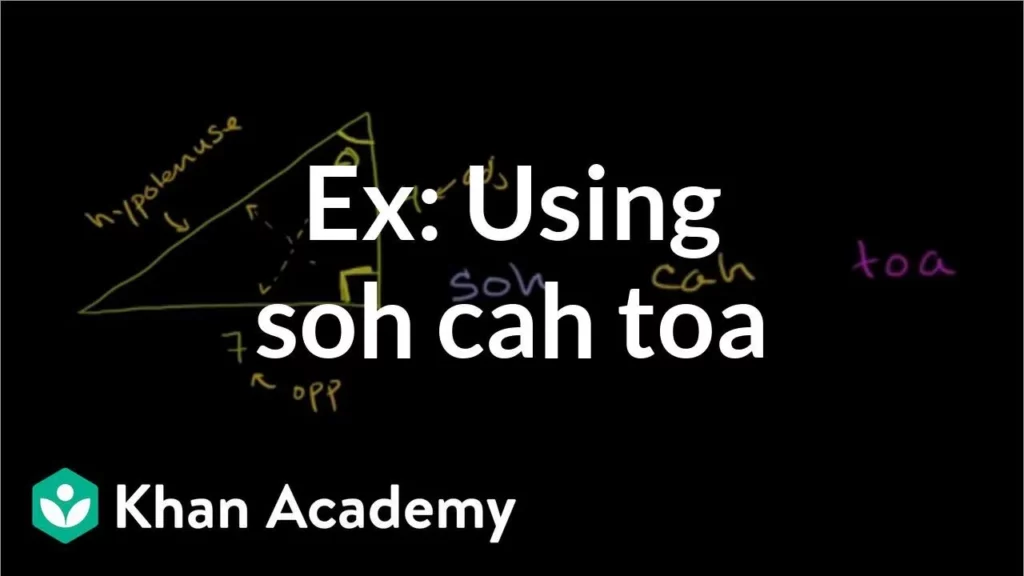
In this lesson, we explored how to find the sine and cosine of an angle in a right triangle using trigonometric ratios, guided by the mnemonic SOHCAHTOA. We calculated the cosine of angle theta as \(\cos(\theta) = \frac{4}{\sqrt{65}}\) and the sine as \(\sin(\theta) = \frac{7}{\sqrt{65}}\), emphasizing the relationship between the sides of the triangle and the angles. Understanding these ratios is essential for applying trigonometry in various mathematical and real-world scenarios.
Alleles and genes
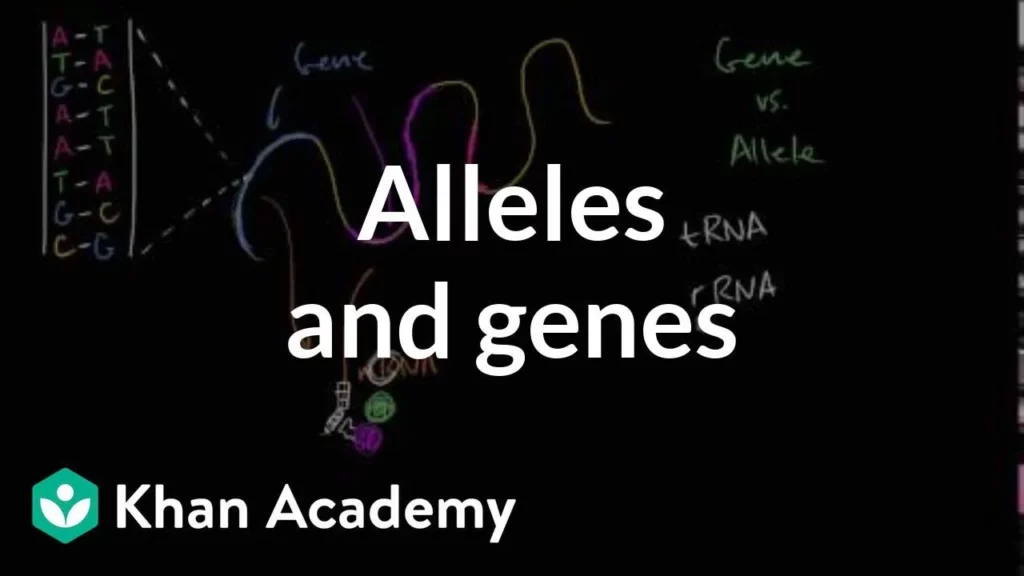
This lesson explains the fundamental concepts of genes and alleles in genetics, highlighting their distinct roles. Genes serve as the overarching instructions for producing proteins, while alleles represent the various versions of those instructions that can lead to different traits, such as eye color. Understanding the relationship between genes and alleles enhances our appreciation of genetic diversity and heredity.
Calculating conditional probability | Probability and Statistics
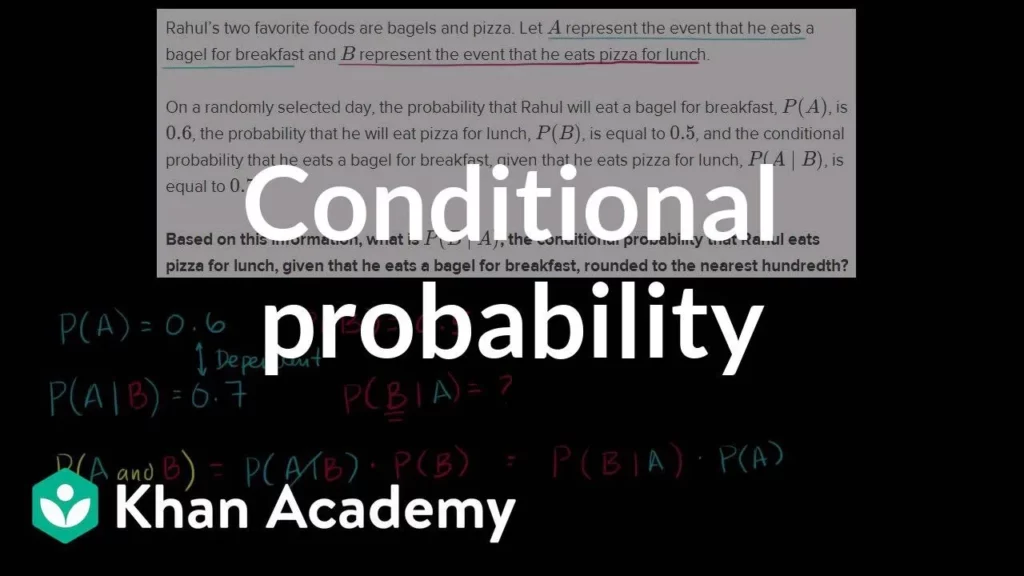
The lesson explores the concept of conditional probability through the example of Rahul’s food choices, specifically focusing on his likelihood of eating bagels for breakfast and pizza for lunch. It demonstrates how to calculate conditional probabilities and highlights the dependence between events, showing that the probability of eating pizza for lunch increases if Rahul has already eaten a bagel for breakfast. Ultimately, the lesson emphasizes the importance of understanding these relationships in probability and statistics.
Brønsted–Lowry acids and bases | Chemical reactions | AP Chemistry
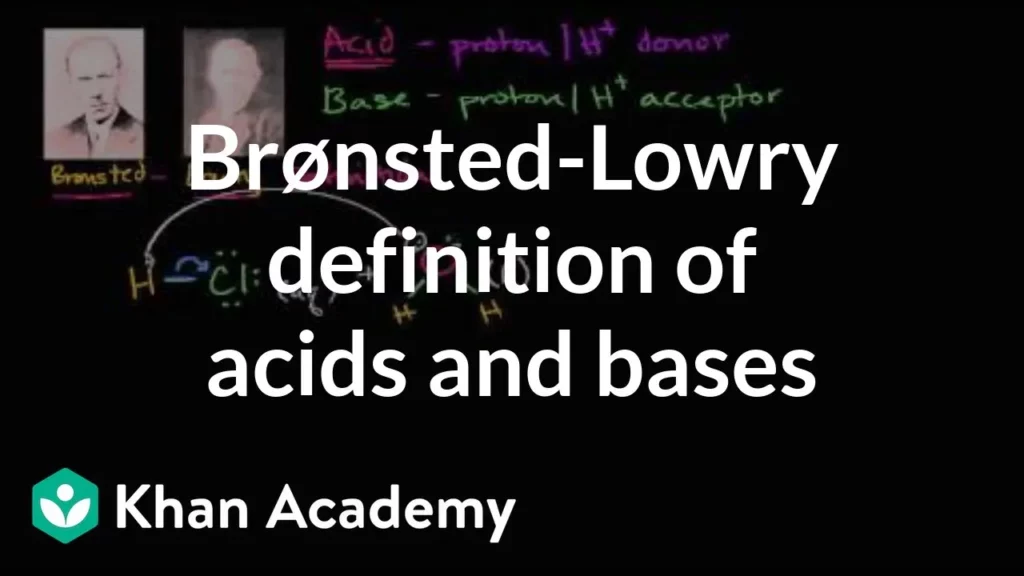
The lesson on the Bronsted-Lowry definition of acids and bases explains that an acid is characterized as a proton donor, while a base acts as a proton acceptor. Using hydrochloric acid (HCl) as an example, the lesson illustrates how HCl donates a hydrogen ion (H⁺) to water, forming hydronium ions (H₃O⁺) and highlighting the concepts of conjugate acids and bases. This framework enhances our understanding of acid-base interactions in various chemical contexts.
Fundamental theorem of calculus (Part 1) | AP Calculus AB
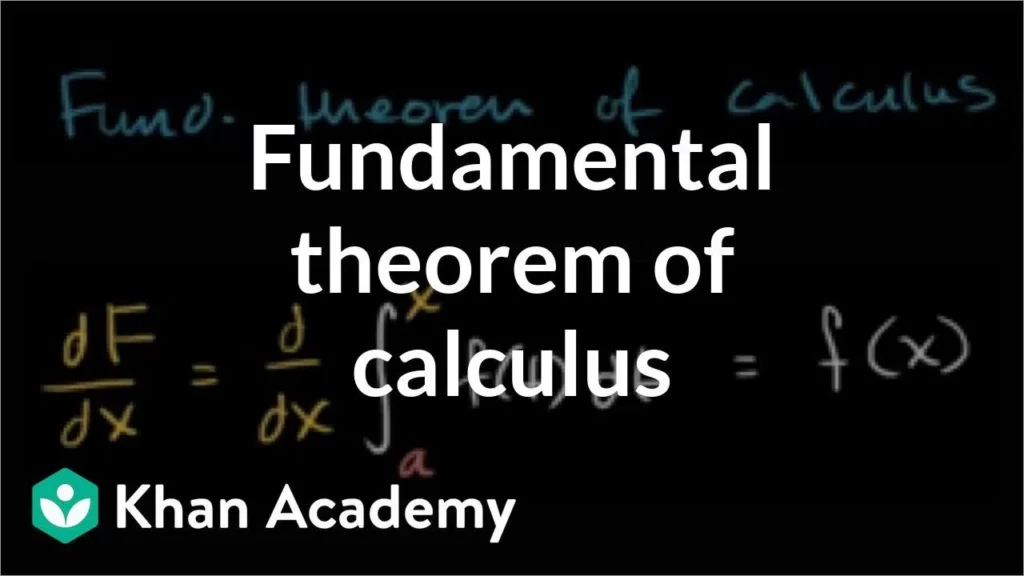
The Fundamental Theorem of Calculus establishes a vital connection between differentiation and integration, demonstrating that the derivative of the area function defined by a definite integral corresponds to the original function. This theorem not only simplifies the process of calculating derivatives of integrals but also deepens our understanding of how these two fundamental operations in calculus are interrelated. Through practical examples, we can see how this theorem facilitates complex calculations and enhances our comprehension of continuous functions.
GCF to Factor a Polynomial
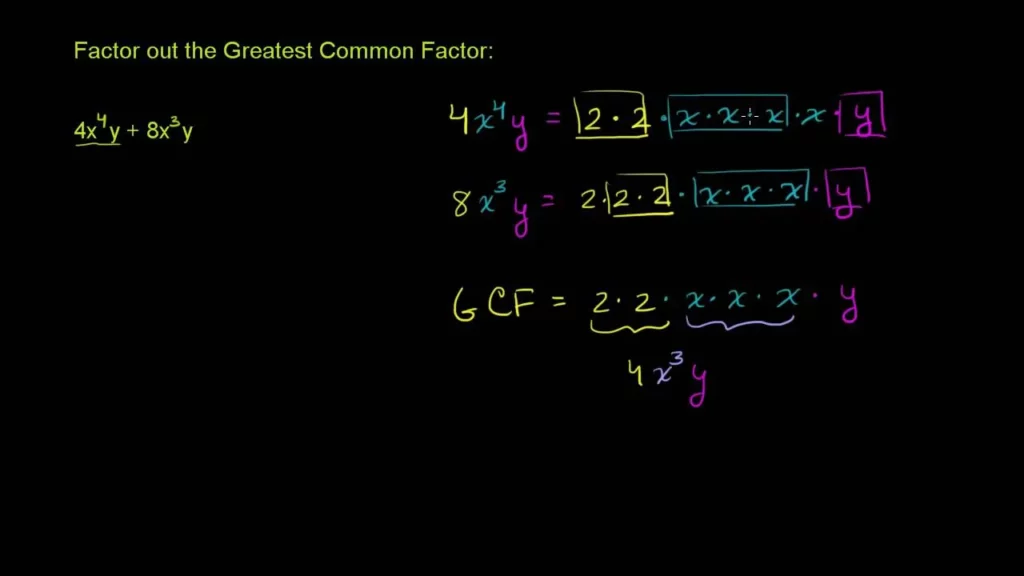
In this lesson, we explored the concept of the Greatest Common Factor (GCF) and its importance in simplifying algebraic expressions. By breaking down two expressions, \(4x^4y\) and \(8x^3y\), into their prime factors, we identified the GCF as \(4x^3y\) and demonstrated how to rewrite the original expressions using this factor. Understanding the GCF is a valuable skill that aids in simplifying and solving algebraic equations effectively.
Transpose of a matrix | Matrices | Precalculus
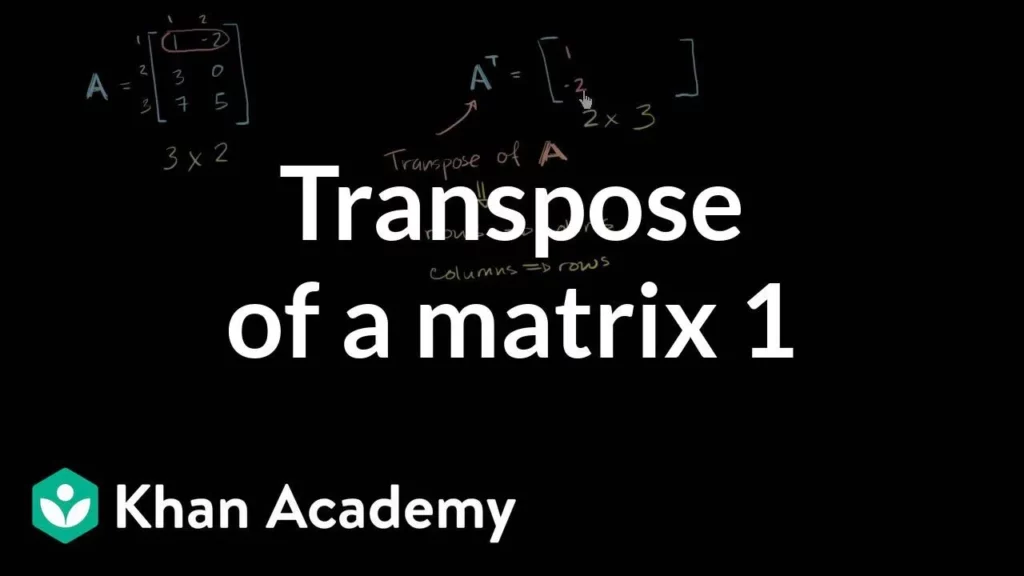
This lesson introduces the concept of matrix transposition, a fundamental operation in linear algebra where the rows and columns of a matrix are swapped. Using examples of a 3×2 matrix and a 2×2 matrix, the lesson illustrates how to transpose these matrices, resulting in a new matrix that maintains the same elements but alters their arrangement. Understanding matrix transposition is crucial for advancing in mathematics and its applications.
What is the domain of a function? | Functions | Algebra I
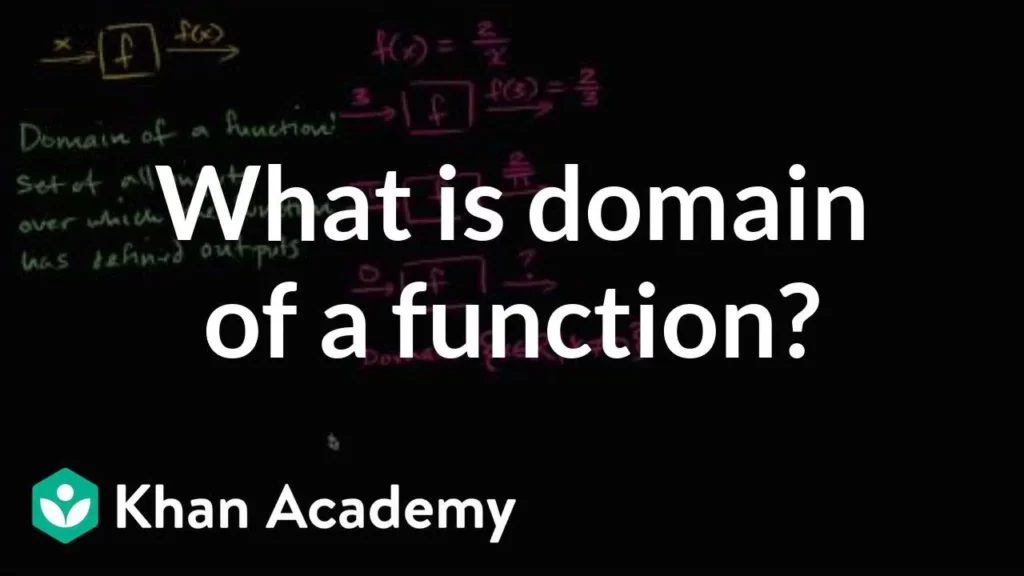
The lesson on “Understanding Functions and Their Domains” introduces the concept of functions as machines that produce outputs from given inputs, exemplified by the function \( f(x) = \frac{2}{x} \). It emphasizes the importance of the domain, which defines the set of valid inputs for a function, highlighting that certain inputs, like zero in this case, can lead to undefined outputs. Through various examples, including square root and piecewise functions, the lesson illustrates how each function has its own specific domain, underscoring the necessity of understanding these limits for proper function usage in mathematics.