
2 critical misconceptions about happiness | Tal Ben-Shahar

The lesson emphasizes the need for a dedicated field of happiness studies that encompasses various disciplines, including philosophy, literature, neuroscience, and economics, rather than solely focusing on the psychological aspects. It addresses critiques of happiness studies, highlighting the misconceptions that equate happiness with superficial pleasures or a pain-free existence, and underscores the importance of understanding happiness as a complex interplay of emotions and experiences. Ultimately, the lesson advocates for a holistic approach to studying happiness to enhance well-being and resilience in the face of life’s challenges.
Why your brain believes everything | Neuroscientist Amishi Jha
The lesson explores the relationship between attention and truth bias in a VUCA (Volatile, Uncertain, Complex, Ambiguous) world, highlighting how our ability to focus influences our capacity to discern truth from misinformation. It emphasizes that truth bias, the tendency to believe what we understand, can lead to the acceptance of false narratives, particularly when attention is compromised. Ultimately, enhancing our attention skills is crucial for improving critical thinking and fostering a more informed society amidst the challenges of a complex information landscape.
Has science made religion useless? | Robert Sapolsky, Reza Aslan, Pete Holmes & more

The lesson explores the universal nature of religion, emphasizing its deep roots in human history and cognitive processes. Experts argue that religious beliefs have evolved as a means of coping with life’s uncertainties and moral dilemmas, suggesting that morality may exist independently of organized religion. Ultimately, the interplay between science and faith is highlighted as a vital aspect of the human quest for meaning, with individuals navigating their beliefs in a complex landscape of personal and cultural influences.
Time-Management Tips from a Neuroscientist | Daniel Levitin
Effective time management is crucial for enhancing productivity and reducing stress. Key strategies include actively utilizing a calendar to break down tasks, avoiding over-scheduling by being realistic about what can be accomplished, and prioritizing tasks using index cards for better focus. Additionally, understanding the concept of hyperbolic discounting can help in making informed commitments, while allowing time for spontaneity and creativity ensures a balanced and fulfilling routine.
Will civilization collapse? | WIRED’s Kevin Kelly

In “Embracing Protopia: A Vision for the Future,” Kevin Kelly presents the concept of Protopia, which emphasizes making small, incremental improvements rather than striving for an unattainable utopia or fearing a dystopian future. He advocates for a balanced approach that combines optimism with a realistic understanding of challenges, encouraging thoughtful evaluation of technology, as exemplified by the Amish community. Ultimately, Protopia is framed as a direction for progress, allowing for continuous growth and alignment with shared values.
A Scientific Explanation of the Human Mind | Daniel Siegel

The lesson explores the mind as a complex, emergent system characterized by self-organization, openness to external influences, chaotic behavior, and non-linearity. It emphasizes the interconnectedness of the mind with the body and environment, challenging traditional notions of the mind’s location and function. By understanding the mind as an embodied and relational process, we can gain deeper insights into its intricate dynamics and the interplay between individual experiences and relational contexts.
Big Think Interview With Peter Thiel

In this lesson, Peter Thiel emphasizes the need for long-term thinking in innovation, arguing that both free markets and government institutions often struggle to promote sustained advancements due to short-term focus. He highlights the critical role of technological progress for the prosperity of developed nations and critiques the current political landscape for its lack of support for innovation. Thiel advocates for a cultural shift that prioritizes long-term goals and rethinks education and entrepreneurship to foster an environment conducive to groundbreaking developments.
Mind hack: 7 secrets to learn any new language | Steve Kaufmann
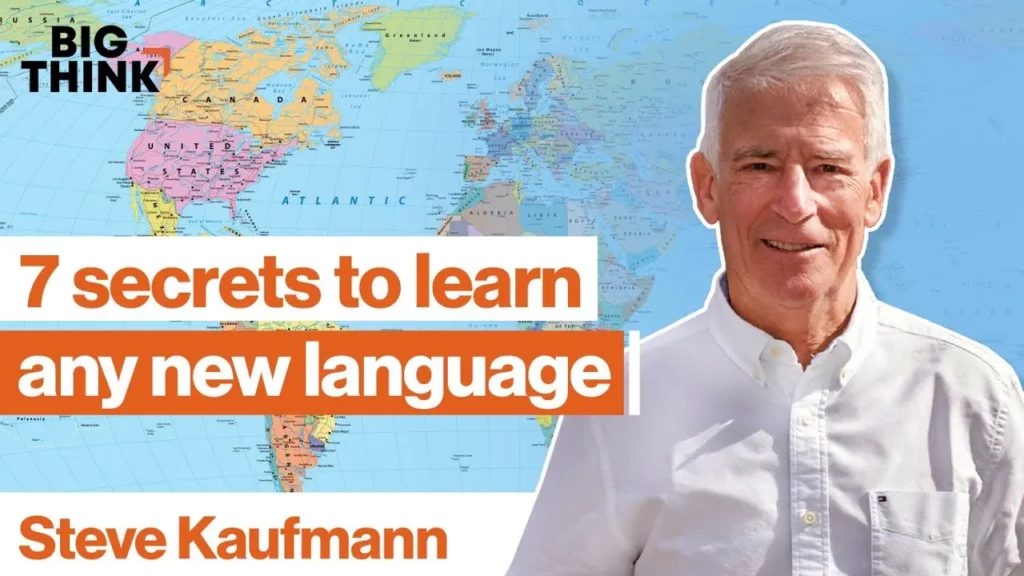
In his lesson on effective language learning, Steve Cochran emphasizes the importance of time, motivation, and engaging with enjoyable content to make the process rewarding. He advocates for prioritizing vocabulary acquisition over grammar, encouraging learners to immerse themselves in the language through listening and noticing patterns, while also utilizing modern tools and resources. Ultimately, Cochran highlights that patience and a proactive approach are key to embracing the language learning journey and achieving success.
Negotiation Technique: Understand Our Perceptions of Gains and Losses | FBI Negotiator Chris Voss

The lesson on “Understanding Bending Reality: The Psychology of Loss and Gain” explores how individuals perceive losses and gains, emphasizing that losses often feel significantly more impactful than equivalent gains. This psychological bias affects decision-making and negotiation strategies, as people are more motivated to avoid losses than to pursue gains. By employing techniques like accusations audits and reframing the costs of inaction, individuals can navigate negotiations more effectively and make informed choices that prioritize their best interests.
Digital Addiction: How Half the Developed World Got Hooked on the Internet | Adam Alter

The lesson on behavioral addiction explores its definition, causes, and implications in a technology-driven society, highlighting how compulsive behaviors can lead to negative consequences similar to substance addiction. It emphasizes the role of advancements in technology and sophisticated design by companies in fostering these addictions, particularly through the allure of screens and social media, which cater to psychological needs for instant gratification and social approval. Understanding behavioral addiction is crucial as it continues to impact individuals’ lives in an increasingly connected world.