
Frans de Waal: Morality Without Religion
The lesson explores the universal presence of religion in human societies and its potential role in shaping morality. It argues that human morality likely predates organized religion, suggesting that moral systems existed independently before the formalization of religious structures. The ongoing experiment in northern Europe, where a largely non-religious population maintains a moral society, raises questions about the necessity of religion for ethical behavior, leaving the relationship between morality and religion open for further exploration.
Why are so many objects in space shaped like discs? | Michelle Thaller
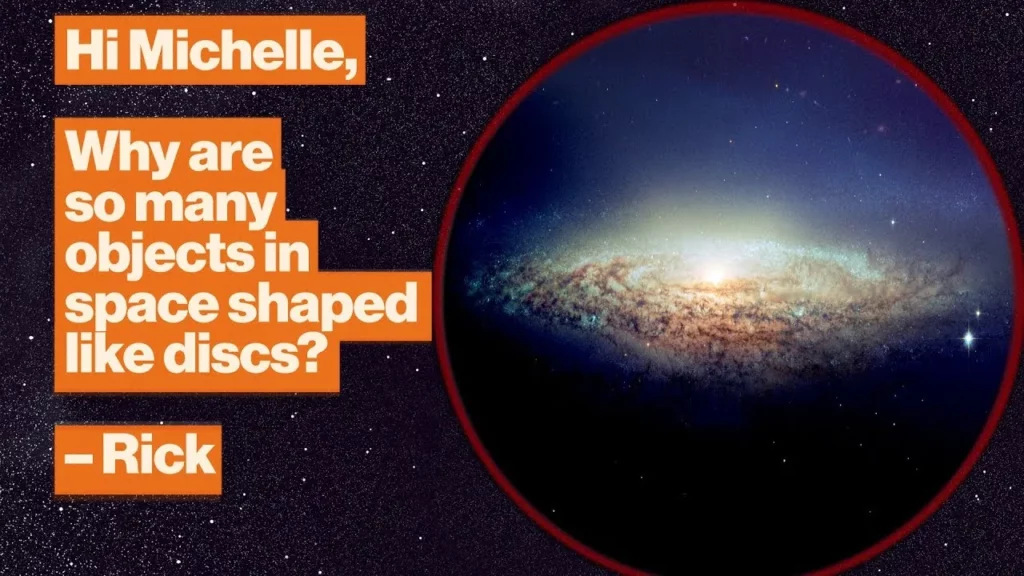
The lesson explores how spinning disks form in the universe, highlighting the roles of gravity and angular momentum in this process. It explains that as a massive cloud of dust and gas collapses under gravity, any initial spin is amplified, leading to a flattening into a disk shape due to particle interactions. This interplay of forces results in the structured disks observed in solar systems, galaxies, and other celestial bodies.
4 Professional Poker Lessons to Help You Think Clearly and Live Wisely | Liv Boeree
The lesson emphasizes the significance of understanding cognitive biases—specifically confirmation bias, status quo bias, and the sunk cost fallacy—in both poker and everyday life. By recognizing these biases, individuals can make more objective decisions, adapt to changing circumstances, and detach their emotions from their choices, ultimately leading to improved strategic thinking and better outcomes.
Michio Kaku: What’s the Fate of the Universe? It’s in the Dark Matter
The lesson on “The Fate of the Universe” delves into cosmology, exploring the universe’s origins and potential endings, including the Big Crunch, Big Freeze, and Big Rip. It highlights the significance of dark energy in the universe’s expansion and the challenges in understanding its properties, ultimately prompting reflections on existence and the future of advanced civilizations in a changing cosmos.
A mind-blowing explanation of the speed of light | Michelle Thaller
The lesson on “Understanding Mass and Speed: The Relativity of Motion” explores how Einstein’s theories of relativity redefine our understanding of mass and its relationship with speed, particularly as objects approach the speed of light. It highlights key concepts such as time dilation and length contraction, which occur at high velocities, and introduces the idea of relativistic mass, where an object’s mass appears to increase due to its kinetic energy. Overall, the lesson emphasizes the intricate connection between mass, energy, and the fundamental laws of physics that govern our universe.
4 ways to hack your memory | Lisa Genova
This lesson outlines effective study strategies to enhance information retention, emphasizing the importance of self-testing, spaced repetition, and contextual learning. It highlights how managing stress and creating meaningful associations can further improve memory recall, ultimately guiding learners to optimize their study sessions for better performance in exams and presentations.
‘Beyond a Reasonable Doubt’: How Juries Get It Wrong | Richard Dawkins

The lesson on “Understanding Reasonable Doubt in the Legal System” emphasizes the complexity of the reasonable doubt standard in criminal trials, which requires juries to convict only when they are sure of a defendant’s guilt beyond a reasonable doubt. It highlights the emotional and subjective nature of jury deliberations, illustrating how different juries can reach varying verdicts based on the same evidence, as seen in high-profile cases like the O.J. Simpson trial. Ultimately, the lesson encourages a critical examination of what “beyond reasonable doubt” truly signifies within the legal framework, acknowledging the challenges posed by human judgment and interpretation.
How the brain makes memories | Lisa Genova
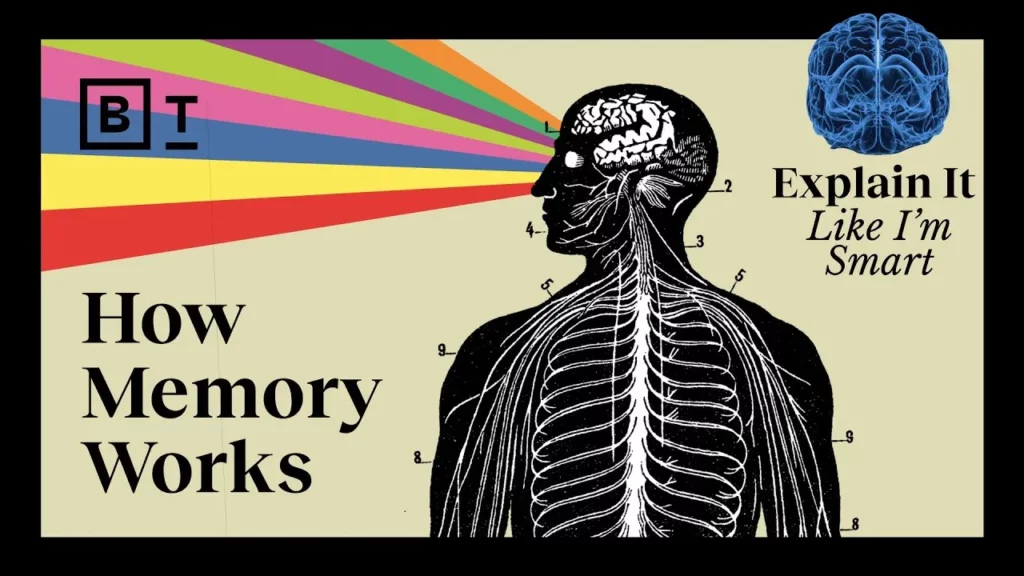
The lesson on memory formation outlines the four critical steps involved: encoding, consolidation, storage, and retrieval. Encoding captures sensory information, consolidation forms neural connections, storage solidifies memories in the brain, and retrieval allows access to these memories when needed. Understanding these processes enhances our grasp of how we learn and remember, with ongoing research aiming to further improve cognitive abilities and memory retention.
Creativity: The science behind the madness | Rainn Wilson, David Eagleman & more
The lesson emphasizes that creativity is an inherent trait in all humans, transcending traditional roles and professions. It explores the cognitive foundations of creativity, highlighting the brain networks involved and the evolutionary advantages that enhance our creative capabilities. By embracing uncertainty, taking risks, and recognizing the influence of culture, individuals can unlock their creative potential and contribute to diverse forms of expression.
Baby Boomers: The Dumbest Generation? Peter Thiel

The lesson on “Understanding the Housing Bubble” explores the psychological and economic factors that contributed to the housing bubble following the tech bubble’s collapse. It highlights the role of monetary policy in fostering a false sense of security among investors, leading to complacency and overconfidence, which ultimately resulted in a severe market crash. The lesson emphasizes the importance of recognizing long-term trends and the interplay of belief systems in preparing for future financial challenges.