
The Unreasonable Efficiency of Black Holes

The lesson explores the concept of energy conversion, highlighting Einstein’s equation E=mc² and its implications for mass-energy equivalence. It discusses the challenges of extracting energy from mass, comparing the inefficiencies of chemical and nuclear reactions with the more promising energy conversion methods offered by black holes, particularly emphasizing the superior efficiency of rotating black holes. Ultimately, the lesson suggests that while traditional methods are limited, the potential of black holes presents a fascinating avenue for effective mass-to-energy conversion.
Length Contraction and Time Dilation | Special Relativity Ch. 5

This lesson explores Lorentz transformations, which explain how measurements of time and space change for observers in different states of motion, particularly in the context of special relativity. Key concepts include time dilation, where time appears to run slower for a moving observer, and length contraction, where objects appear shorter from a moving perspective. These phenomena highlight the non-intuitive nature of the universe and emphasize the importance of understanding how motion affects our perception of time and space.
Einstein’s Biggest Blunder, Explained
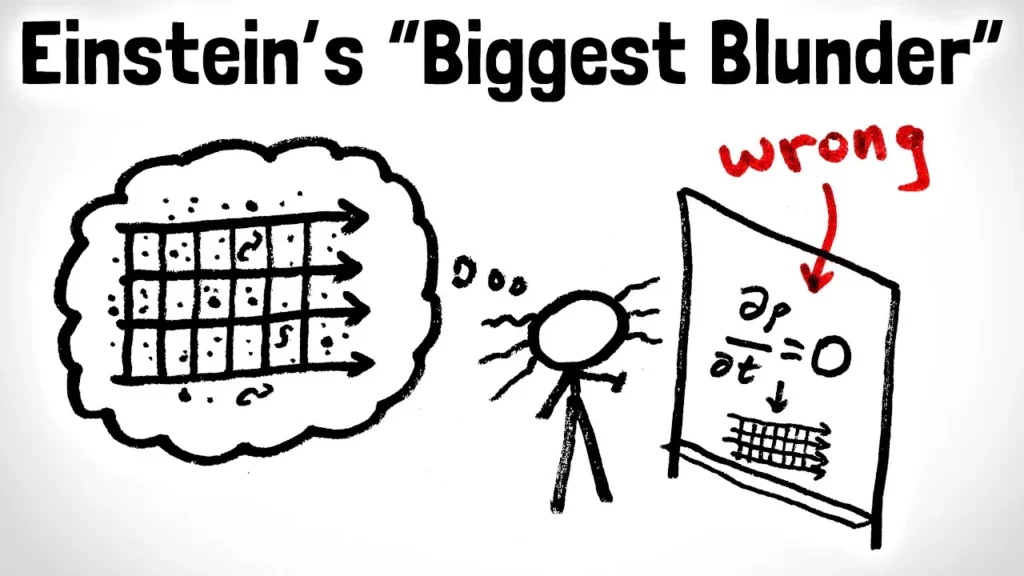
In this lesson, we explore Albert Einstein’s revolutionary equation of general relativity, which fundamentally changed our understanding of gravity by linking mass and energy to the curvature of spacetime. Initially, Einstein introduced a term to allow for a non-static universe, which led to the realization that the universe is expanding, a concept later confirmed by observations of distant galaxies. The lesson also highlights the evolution of Einstein’s thoughts on his equation, particularly in light of the discovery that the universe’s expansion is accelerating, giving new significance to his earlier adjustments.
Why Penrose Tiles Never Repeat

The lesson on Penrose tilings explores the intriguing concept of quasi-periodic patterns, which are characterized by their non-repeating nature despite appearing similar across different sections. The discovery of the pentagrid—a structure formed by five sets of parallel lines—provides insight into why these patterns do not repeat, as the ratio of tile types adheres to the irrational golden ratio. By utilizing the pentagrid, one can create and appreciate the complexity of Penrose tilings and other non-repeating geometric patterns.
This is Not a Rainbow

The lesson explores the science behind rainbow colors, highlighting Isaac Newton’s original classification of red, orange, yellow, green, blue, indigo, and violet, and the reasoning behind the inclusion of indigo to match the seven notes of the musical scale. It also explains why colors like purple and magenta don’t appear in a prism-created rainbow, and how optical illusions and phenomena like supernumerary rings can create the appearance of purple in the sky. Ultimately, the lesson emphasizes the intricate blend of science, perception, and history that contributes to our understanding of rainbows.
General Relativity Explained in 7 Levels of Difficulty
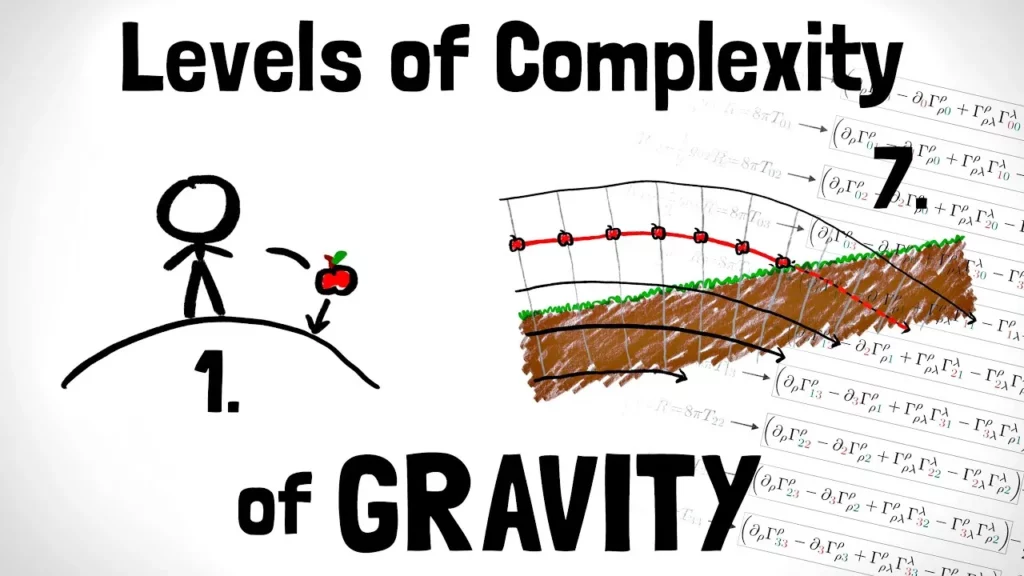
The lesson on General Relativity explores how Albert Einstein’s revolutionary theory redefined our understanding of gravity, presenting it as a consequence of the curvature of spacetime rather than merely a force. It explains the concept of curved spacetime, the significance of the Einstein Field Equations in determining how matter and energy shape this curvature, and highlights the theory’s successful predictions and applications in various cosmic phenomena. Additionally, it addresses the challenges of reconciling General Relativity with quantum mechanics, emphasizing the ongoing quest for a unified theory.
Science, Religion, and the Big Bang

The lesson explores the evolution of our understanding of the universe, transitioning from the belief in a static, eternal cosmos to the acceptance of an expanding universe with a distinct beginning, as proposed by Georges Lemaître. His groundbreaking theory, supported by Edwin Hubble’s observations, led to the formulation of the “big bang theory,” which describes the universe’s expansion from a highly compressed state. The lesson also addresses misconceptions about the big bang, the nature of space and time, and the ongoing mysteries surrounding the universe’s origins and expansion, suggesting that there may be more to discover about the universe’s past and its potential eternity.
What Is The Universe?
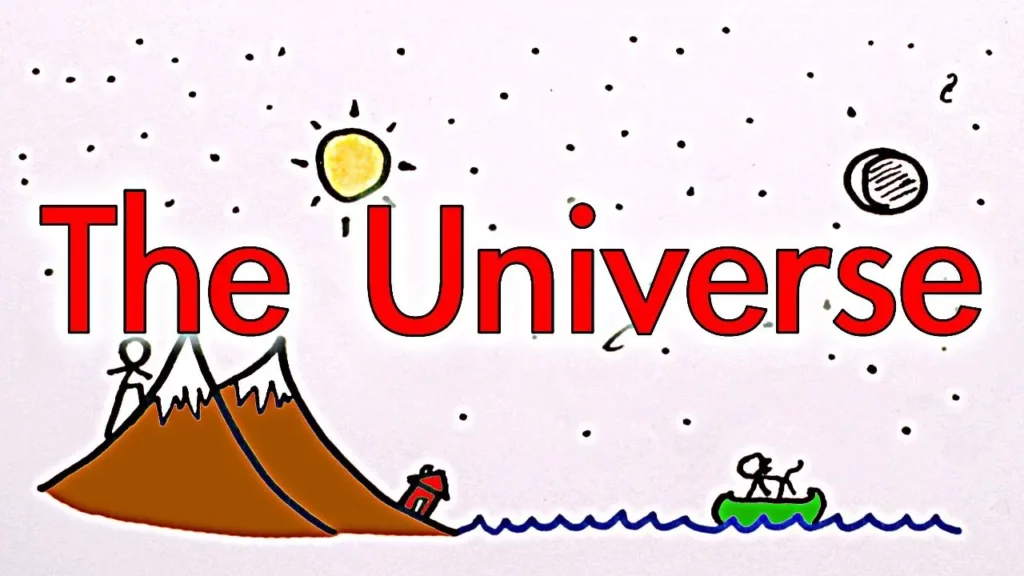
The lesson “Understanding the Universe: A Fun Exploration” introduces the concept of the universe as everything that exists, distinguishing between the “observable universe,” which includes what we can see and confirm, and “The Whole Universe,” which encompasses all existence, known or unknown. It discusses the age of the universe, the nature of light travel, and the fundamental components of spacetime, particles, and physical laws, while also touching on intriguing ideas like the existence of mathematics and the possibility of multiverses. Ultimately, it encourages curiosity about the vast mysteries of the universe beyond our current understanding.
Albert Einstein: The Size and Existence of Atoms
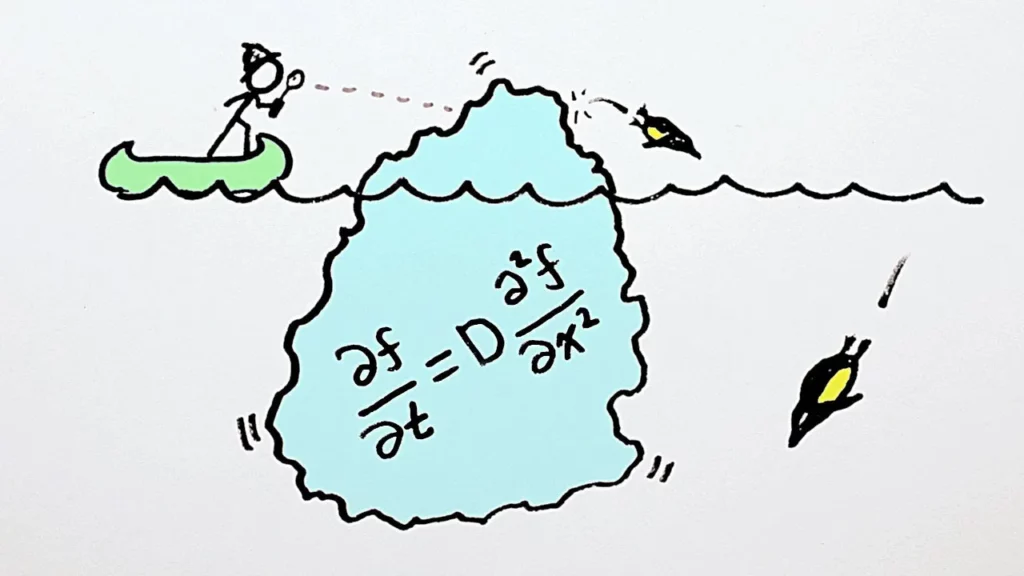
In 1905, Albert Einstein published pivotal papers that transformed physics, including his analysis of Brownian motion, which describes the random movement of tiny particles in fluids. By mathematically explaining this phenomenon, Einstein provided compelling evidence for the existence of atoms, demonstrating that even ordinary observations can yield significant scientific insights. His work not only supported atomic theory but also laid the groundwork for future advancements in the field.
How Shor’s Algorithm Factors 314191
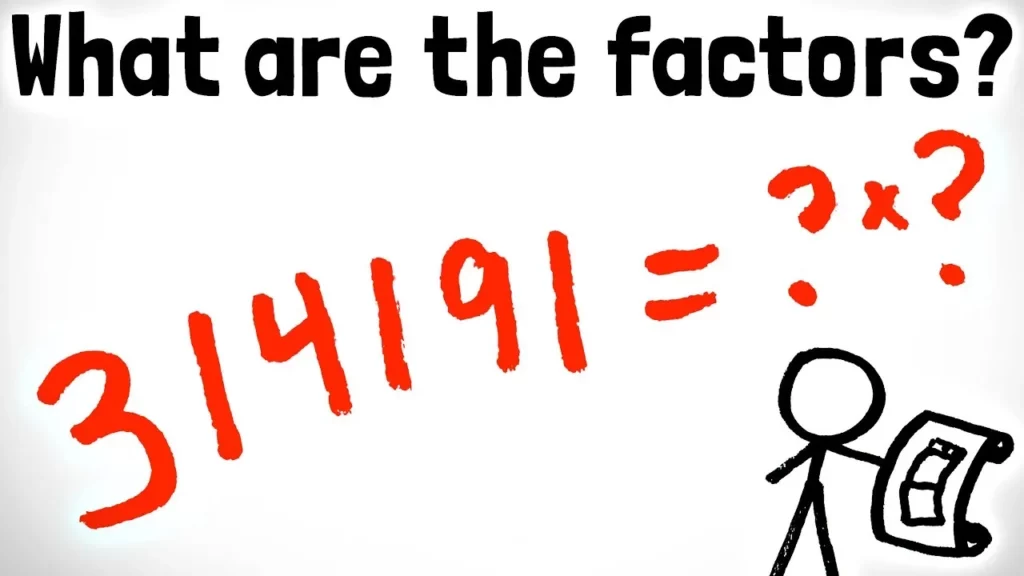
Shor’s algorithm is a groundbreaking quantum computing method that efficiently factors large numbers, which poses a threat to traditional encryption systems. By utilizing quantum superposition and the quantum Fourier transform, the algorithm refines guesses to identify factors of a number, exemplified through the factorization of 314191 into 829 and 379. This lesson highlights the significance of Shor’s algorithm in understanding quantum computing’s potential while emphasizing the need for enhanced digital security measures to protect against its implications.