
Why isn’t the Netherlands underwater? – Stefan Al
The lesson highlights the Netherlands’ exceptional advancements in water management, particularly following the catastrophic 1953 flood that prompted the development of the Delta Works, a sophisticated flood prevention system. Key innovations, such as the Maeslantkering, showcase the country’s proactive approach to safeguarding its low-lying regions through a combination of advanced engineering, strategic land use, and urban design. As global sea levels rise, the Netherlands serves as a model for resilience and adaptability in the face of climate challenges.
Particles and waves: The central mystery of quantum mechanics – Chad Orzel
The lesson explores the dual nature of matter, highlighting how entities like light and electrons exhibit both particle and wave characteristics, a fundamental concept in quantum physics. Key historical developments, from Einstein’s proposal of light as photons to Bohr’s atomic theory and de Broglie’s insight into electron wave behavior, illustrate the evolution of this idea. Understanding particle-wave duality is essential for grasping the complexities of quantum mechanics and its implications for the nature of reality.
The fundamentals of space-time: Part 1 – Andrew Pontzen and Tom Whyntie
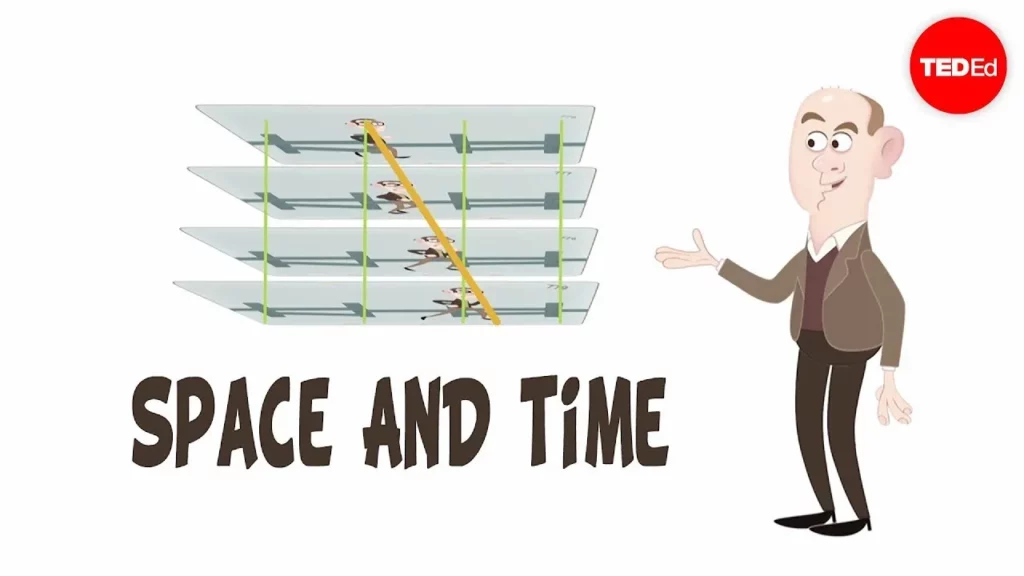
The lesson on “Understanding Space-Time” emphasizes the integration of space and time into a unified four-dimensional framework, essential for grasping the universe’s complexities. Through animations and examples, such as a character’s journey depicted in space-time diagrams, the lesson illustrates how motion and perspective can be analyzed within this framework. It also highlights the limitations of this understanding at extreme velocities, paving the way for further exploration of space-time concepts.
What causes an economic recession? – Richard Coffin
The lesson explores the historical context and causes of economic recessions, beginning with the decline of bronze’s value in ancient Britain around 800 BCE, which led to social upheaval. It highlights the complex interplay of supply and demand, inflation, interest rates, and psychological factors that contribute to economic fluctuations, emphasizing that recessions can occur even during prosperous times. Additionally, it discusses the role of government policies in both mitigating and potentially exacerbating economic downturns, while underscoring the importance of learning from past recessions to better navigate future challenges.
What is entropy? – Jeff Phillips
The lesson on entropy explains its fundamental role in spontaneous processes, emphasizing that entropy is a measure of the probability of energy configurations rather than merely a measure of disorder. It illustrates how energy tends to disperse in systems, leading to higher entropy states, which are statistically more likely than concentrated energy states. Ultimately, the concept of entropy serves as a guiding principle for understanding why certain physical processes, such as melting ice or mixing cream in coffee, occur in one direction over time.
What’s a squillo, and why do opera singers need it? – Ming Luke
The lesson explores the captivating power of the human voice in opera, particularly through the example of the Queen of the Night’s aria in Mozart’s “The Magic Flute.” It delves into the physics of sound production, explaining how skilled opera singers manipulate harmonics and vocal techniques, such as achieving the distinctive squillo, to project their voices above orchestral accompaniment. Ultimately, the lesson highlights the extraordinary ability of the human voice to resonate and inspire, transcending the need for amplification.
Jellyfish predate dinosaurs. How have they survived so long? – David Gruber
The lesson explores the captivating biology and survival strategies of jellyfish, highlighting their unique anatomy, including their gelatinous structure and rudimentary nervous system. It discusses their potent stings, which serve both predatory and defensive purposes, and their significant contributions to scientific advancements, particularly through the use of green fluorescent protein. Additionally, the lesson emphasizes the remarkable resilience of jellyfish, which have thrived for millions of years and possess the ability to revert to an earlier life stage, showcasing their evolutionary success in changing ocean environments.
Licking bees and pulping trees: The reign of a wasp queen – Kenny Coogan
The lesson outlines the remarkable journey of a wasp queen as she emerges from hibernation in spring to establish a new hive after surviving a harsh winter. It details her challenges, including finding food and building a nest, as well as her role in nurturing a new generation of workers that support the hive’s growth. The lesson emphasizes the ecological importance of wasps, highlighting their contributions to pest control and pollination, while also illustrating the cyclical nature of their life cycle as the queen prepares for winter and the continuation of her species.
How do steroids affect your muscles— and the rest of your body? – Anees Bahji
The lesson explores the complexities surrounding steroid use, particularly in recreational contexts, highlighting both their anabolic benefits for muscle growth and the significant health risks associated with misuse. While steroids can aid in medical treatments, their recreational use often involves high doses that lead to serious physical and psychological consequences, including organ damage, hormonal imbalances, and increased aggression. Ultimately, the lesson underscores the uncertainty regarding the safety of steroid use, emphasizing the need for more comprehensive research on its risks and long-term effects.
Will we ever be able to teleport? – Sajan Saini
The lesson explores the concept of quantum teleportation, explaining how the information about an object’s quantum state can theoretically be transmitted from one location to another, allowing for the reconstruction of that object elsewhere. It highlights the challenges posed by the uncertainty principle in measuring quantum states and the role of quantum entanglement in facilitating this process. While current technology allows for the teleportation of single electrons and atoms, the complexity of teleporting larger objects remains a significant hurdle, raising intriguing philosophical questions about the nature of matter and information.