
A brief history of toilets – Francis de los Reyes
The lesson explores the evolution of sanitation from ancient Rome to modern innovations, highlighting the significance of waste management for public health throughout history. It discusses early sewage systems in various cultures, advancements in toilet technology, and the ongoing challenges faced by billions who lack proper sanitation today. Ultimately, the lesson emphasizes the need for innovative solutions to address the disparities in sanitation access and infrastructure.
The woman who stared at the sun – Alex Gendler
The lesson highlights the remarkable contributions of Hisako Koyama, who, during World War II, ingeniously observed and documented solar activity despite the challenges of her environment. Using a simple telescope setup, she meticulously tracked sunspots over decades, producing over 10,000 drawings that significantly advanced our understanding of solar phenomena and their impact on Earth. Koyama’s legacy emphasizes the value of careful observation in science, demonstrating that significant insights can arise from dedication and perseverance, regardless of formal training.
The biggest mistakes in mapmaking history – Kayla Wolf
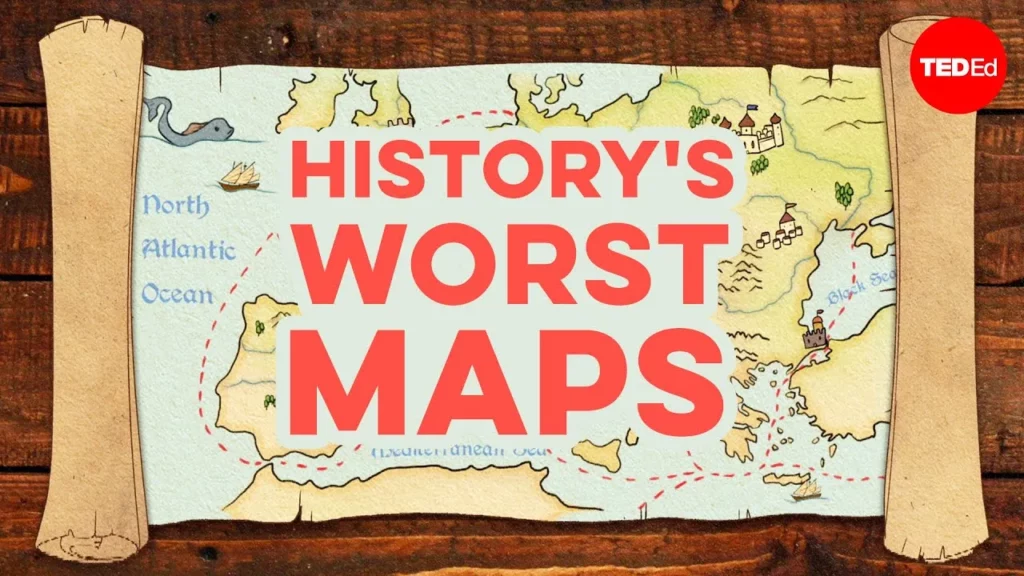
The lesson “Exploring the Evolution of World Maps: From Dragons to Discoveries” examines the historical development of world maps from the medieval period to the mid-17th century, highlighting the blend of myth and geography in cartography. It discusses the dual nature of ancient maps—functional and cosmographical—and emphasizes the contributions of Islamic and Chinese cartographers, who prioritized accuracy over fantastical elements. Despite advancements in mapping, the allure of mythical creatures persisted, reflecting a tension between exploration and the realities of indigenous cultures that were often overlooked by European mapmakers.
Can you solve the fish riddle? – Steve Wyborney
In the lesson “Rescue Mission: Saving Endangered Fish from the Depths,” you take on the role of a cargo director tasked with rescuing critically endangered fish after a storm causes their tanks to fall overboard into shark-infested waters. Utilizing thermal imaging and sonar, you analyze the situation, decipher clues about the number of tanks and sharks in different sectors, and determine the optimal way to distribute the fish across the tanks. Ultimately, your problem-solving skills lead to a successful recovery of the fish, highlighting the importance of quick thinking in conservation efforts.
Feedback loops: How nature gets its rhythms – Anje-Margriet Neutel
The lesson on “The Symphony of Nature: Understanding Feedback Loops” emphasizes the crucial role of feedback loops in maintaining the balance and resilience of ecosystems. It distinguishes between positive feedback loops, which amplify changes and can lead to both beneficial and harmful outcomes, and negative feedback loops, which stabilize ecosystems by counteracting changes. By exploring these interconnected processes, the lesson highlights the complexity and harmony of ecological systems, illustrating how they evolve over time while maintaining their intricate balance.
The rise and fall of the Kingdom of Man – Andrew McDonald
The lesson explores the history of the Sea Kings of the Isle of Man, a medieval dynasty that ruled over a maritime empire from the late 11th century until the mid-13th century. It highlights the reign of Godred Crovan, the kingdom’s diverse cultural heritage, maritime dominance, internal rivalries, and eventual decline, culminating in the annexation of the Isle of Man by Scotland in 1266. The legacy of the Sea Kings endures through historical chronicles and the remnants of their coastal fortresses, symbolizing their significant impact on the region.
What causes kidney stones? – Arash Shadman

This lesson covers the essential aspects of kidney stones, including their formation, types, symptoms, and treatment options. Kidney stones are hard crystal masses that can cause severe pain and complications as they move through the urinary tract, with calcium oxalate stones being the most common type. Prevention strategies, such as increasing water intake and dietary adjustments, are crucial for those at risk of developing kidney stones.
A day in the life of a Roman soldier – Robert Garland
The lesson explores the life of Servius Felix, a Roman legionary, highlighting his dedication and the challenges he faces in service to the Roman Empire during a time of prosperity. Despite the grueling demands of military life, including long marches and the weight of his armor, Servius finds camaraderie among his fellow soldiers and reflects on the haunting memories of past battles, particularly the devastating defeat at Teutoburg Forest. Ultimately, his aspirations for a peaceful retirement and a life with his future wife drive him to endure the hardships of his service.
Could we build a wooden skyscraper? – Stefan Al

The lesson discusses the innovative rise of wooden skyscrapers, exemplified by Mjøstårnet, the world’s tallest wooden building at 85 meters. It highlights the advancements in engineered wood products like cross-laminated timber (CLT) and glue-laminated timber (glulam), which have revolutionized construction by providing strength and resilience comparable to traditional materials while offering significant environmental benefits. Despite challenges in scaling to greater heights, wooden architecture presents a sustainable alternative that can reduce carbon footprints and promote healthier urban environments.
Can you solve the three gods riddle? – Alex Gendler

In “The Hardest Logic Puzzle: Deciphering Alien Overlords,” participants must navigate a complex riddle involving three alien overlords—Tee, Eff, and Arr—who provide answers that are either always true, always false, or random. The challenge lies in formulating three strategic yes-or-no questions to identify each overlord, despite not knowing which of the two words means yes or no. By embedding hypothetical scenarios into their questions, participants can derive useful information regardless of the truthfulness of the answers, ultimately leading to the successful identification of the aliens and escape from the planet.