
The Basics Of The Higgs Boson
The article discusses a conversation between a physicist and a blues singer about the Higgs boson and the Higgs field. The physicist explains that the Higgs boson suggests the existence of the Higgs field, which gives mass to elementary particles. They also discuss the importance of the Higgs field and the future of particle physics in exploring new theoretical models.
The Colossal Consequences Of Supervolcanoes
The article discusses the “Year Without a Summer” in 1816, which was caused by the eruption of Mount Tambora in Indonesia the previous year. The eruption released a large amount of volcanic ash and gases into the atmosphere, causing a volcanic winter that led to crop failures, famine, and other disasters around the world. The article also mentions the threat of supervolcanoes, such as the one under Yellowstone National Park, and the challenges of monitoring and predicting eruptions.
How A Single-Celled Organism Almost Wiped Out Life On Earth
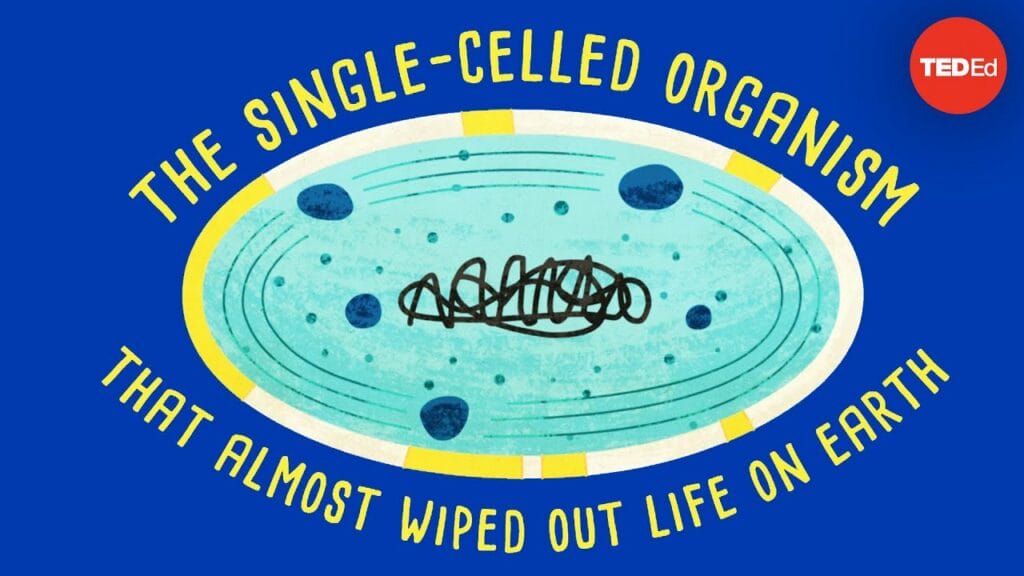
Cyanobacteria, a simple single-celled organism, played a pivotal role in shaping the Earth’s atmosphere and paving the way for complex life. Through photosynthesis, cyanobacteria produced oxygen, leading to a mass extinction event and the oxygenation of the atmosphere. This eventually led to the evolution of aerobic organisms and the diversification of life on Earth. Additionally, cyanobacteria played a crucial role in the evolution of plant cells through endosymbiosis. Today, cyanobacteria continue to be present in various environments and are essential for maintaining the balance of oxygen and nitrogen in the atmosphere.
How Your Split Ends Can Help Clean Oil Spills

The Guimaras oil spill of 2006, considered the worst in Philippine history, caused significant environmental damage when over 130,000 gallons of bunker oil were spilled into the Panay Gulf. In an unconventional attempt to contain the spill, locals used synthetic materials and human hair, inspired by a hairstylist in Alabama who noticed the effectiveness of hair in absorbing oil after the Exxon Valdez spill. While hair booms and mats have not been the primary method for cleaning major oil spills, their potential as a tool for future cleanup efforts is being considered.
How Big Is The Ocean
The article provides information about the size and significance of the ocean. It explains that the ocean covers about 71% of the Earth’s surface and contains 97% of its total water content. The article also highlights some of the ocean’s geological features, such as the mid-ocean ridge, the largest mountain range, and the Challenger Deep, the world’s deepest canyon. Additionally, it emphasizes that human influence can be seen in every part of the ocean, highlighting the importance of preserving its health and nature.
Dark Matter The Matter We CanT See
The article discusses the ancient Greek’s theory of the universe, which believed that the universe was made up of four elements: earth, air, fire, and water. However, this theory was proven incorrect and was replaced by Leucippus’s atom theory, which proposed that everything is made up of tiny, indivisible bits of stuff called atoms. The article also explores the concept of the dark universe, consisting of dark matter and dark energy, which make up 95% of the universe. The composition of the universe is estimated to be 68% dark energy, 27% dark matter, and only 5% visible matter. The article concludes by discussing theories about the universe’s diversity and the potential for further exploration and understanding.
Why Can’t We See Evidence Of Alien Life
The article discusses the Fermi Paradox, which questions the absence of evidence for extraterrestrial life despite the vast number of potentially habitable planets in the universe. Possible explanations for this paradox range from the rarity of intelligent life to the possibility that civilizations have chosen not to reveal their presence. The future of the search for extraterrestrial life is also discussed, with advancements in technology and the involvement of citizen scientists offering hope for finding answers to this enduring question.
Hawking’s Black Hole Paradox Explained
The article discusses the black hole information paradox, which threatens to challenge the fields of general relativity and quantum mechanics. It explains the concept of quantum information and the conservation of information, and explores various theories and possible solutions to the paradox, including the holographic principle.
The Tallest Lifeforms Of All Time
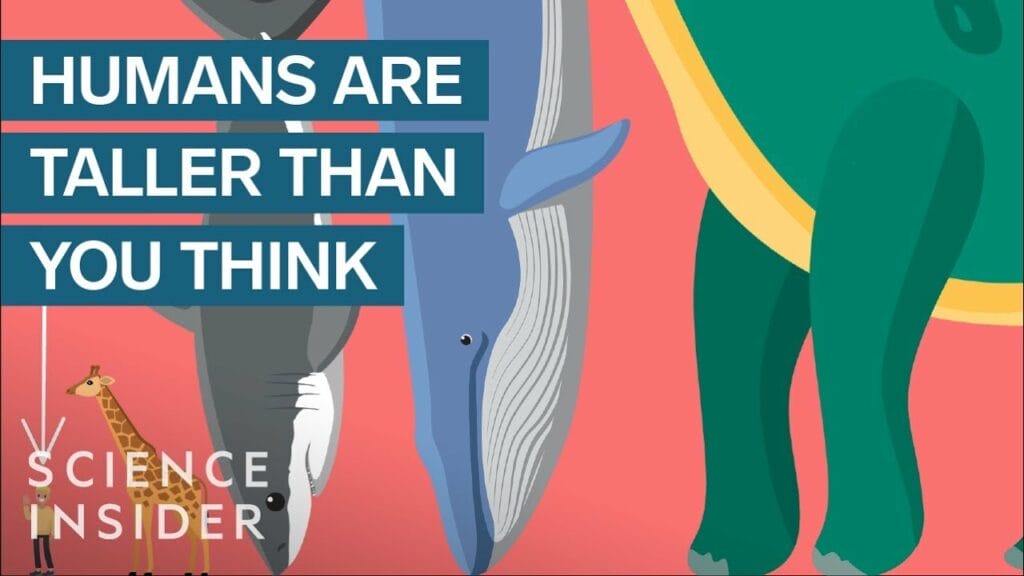
The article discusses how certain earthly giants are able to defy gravity and grow to impressive heights. The tallest trees, such as giant redwoods and mountain ashes, dedicate all their energy to growing taller. Animals, on the other hand, expend energy on various tasks, limiting their growth. Sea creatures, supported by water, can grow much larger than land-dwellers. Humans are larger than 87.6% of mammals on Earth, with the average Dutchman being the tallest. The longest lifeform of all time is a honey fungus that stretches for 3.8 kilometers underneath a forest in Oregon.
The Arctic Vs The Antarctic
The article provides an overview of the Arctic and Antarctic regions. It explains the geographical and climatic characteristics of each region, as well as the unique organisms and human populations that inhabit them. Additionally, it discusses why Antarctica is colder than the Arctic and highlights the importance of the polar regions in regulating global climate.