
1 Minute Spelling Strategy: Mispronouncing Words!
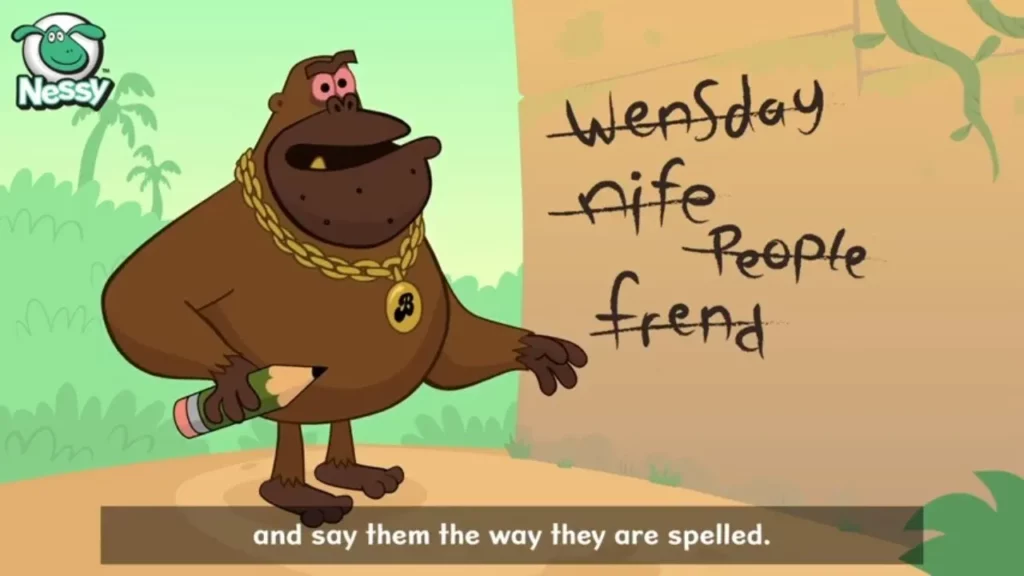
The “1 Minute Spelling Strategy: Mispronouncing Words!” lesson teaches a fun technique for improving spelling by intentionally mispronouncing words with silent letters. By saying words in a humorous way, such as “wed-nes-day” for “Wednesday” or “kuh-nife” for “knife,” learners can better remember the silent letters and improve their spelling skills. This engaging approach not only makes learning more enjoyable but also enhances memory retention for tricky words.
Dyslexia Explained | What's It Like Being Dyslexic? | Understand Dyslexia
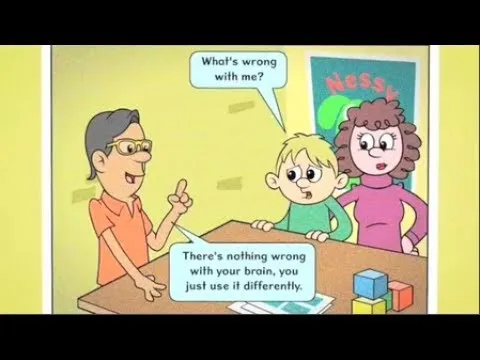
The lesson explores the experiences of a boy named Tom, who faces challenges in school due to dyslexia, a learning difference that affects reading, writing, and spelling. Through Tom’s journey, we learn that dyslexia does not reflect a person’s intelligence; rather, it highlights the need for tailored support to help dyslexic individuals thrive by focusing on their strengths. With understanding and appropriate accommodations, such as extra time and alternative learning methods, students like Tom can succeed and embrace their unique talents.
Gang of 3 | Sound of 3 Consonants | Learn to Read
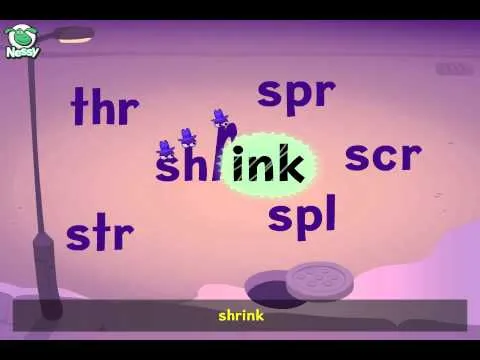
In this lesson, students learn about groups of three consonants in words, which can simplify reading and spelling by breaking words into manageable parts. By identifying these consonant clusters, such as “thro,” “spr,” and “shr,” learners can enhance their reading skills and become more confident in deciphering words. Practicing spotting these groups in various texts will help students improve their reading abilities over time.
Closed and Open Syllables | Learn to Read
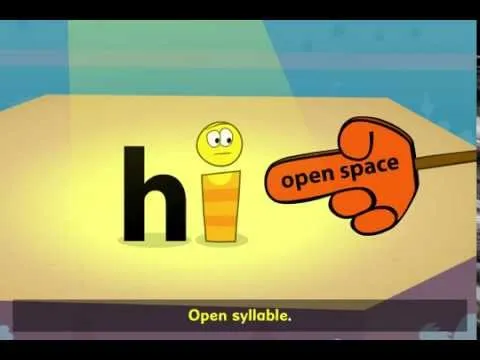
In this lesson, students learn about syllables, which are the beats in words, focusing on two types: open and closed syllables. Open syllables allow the vowel to say its name, as seen in words like “hi” and “go,” while closed syllables feature a short vowel sound due to being followed by a consonant, as in “cat” and “dog.” Through examples and practice, students are encouraged to identify and differentiate between open and closed syllables to enhance their reading skills.
LY Words | Singalong| Learn to Spell
In today’s lesson, we explored how to form “ly” words by adding “ly” to various base words, enhancing their meaning and sound. We learned specific rules, such as changing “y” to “i” before adding “ly,” doubling the “l” for words ending in “l,” and swapping “e” for “y” in words that end with “le.” With these simple guidelines, students can confidently create adverbs and adjectives that enrich their vocabulary.
Apostrophes – When To Use Them | Learn to Spell
In this lesson, we learn about apostrophes, which are punctuation marks that help shorten words and indicate possession. Apostrophes can replace missing letters in contractions, such as “it’s” for “it is” or “I’ve” for “I have,” and they also show ownership, as in “Sarah’s toy” or “Tom’s book.” Practicing the use of apostrophes will enhance your writing skills and help you recognize their importance in sentences.
Adjectives, Nouns, Verbs (Amazing Newts Vibrate) |
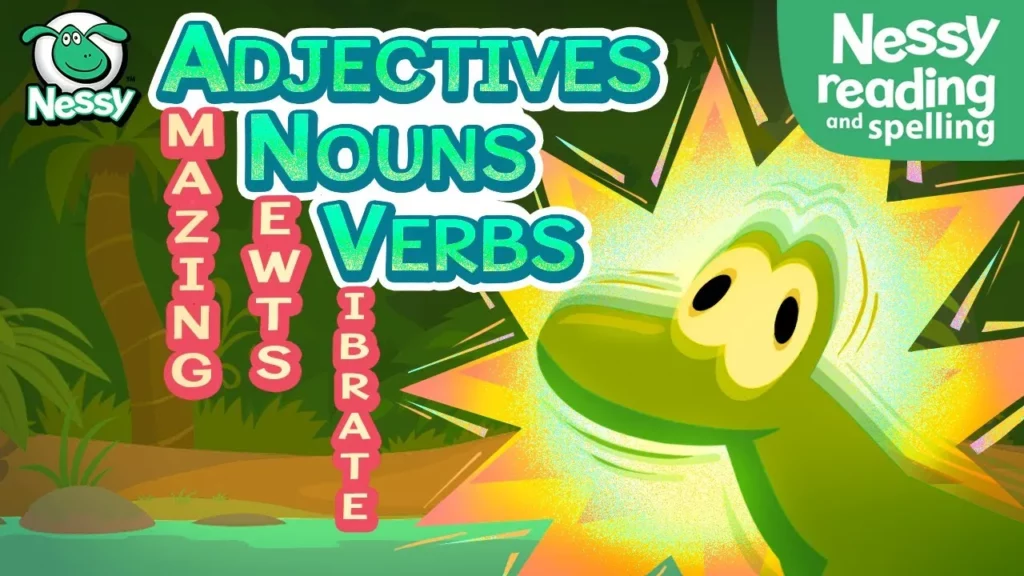
In this lesson, students embark on an adventure to discover the astonishing newt, a unique creature that vibrates, which serves as a fun way to learn about parts of speech. They explore adjectives, nouns, and verbs, understanding that adjectives describe qualities (like “amazing”), nouns name people, places, or things, and verbs indicate actions (like “vibrating”). By the end of the lesson, students can confidently identify and differentiate between these essential components of language.
Plurals -s -es | Learn to Spell
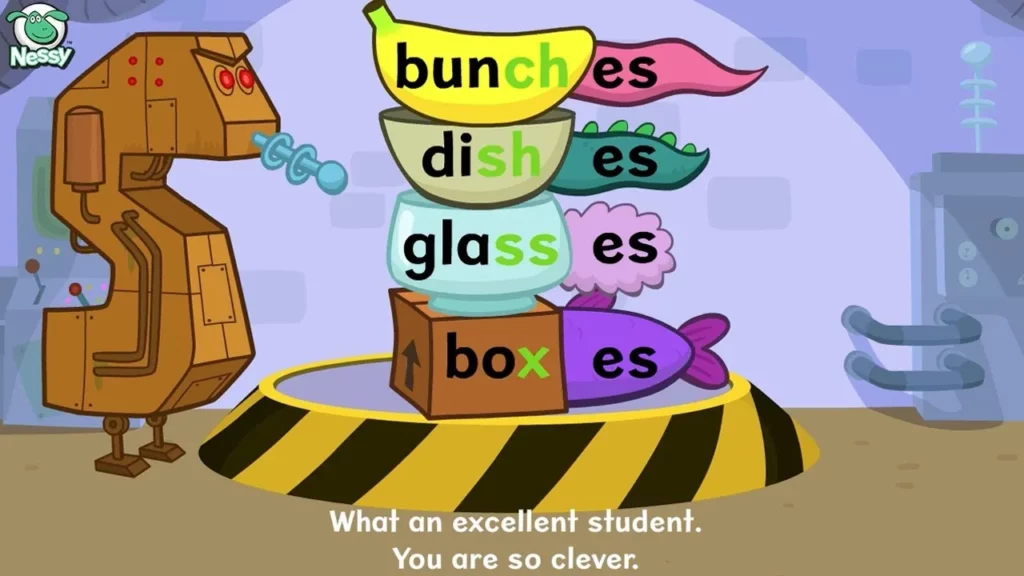
In this lesson, students learn how to form plurals by adding “s” or “es” to words, using the fun concept of the “Pluralator” to illustrate the process. They discover that adding “s” is the standard way to indicate more than one, while “es” is used for words ending in hissing sounds, such as “glass” becoming “glasses.” By the end of the lesson, students feel confident in their ability to create plurals and are encouraged to continue their learning journey.
Silent Letters | Learn to Read
In this lesson, we explored the intriguing world of silent letters in the English language, uncovering their historical origins and patterns. We learned that silent letters, such as ‘k’ before ‘n,’ ‘b’ after ‘m,’ and ‘u’ following ‘g,’ have fascinating stories tied to the influence of Vikings, Romans, and the French. By recognizing these patterns, students can improve their spelling skills and better understand the complexities of English.
Irregular Verbs | Learn to Write
In this lesson, Ed introduces the concept of irregular verbs, which do not follow standard rules when changing from present to past tense. With the help of Irregular Sue, students learn that these verbs often change their vowels or take entirely different forms, such as “go” becoming “went” and “be” becoming “was” or “were.” The lesson emphasizes the importance of practice and memorization to master these tricky verbs.