
How to Create a Story Map for Kids – Planning Your Narrative Writing
In this lesson, students learn how to create a story map, a helpful tool for planning their narrative writing by organizing key elements such as characters, setting, and plot. By using a story map, writers can effectively outline their stories, ensuring they include a clear beginning, middle, and end, which ultimately makes the writing process more enjoyable and structured. The lesson encourages creativity and imagination while providing a framework for crafting engaging narratives.
Ways to Make 5 Using Your Fingers – Kindergarten Math – “Making 5”
In this lesson, students learn to make the number five using their fingers by exploring different combinations of fingers up and down. Through interactive exercises, they discover six unique ways to represent the number five and solve related problems to reinforce their understanding. The lesson emphasizes hands-on learning and encourages practice to become proficient in recognizing numerical relationships.
Ways to Make 5 Using Objects – Kindergarten Math – “Making 5”
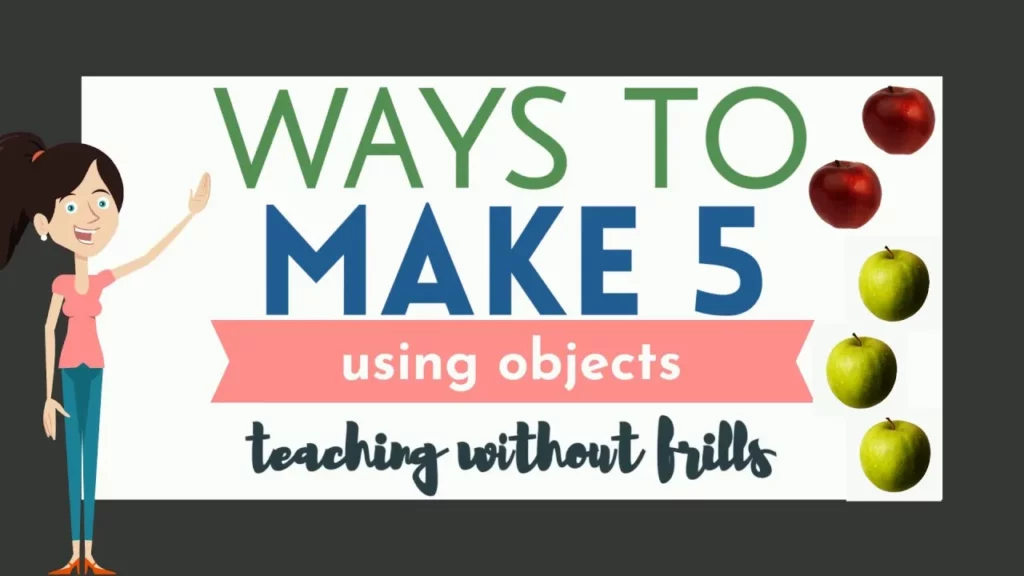
In this lesson, students explore the concept of the number 5 by using various objects, such as apples and pennies, to understand different combinations that add up to five. Through engaging activities like the “Apple Adventure” and the “Penny Toss Game,” learners discover how to creatively represent the number 5 and reinforce their counting skills. The lesson encourages continued exploration and play with numbers using everyday items.
Ways to Make 5 Using Drawings – Kindergarten Math – “Making 5”
In this lesson, students learn to represent the number five through creative drawings, using scenarios like sunny and cloudy days and planting flowers. They explore different combinations of sunny and cloudy days, illustrating how to make five with varying numbers of suns and clouds, and then apply the same concept to flowers by drawing and coloring them. The lesson encourages exploration and creativity while reinforcing the concept of the number five.
Ways to Make 5 Using Addition Equations – Kindergarten Math – “Making 5”
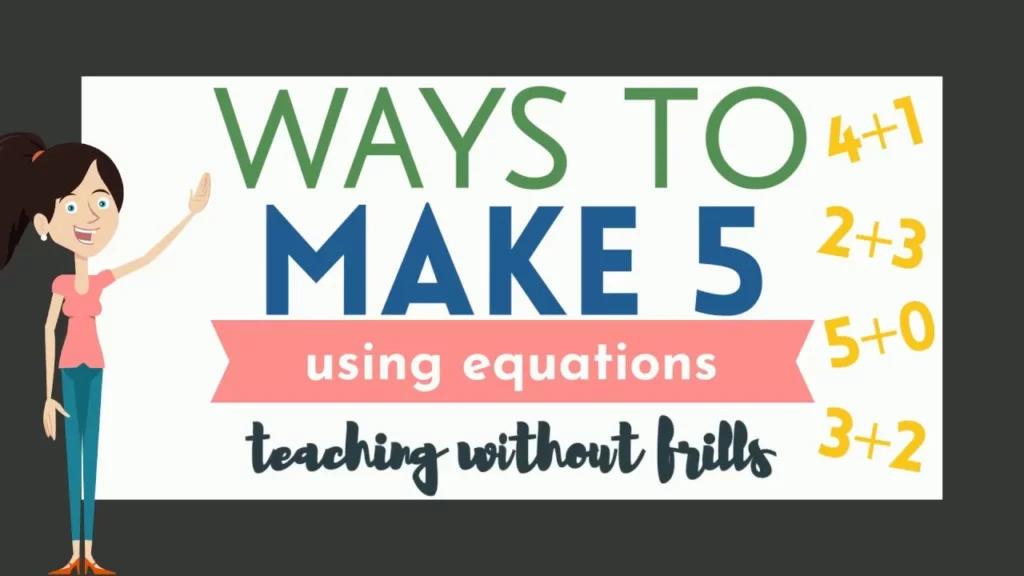
In this lesson, students learn about the concept of making the number 5 using equations, which are math sentences that combine numbers with symbols. Through playful examples involving toy cars of different colors, they explore various combinations that total 5, such as 5 yellow cars and 0 blue cars or 3 blue cars, 1 yellow car, and 1 red car. The lesson encourages creativity and exploration in finding multiple ways to represent the number 5.
Economics for Kids: Needs and Wants
In this lesson, children learn the difference between needs and wants, with needs being essential items for survival such as food, water, and shelter, while wants are non-essential items that enhance enjoyment, like toys and games. The lesson encourages kids to think critically about their daily requirements and provides examples to help distinguish between the two concepts. Additionally, it introduces ways people can obtain both their needs and some of their wants.
Economics for Kids: Goods and Services
In this lesson, children learn the difference between needs and wants, with needs being essential for survival and wants being enjoyable but non-essential items. The lesson also explains the concepts of goods, which are tangible items produced for sale, and services, which are actions performed to help others, highlighting examples of each. Through interactive activities, students practice identifying goods and services, reinforcing their understanding of how people earn money and the importance of both in the economy.
Economics for Kids: Producers and Consumers
In this lesson, students learn about the roles of producers and consumers in the economy. Producers create and sell goods or services, like a baker selling baked treats, while consumers purchase these goods or services, such as a family buying cookies. The lesson emphasizes that individuals, including kids, can be both producers and consumers, highlighting simple ways they can earn money and spend it.
Economics for Kids: Saving and Spending
In this lesson on “Economics for Kids: Saving and Spending,” children learn about the basics of money, including how it is earned and used for purchasing necessities and wants. The concept of scarcity is introduced, highlighting the need to make choices when resources are limited, and the lesson emphasizes the importance of deciding between spending money now or saving it for future purchases. Ultimately, the lesson encourages thoughtful decision-making regarding money management.
Editing Your Writing For Kids – Grammar, Punctuation, Capitalization, Spelling
The lesson on editing your writing emphasizes the importance of refining your work by checking for grammar, spelling, capitalization, and punctuation errors. Through a practical example, the lesson illustrates how to identify and correct mistakes to enhance clarity and coherence in writing. By the end, students are encouraged to apply these editing skills to improve their own writing.