
The mystery of motion sickness – Rose Eveleth
The lesson explores the phenomenon of motion sickness, which affects about one-third of people when reading or focusing on stationary objects while in motion. It explains that the condition arises from conflicting sensory signals, where the inner ear detects movement while the eyes perceive stillness, leading to discomfort. Despite various theories and remedies, including evolutionary explanations and practical tips for alleviation, the exact causes of motion sickness remain an ongoing mystery in scientific research.
Want to be an activist? Start with your toys – McKenna Pope

In her lesson, McKenna Pope shares her inspiring journey as a young activist who challenged gender stereotypes in children’s toys. After noticing that the Easy Bake Oven was marketed exclusively to girls, she launched a petition on Change.org to advocate for inclusivity and received overwhelming support, ultimately prompting Hasbro to create a more gender-neutral version of the toy. McKenna emphasizes that anyone, regardless of age, can make a difference by speaking up for what they believe in and encourages others to harness their passions to drive change.
Why is glass transparent? – Mark Miodownik
The lesson explains the transparency of glass, highlighting its composition from silicon dioxide and its unique amorphous structure that allows light to pass through without scattering. It delves into atomic structure, illustrating how the energy levels of electrons in glass prevent the absorption of visible light, making it transparent. The lesson concludes by emphasizing the practical importance of glass in our daily lives, from windows to lenses, despite its often overlooked presence.
How one teenager unearthed baseball’s untold history – Cam Perron

In this lesson, Cam Perron shares his journey from a young baseball card collector to a passionate researcher of the Negro Leagues, highlighting the importance of recognizing and reconnecting with the often-overlooked players of this era. Through writing letters, creating custom baseball cards, and collaborating with adult researchers, he has successfully unearthed the stories and contributions of these athletes, helping them gain the recognition they deserve. Perron’s dedication not only preserves baseball history but also fosters connections among former teammates, enriching the lives of those who played in the Negro Leagues.
What we can learn from galaxies far, far away – Henry Lin

In the lesson “What We Can Learn from Galaxies Far, Far Away,” Henry Lin emphasizes the significance of galaxy clusters as massive laboratories that provide insights into fundamental cosmic questions. By studying these clusters, we can explore the nature of gravity, extreme temperatures of hot plasma, the elusive dark matter, and the enigmatic dark energy driving the universe’s expansion. Ultimately, these cosmic explorations inspire innovative thinking and broaden our understanding of the universe and its mysteries.
Getting started as a DJ: Mixing, mashups and digital turntables – Cole Plante
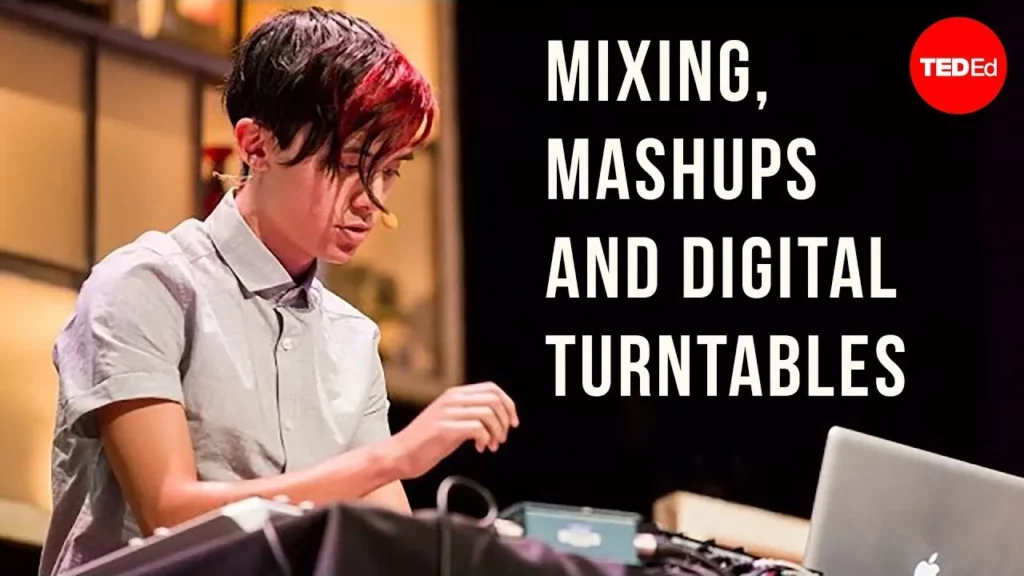
In this lesson, Cole Plante shares his journey as a high school DJ and producer, emphasizing the creativity involved in mixing different music genres and creating mashups. He discusses the evolution of DJing tools from traditional turntables to modern digital software and hardware, highlighting accessible resources for aspiring DJs. Plante encourages students to explore their passion for music through DJing, emphasizing that anyone can start their journey with the right tools and enthusiasm.
How many ways can you arrange a deck of cards? – Yannay Khaikin

This lesson explores the concept of arrangements using a standard 52-card deck as an example, illustrating that each shuffle likely results in a unique configuration. By introducing the factorial concept, it explains how to calculate the number of arrangements for any set of objects, demonstrating that there are approximately 8.07 x 10^67 ways to arrange a deck of cards. This staggering number emphasizes the uniqueness of each shuffle, highlighting that there are more possible arrangements than atoms on Earth.
History vs. Vladimir Lenin – Alex Gendler
The lesson explores the complex legacy of Vladimir Lenin, a pivotal figure in 20th-century history who played a crucial role in the overthrow of the Russian tsar and the establishment of the Soviet Union. While Lenin is credited with transforming Russia into a modern industrial nation and advancing social reforms, his regime was marked by oppressive tactics, violence, and significant suffering among the populace. The discussion encourages reflection on the duality of historical figures, highlighting the importance of understanding both their achievements and the consequences of their actions.
Why is ketchup so hard to pour? – George Zaidan

The lesson explains the unique pouring behavior of ketchup, which is classified as a Non-Newtonian fluid, meaning it doesn’t flow like typical liquids. Ketchup can act like a solid under low force but becomes thinner and flows easily when a sufficient force is applied or when a gentle force is applied over time. Understanding these properties can help improve the pouring technique, such as shaking the bottle or tapping it to facilitate a smoother flow.
Can we eat to starve cancer? – William Li

In this lesson, William Li discusses the significance of angiogenesis—the process of blood vessel formation—in relation to cancer and other diseases. He highlights how disrupting the balance of angiogenesis can lead to various health issues, including cancer, and introduces anti-angiogenic therapies as a promising treatment approach. Additionally, Li emphasizes the potential of dietary choices to inhibit angiogenesis and reduce cancer risk, suggesting that incorporating anti-angiogenic foods into our diets could play a crucial role in prevention strategies.