
What we know (and don’t know) about Ebola – Alex Gendler
The lesson on Ebola outlines the virus’s discovery in 1976, its severe impact on the immune system, and the progression of symptoms from flu-like signs to potentially fatal complications. It emphasizes the virus’s transmission through direct contact with bodily fluids and the challenges in controlling outbreaks due to poor infrastructure and limited research incentives. Effective responses to Ebola outbreaks focus on isolation, sanitation, and public education, highlighting the importance of understanding the virus to prevent future occurrences.
The 2,400-year search for the atom – Theresa Doud
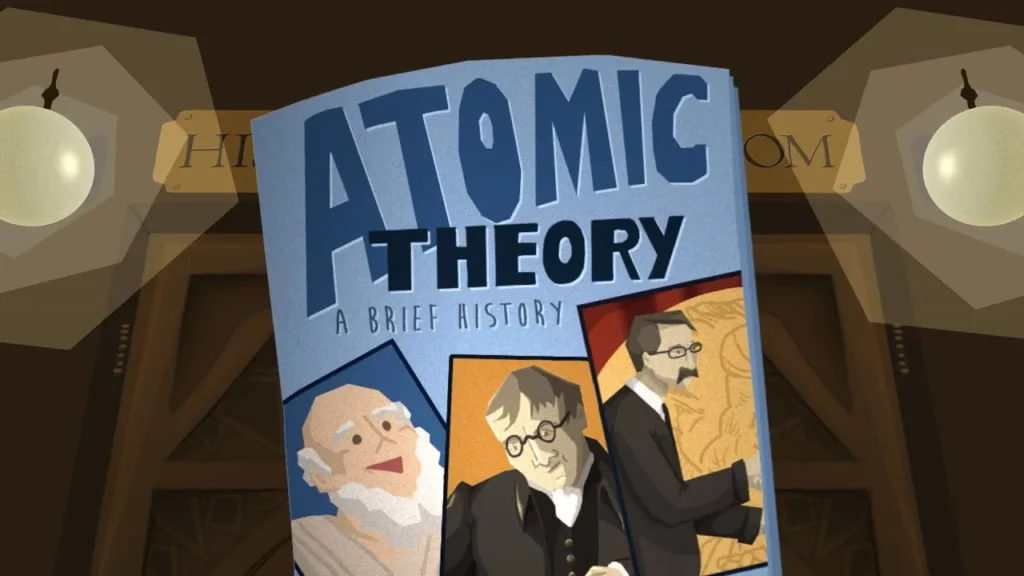
The lesson explores the historical evolution of the concept of the atom, beginning with Democritus’s early idea of indivisible particles and progressing through significant contributions from scientists like John Dalton, J.J. Thomson, Ernest Rutherford, Niels Bohr, and Werner Heisenberg. Each scientist built upon the previous theories, leading to a more complex understanding of atomic structure, culminating in the quantum model that describes the behavior of electrons. This journey highlights how our understanding of atoms has developed over 2,400 years, illustrating the enduring relevance of the atomic concept in modern science.
At what moment are you dead? – Randall Hayes
In the lesson “At What Moment Are You Dead?” by Randall Hayes, the exploration of life and death delves into historical and biological perspectives, emphasizing that life is defined by ongoing biological processes rather than a mystical essence. The lesson highlights that death occurs when cells can no longer maintain their structures due to entropy, and while medical advancements can delay death, they cannot reverse it. The concept of death is fluid, as future technologies may extend the point of no return, challenging our understanding of life and resurrection.
The pharaoh that wouldn’t be forgotten – Kate Green
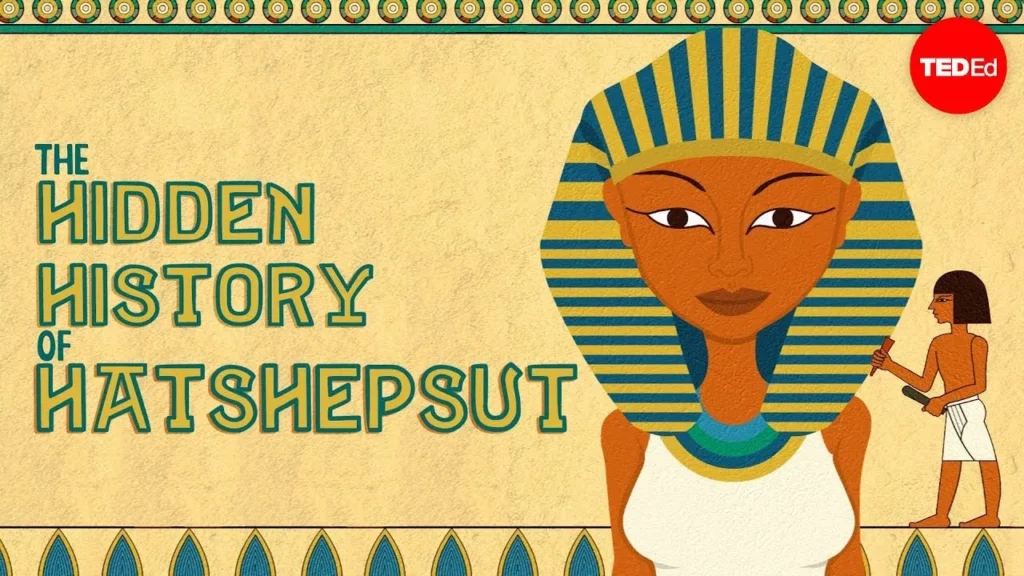
The lesson explores the life of Hatshepsut, a female pharaoh of ancient Egypt who faced attempts to erase her from history through acts of damnatio memoriae. Despite the challenges posed by traditional gender roles and her initial status as a regent for her stepson, Hatshepsut successfully ruled as pharaoh, leaving a lasting legacy through her impressive building projects and economic achievements. Her story highlights the complexities of power, gender, and memory in ancient Egyptian society.
What is a gift economy? – Alex Gendler
The lesson on “Understanding the Gift Economy” explores the concept of gift economies, where gifts are given without explicit conditions but serve to strengthen social ties and obligations among individuals. It highlights historical examples, such as the kula ring among the Trobriand Islanders and potlatch feasts in the Pacific Northwest, illustrating how social wealth is prioritized over material wealth. The lesson also emphasizes that gift economies are not limited to small societies; they coexist with market systems in modern contexts, promoting community and reciprocity through practices like potlucks and artistic sharing.
The benefits of a good night’s sleep – Shai Marcu
The lesson emphasizes the critical importance of sleep for both physical health and cognitive function, particularly in relation to memory consolidation. It explains how sleep facilitates the transfer of information from short-term to long-term memory through processes occurring in the hippocampus and highlights the different roles of sleep stages in consolidating various types of memories. Ultimately, the lesson advocates for prioritizing sleep over last-minute cramming to enhance learning and performance.
Einstein’s miracle year – Larry Lagerstrom
In 1905, Albert Einstein, then a struggling patent clerk, published four revolutionary papers that transformed the field of physics and our understanding of the universe. These papers introduced groundbreaking concepts such as wave-particle duality, the reality of atoms through Brownian motion, the theory of special relativity, and the famous equation E=mc². Despite initial skepticism, these contributions laid the foundation for modern physics and established Einstein’s legacy as one of the greatest scientists in history.
How spontaneous brain activity keeps you alive – Nathan S. Jacobs
The lesson explores the vital role of spontaneous brain activity in sustaining life and facilitating complex functions without conscious awareness. It highlights how the brain’s automatic processes, such as breathing and sensory perception, operate through intricate neuronal circuits, allowing us to perform tasks like walking or driving while our minds are preoccupied. Additionally, the lesson delves into the mysteries of sleep, emphasizing the brain’s ongoing activity and synchronization during different sleep stages, while acknowledging that many questions about these processes remain unanswered.
Could a blind eye regenerate? – David Davila
The lesson explores the potential for retinal regeneration in humans by examining the unique abilities of zebrafish, which can regenerate their photoreceptors and restore vision after injury. It highlights the role of Müller glia cells in this process and discusses ongoing research into how similar mechanisms might be activated in human eyes to combat conditions like Retinitis Pigmentosa and Usher Syndrome. While significant challenges remain, the study of zebrafish offers hope for future advancements in restoring sight to those who are blind.
What triggers a chemical reaction? – Kareem Jarrah
In this lesson, Kareem Jarrah explores the concepts of enthalpy and entropy, which are crucial in understanding chemical reactions. Enthalpy refers to the energy changes during a reaction, distinguishing between exothermic (energy-releasing) and endothermic (energy-absorbing) processes, while entropy measures the disorder within a system, influencing the likelihood of reactions occurring. By using relatable examples like baking a cake and lighting a campfire, the lesson illustrates how these principles govern everyday chemical interactions.