
The poet who painted with his words – Geneviève Emy
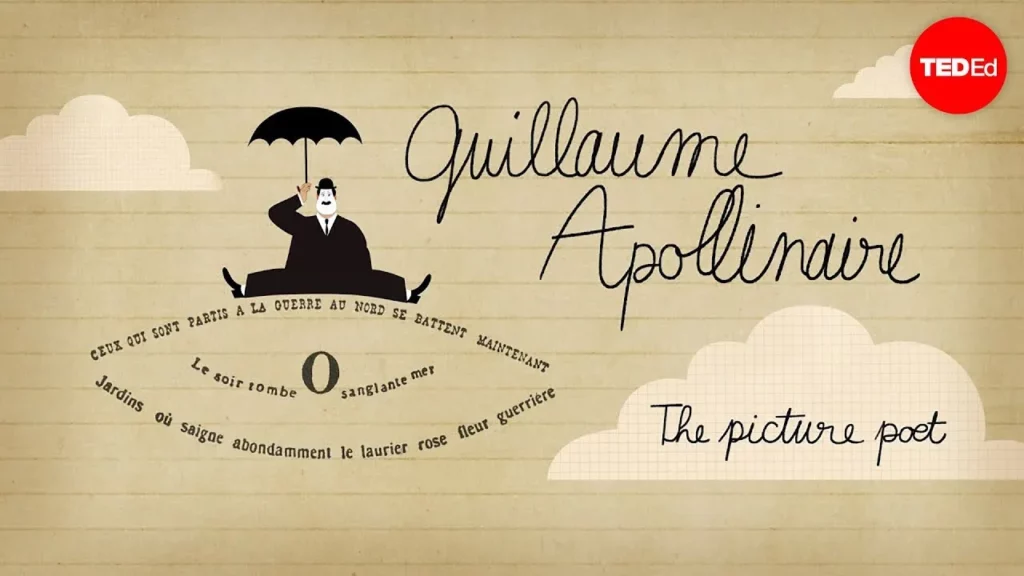
The lesson highlights the life and contributions of Guillaume Apollinaire, an influential early 20th-century French poet who bridged the worlds of poetry and visual art through his innovative calligrams. Set against the vibrant backdrop of Paris’s bohemian culture, Apollinaire championed avant-garde movements like cubism and surrealism, creating works that not only pushed the boundaries of traditional poetry but also celebrated the artistic revolution of his time. His legacy endures as a testament to the creative spirit and collaboration among artists in an era of profound change.
The physics of the “hardest move” in ballet – Arleen Sugano
The lesson explores the physics behind the challenging fouetté turns performed by the Black Swan in “Swan Lake,” emphasizing the dancer’s skill in generating and sustaining rotation. Key concepts include the generation of torque through foot movement, the role of momentum transfer between the legs and body, and the conservation of angular momentum, which allows the dancer to maintain speed and balance during the spins. Ultimately, the lesson illustrates how physics underpins the seemingly magical artistry of ballet.
The invisible motion of still objects – Ran Tivony
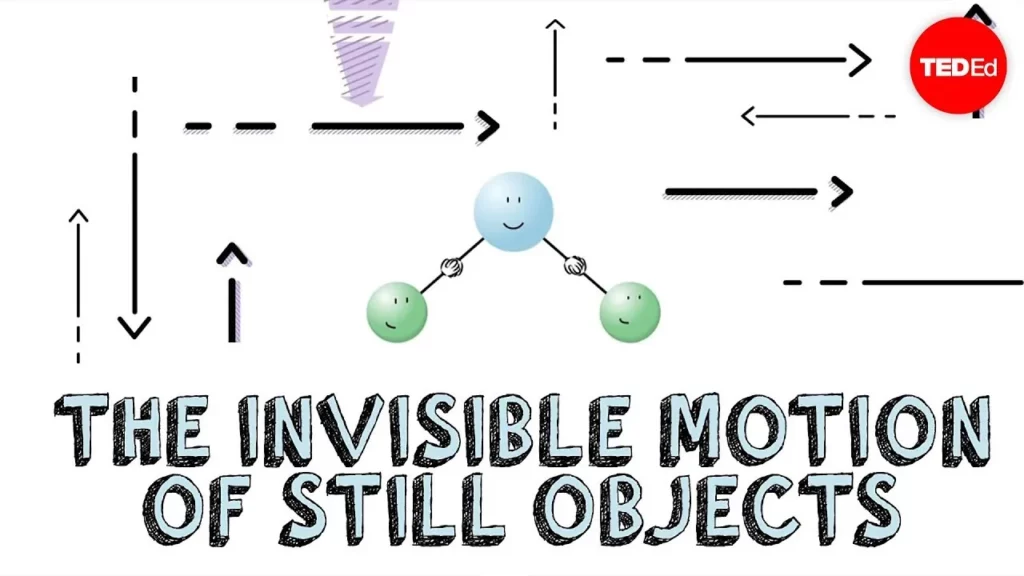
The lesson “The Invisible Motion of Still Objects” explores the constant motion of atoms and molecules within seemingly stationary objects, revealing that they are always vibrating, stretching, and contracting. It explains the different types of molecular motion—rotation, translation, and vibration—and how these movements are influenced by energy absorption, which affects temperature and thermal energy. Additionally, the lesson touches on the implications of molecular motion in phenomena like the greenhouse effect and emphasizes that molecular motion persists even at absolute zero due to quantum mechanics.
How do glasses help us see? – Andrew Bastawrous and Clare Gilbert
The lesson explains how glasses improve vision through the principle of refraction, which involves bending light to focus it correctly on the retina. It discusses various refractive errors, such as myopia and hyperopia, that can cause blurry vision, and how glasses are designed to correct these issues by ensuring light hits the retina accurately. The evolution of glasses from ancient times to modern advancements is also highlighted, emphasizing their continued importance in helping people see clearly.
Why is Mount Everest so tall? – Michele Koppes
The lesson explores the reasons behind Mount Everest’s towering height, emphasizing its status as the highest mountain on Earth due to its altitude of 8,850 meters above sea level. It explains that Everest was formed from the collision of the Indian and Eurasian tectonic plates around 50 million years ago, and discusses the ongoing processes of uplift and erosion that shape mountains. Additionally, it highlights the role of climate and glaciers in maintaining Everest’s height, while acknowledging that future geological and climatic changes could eventually alter its stature.
How to spot a fad diet – Mia Nacamulli
This lesson explores how to identify fad diets amidst the plethora of diet trends and health tips that promise quick weight loss and improved health. It highlights the historical context of fad diets, their short-term effectiveness, and the importance of recognizing unsustainable practices, such as drastic calorie cuts or the elimination of food groups. Ultimately, the lesson emphasizes the value of making informed dietary choices and consulting healthcare professionals for personalized advice.
Should you trust unanimous decisions? – Derek Abbott
The lesson explores the paradox of unanimity, highlighting that while consensus is often perceived as a sign of reliability, total agreement can indicate systemic errors or biases, particularly in uncertain situations like eyewitness identifications. It emphasizes that unanimous decisions may not reflect truth but rather suggest underlying issues, such as flawed processes or external influences. Ultimately, the lesson cautions against assuming that unanimous agreement guarantees accuracy, advocating for a critical evaluation of such outcomes.
Why is being scared so fun? – Margee Kerr
The lesson explores the paradox of why people enjoy being scared, highlighting that fear can trigger a thrilling “fight or flight” response that energizes and heightens emotions. It discusses how facing fears can build confidence, strengthen friendships through shared experiences, and create lasting memories, making activities like roller coasters and horror movies enjoyable despite their frightening nature. Ultimately, the lesson emphasizes that when we are in safe environments, the excitement of fear can lead to fun and bonding experiences.
The Turing test: Can a computer pass for a human? – Alex Gendler
The lesson explores the Turing Test, proposed by Alan Turing in 1950, as a method to evaluate whether a computer can convincingly mimic human conversation. While early attempts like ELIZA and PARRY demonstrated some success, modern AI still struggles with the complexities of human language, revealing the limitations of current technology. The discussion raises deeper questions about consciousness and the nature of intelligence, suggesting that achieving true human-like thinking in machines may require more than just advanced computational power.
What is abstract expressionism? – Sarah Rosenthal
The lesson on Abstract Expressionism explores the significance of this art movement, which emerged in the 1940s and is characterized by large, abstract paintings that convey deep emotions through sweeping strokes. Key figures like Jackson Pollock, known for his innovative drip technique, challenged traditional painting conventions and created works that reflect the complexities of the human psyche. Despite the seemingly accessible nature of their techniques, the artists of the New York School fundamentally transformed the art world, leaving a lasting legacy that continues to provoke thought and debate about the nature of art itself.