
Can plants talk to each other? – Richard Karban
The lesson explores the fascinating ways in which plants communicate with each other, primarily through chemical signals. When threatened, such as by insect damage, plants release chemicals that can alert nearby plants to bolster their defenses, demonstrating a form of cooperation despite competition for resources. Additionally, plants utilize an underground network formed with fungi to share warnings about diseases, highlighting their complex and active communication methods.
How do we separate the seemingly inseparable? – Iddo Magen
The lesson explores various separation techniques that allow us to isolate different substances based on their unique properties, which is essential in fields ranging from manufacturing to medicine and scientific research. It discusses simple methods like filtering and boiling, as well as advanced techniques such as reverse osmosis and chromatography, highlighting their applications in everyday life, healthcare, and even cosmic exploration. Overall, these techniques demonstrate the power of science in solving complex problems and enhancing our understanding of the world.
The psychology behind irrational decisions – Sara Garofalo
The lesson explores the psychology behind irrational decision-making, particularly through the lens of loss aversion and cognitive biases. It illustrates how people often make seemingly illogical choices based on emotional responses to potential losses rather than rational evaluations of risk and reward. By understanding heuristics—mental shortcuts that can lead to errors in judgment—individuals can become more aware of their decision-making processes and improve their choices in complex situations.
Why is the US Constitution so hard to amend? – Peter Paccone
The U.S. Constitution is challenging to amend due to the intentional design by the founders, who established rigorous requirements for both proposing and ratifying amendments to ensure stability and unity among the states. Despite numerous proposals, only 27 amendments have been successfully added since its ratification in 1789, with the last one occurring in 1992, reflecting a growing political divide that complicates consensus. While some advocate for easier amendment processes, the Supreme Court has often played a crucial role in interpreting the Constitution to address contemporary issues, albeit in a manner that raises questions about democratic representation.
The microbial jungles all over the place (and you) – Scott Chimileski and Roberto Kolter
The lesson “The Microbial Jungles All Around Us” explores the ubiquitous presence and significance of microbes, particularly in the form of biofilms, which are complex communities of various microorganisms that thrive in diverse environments. These biofilms provide stability, protection, and opportunities for interaction among microbes, playing crucial roles in ecosystems, nutrient cycling, and even food production. Understanding these microbial communities highlights their essential contributions to our planet and daily lives, from maintaining ecological balance to enhancing our culinary experiences.
The origin of countless conspiracy theories – PatrickJMT
The lesson explores the concept of Ramsey theory to explain the emergence of patterns in large sets, such as texts or social groups, and how this can lead to the perception of conspiracy theories or hidden messages. It illustrates that while it may seem like authors or events are predicting the future, the appearance of patterns is a natural outcome of mathematical principles, particularly in large datasets. Ultimately, our tendency to find meaning in randomness is a reflection of human cognition rather than evidence of intentional prophecy.
Making sense of irrational numbers – Ganesh Pai
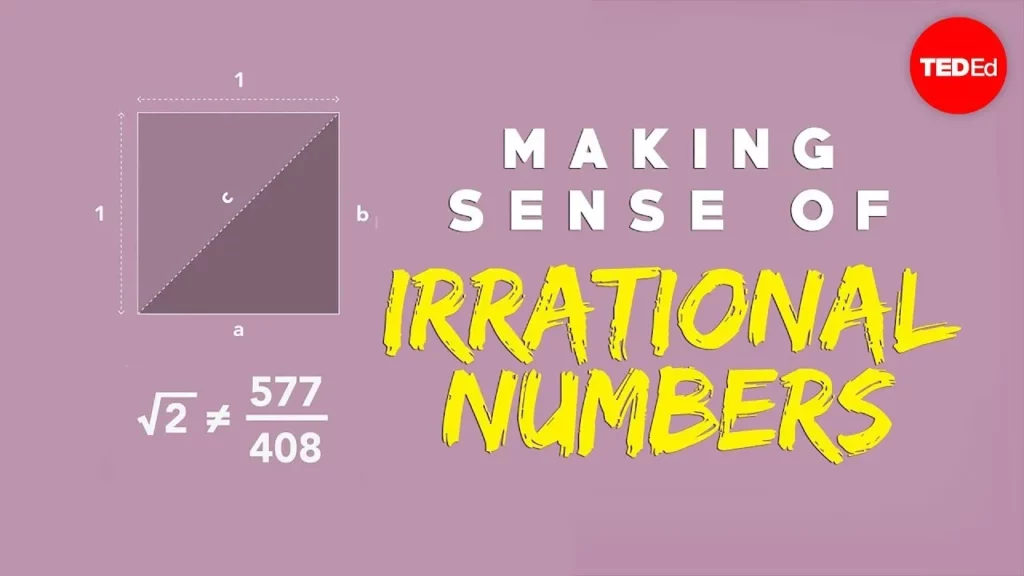
The lesson discusses Hippasus’s groundbreaking discovery of irrational numbers, which challenged the Pythagorean belief that all numbers could be expressed as ratios of whole numbers. By proving that the square root of 2 cannot be represented as a fraction, Hippasus introduced the concept of irrational numbers, fundamentally altering the understanding of mathematics and paving the way for future explorations in the field. His work highlights the importance of questioning established beliefs and embracing the complexities of numbers.
Can you solve the control room riddle? – Dennis Shasha
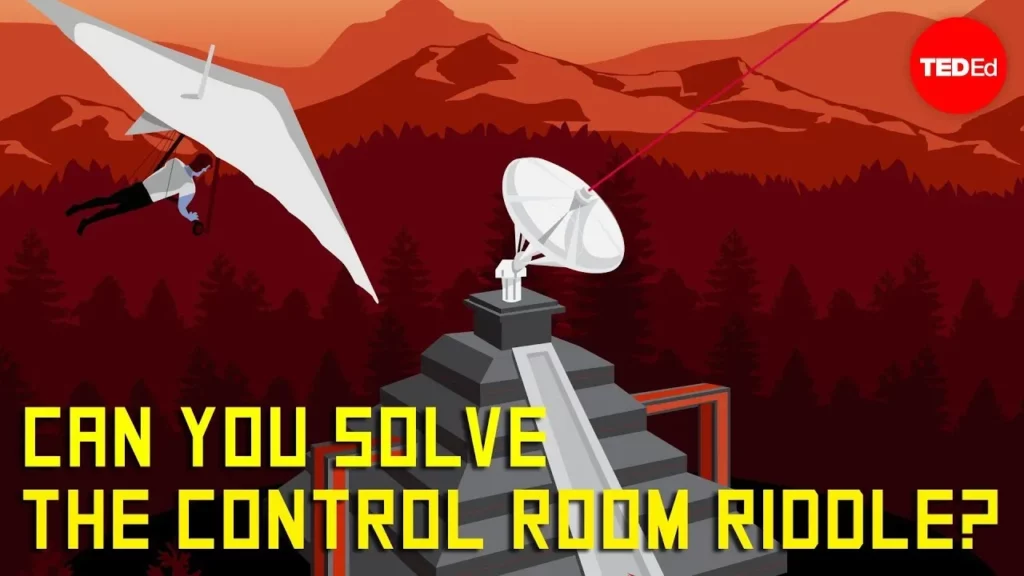
In this lesson, you are tasked with solving a riddle that involves navigating a pyramid-shaped headquarters to locate a hidden control panel. By applying principles of graph theory and visualizing the room connections, you determine that the control panel must be on the sixth floor from the top, as it meets the specific conditions of room connections required for the mission’s success. Ultimately, this exercise emphasizes the importance of logical reasoning and mathematical analysis in problem-solving scenarios.
The pleasure of poetic pattern – David Silverstein
The lesson “The Pleasure of Poetic Pattern” explores the significance of rhythm and repetition in poetry, highlighting how these elements resonate with our natural inclinations towards patterns in life. It discusses various forms of repetition, such as rhyme, assonance, and consonance, emphasizing their roles in creating rhythm and enhancing the emotional impact of poetry. Ultimately, the lesson underscores the importance of balance in poetic repetition, suggesting that effective poetry harmonizes familiar sounds with fresh ideas to engage and surprise the reader.
How transistors work – Gokul J. Krishnan
This lesson explains the fundamental role of transistors in modern computers, highlighting their evolution from early vacuum tubes to the efficient semiconductor devices we use today. It covers the basics of how computers operate using binary and Boolean logic, the limitations of vacuum tubes, and the advantages of transistors, which allow for compact, durable, and energy-efficient computing. Ultimately, transistors enable computers to perform complex calculations at incredible speeds, transforming our technological landscape.