
Can you solve the river crossing riddle? – Lisa Winer
In this lesson, participants are challenged to solve a riddle involving three lions and three wildebeest needing to cross a crocodile-infested river while ensuring the wildebeest are never outnumbered by the lions. By carefully planning each crossing and utilizing the raft effectively, the animals can safely escape the wildfire, completing the journey in eleven trips. The exercise emphasizes critical thinking and strategic problem-solving in a fun and engaging scenario.
How the sandwich was invented | Moments of Vision 5 – Jessica Oreck
The lesson explores the invention of the sandwich, tracing its origins back to 1762 with John Montagu, the 4th Earl of Sandwich, who created this convenient meal to avoid interrupting his gambling. His innovative idea of placing meat and cheese between two slices of bread quickly gained popularity, leading to the widespread enjoyment of sandwiches today, especially in America. The lesson also highlights the versatility of sandwiches, encouraging creativity in combining various ingredients for a quick and tasty meal.
Why are sharks so awesome? – Tierney Thys
The lesson explores the fascinating adaptations and unique features that make sharks exceptional predators in the ocean. It highlights their evolutionary traits, such as a lightweight cartilage skeleton, specialized skin and teeth, advanced sensory abilities, and even the ability to maintain warmth in certain species. Despite their remarkable qualities, sharks are threatened by overfishing, emphasizing the need for conservation efforts to ensure their survival.
Why do whales sing? – Stephanie Sardelis
The lesson explores the fascinating world of whale communication, highlighting how these marine mammals use complex songs to communicate underwater, where sound travels more effectively than light or smell. It discusses the unique anatomy of whales that enables them to produce and sustain their songs, the potential reasons behind this behavior, and the impact of human-induced noise pollution on their ability to communicate. Ultimately, the lesson emphasizes the importance of protecting whale habitats and reducing ocean noise to ensure these remarkable creatures can continue their intricate vocalizations.
Do we really need pesticides? – Fernan Pérez-Gálvez
The lesson discusses the historical context and evolution of pesticide use, highlighting its critical role in modern agriculture to prevent disasters like the Irish Potato Famine. It examines the challenges posed by monoculture and the emergence of pesticide-resistant pests, as well as the environmental impacts of chemical pesticides. The lesson concludes by emphasizing the need for innovative, sustainable pest control methods that integrate biological knowledge and technology to reduce reliance on harmful chemicals while ensuring food security.
How to recognize a dystopia – Alex Gendler
The lesson explores the concept of dystopia, contrasting it with the ideal of utopia, and examines how attempts to create perfect societies often lead to oppressive realities. It traces the evolution of dystopian literature from early works like Jonathan Swift’s “Gulliver’s Travels” to modern narratives that reflect contemporary anxieties about technology, government power, and social inequality. Ultimately, dystopian stories serve as cautionary tales, prompting readers to critically assess the implications of striving for an ideal society and the potential consequences of such aspirations.
How do US Supreme Court justices get appointed? – Peter Paccone
The appointment of U.S. Supreme Court justices involves a three-step process: nomination by the President, Senate approval, and formal appointment. While the Constitution does not set specific qualifications for justices, factors such as ideological alignment, experience, and personal background influence nominations. Once confirmed, justices serve for life, tasked with upholding justice and protecting the rights of all Americans, despite the political dynamics surrounding their appointments.
The secrets of Mozart’s “Magic Flute” – Joshua Borths
The lesson on Mozart’s “The Magic Flute” explores the opera’s intricate narrative, which follows Prince Tamino’s quest to rescue Pamina while navigating themes of enlightenment and duality. Influenced by Masonic ideals, the opera incorporates symbolism, particularly the number three, to represent balance and order, while its musical structure reflects Tamino’s journey from innocence to wisdom. Ultimately, the work emphasizes the importance of overcoming darkness through knowledge and harmony.
What’s the fastest way to alphabetize your bookshelf? – Chand John
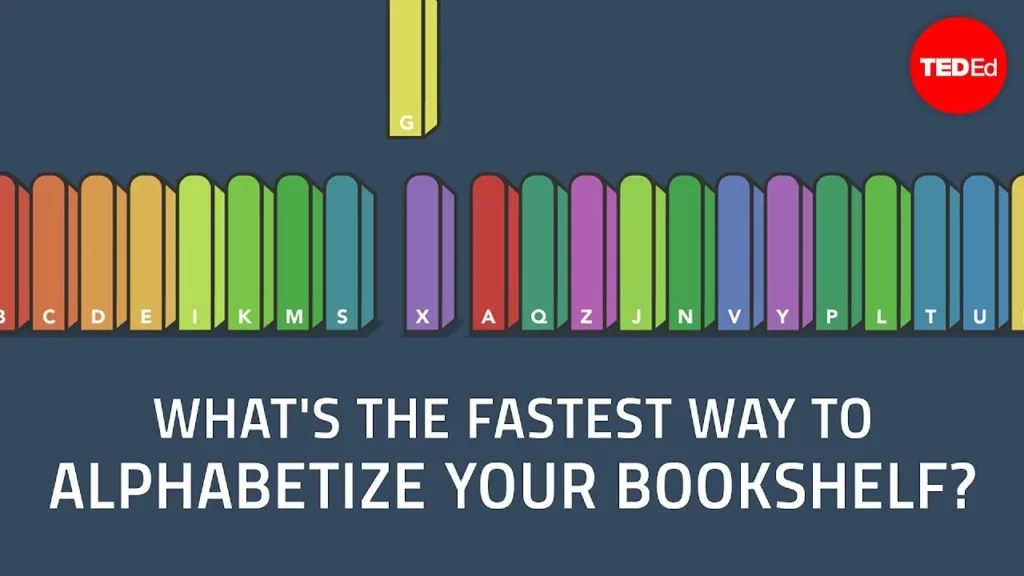
The lesson discusses various methods for alphabetizing a mixed shipment of books quickly, highlighting three sorting algorithms: Bubble Sort, Insertion Sort, and QuickSort. While Bubble Sort is simple but slow due to its numerous comparisons, Insertion Sort is more efficient as it requires fewer comparisons by only sorting new books against those already in place. QuickSort emerges as the fastest and most effective method, utilizing a partitioning strategy to minimize comparisons and streamline the sorting process, making it ideal for handling large volumes of items efficiently.
Can machines read your emotions? – Kostas Karpouzis
The lesson explores the advancements in emotion recognition technology, highlighting how machines can learn to interpret human emotions through visual cues, body language, and vocal tones. It discusses the potential applications of this technology in areas such as mental health support and social media monitoring, while also addressing significant privacy and ethical concerns related to its use. Ultimately, while machines are improving in understanding emotions, they still face challenges in grasping emotional nuances and the implications of their capabilities on society.